 English
 中文简体
中文简体 عربى
عربىNews
Home / News / Industry News / Self-Adhesive Vinyl: How Pressure-Sensitive Adhesive Chemistry Affects Performance
Professional manufacturer of architectural decorative film, Decorative Film Supplier in China

Content
A sign installer presses a sheet of vinyl onto a storefront window. No primer, no curing time, no heat gun — within seconds, it holds. That instant bond comes from a pressure-sensitive adhesive (PSA) layer engineered into the back of the material, and the specific chemistry behind that layer determines how well the vinyl performs once it's on the wall, the window, or the vehicle panel.
Most self-adhesive vinyl relies on one of three PSA families, each suited to a different job:
Manufacturers evaluate these adhesives using standardized peel and tack testing rather than guesswork. The Pressure Sensitive Tape Council's published test methods for measuring peel adhesion and tack give a consistent benchmark for comparing how aggressively a self-adhesive vinyl bonds and how it releases from a liner. When a supplier can cite these figures, it's a reasonable signal the adhesive was formulated deliberately rather than selected for cost alone.
Not every application calls for maximum bond strength. Permanent self-adhesive vinyl builds shear resistance over hours or days as the adhesive flows into surface irregularities — exactly what long-term signage, vehicle wraps, and floor graphics need. Removable and repositionable formulations trade some of that long-term strength for a cleaner exit, holding a lower, more stable tack instead of building over time.
| Factor | Permanent | Removable |
|---|---|---|
| Bond strength over time | Increases, then locks in | Stays low and stable |
| Typical lifespan | Years, outdoor-rated | Weeks to months |
| Removal residue | Likely, especially after months | Minimal to none |
| Best fit | Signage, wraps, flooring | Promotions, rentals, temporary décor |
The practical test is simple: ask how long the installation needs to last, and whether the surface underneath will ever need to be reused. A three-month retail campaign and a ten-year exterior sign are not the same adhesive decision, even if the printed graphic looks identical.
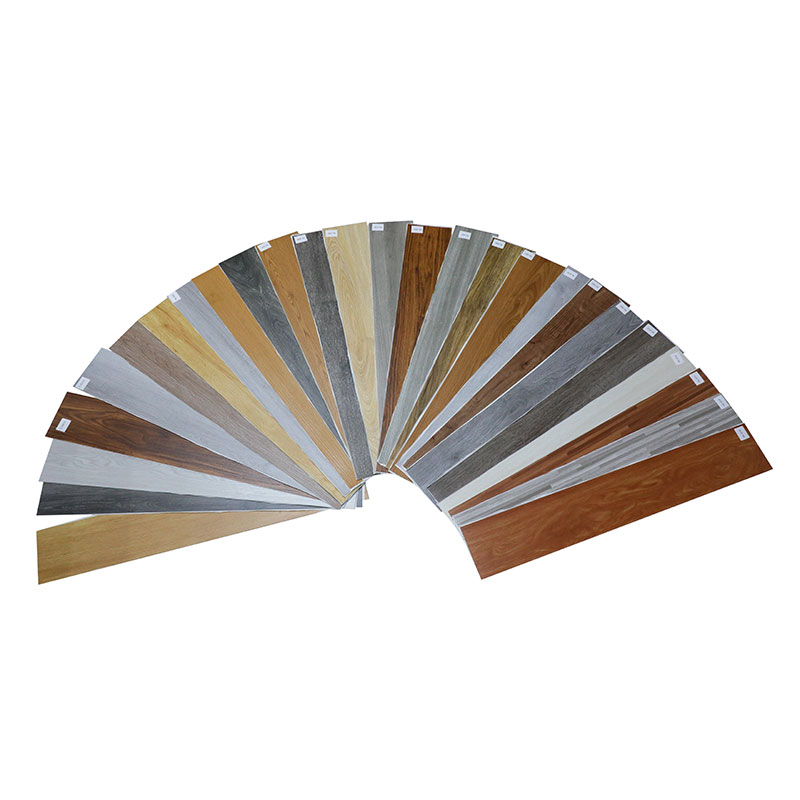
Outdoor signage remains the largest use case, and it's also where adhesive selection matters most, since UV exposure and temperature swings punish weak formulations quickly. This is where reflective vinyl rolls have become a standard choice for road signage and safety markings — the adhesive backing needs to survive years of direct sun without losing bond strength.
Beyond signage, self-adhesive vinyl shows up across three very different settings:
Surface energy determines whether an adhesive wets out properly or just sits on top of the material without forming a real bond. Compatibility varies enough by substrate that it's worth treating each one separately.
Smooth and high-energy, glass is generally the easiest surface for self-adhesive vinyl — though condensation and frequent cleaning still call for a formulation built specifically for glass. A glue-free static cling film that adheres to glass through adsorption rather than adhesive residue sidesteps the bonding question altogether, useful where future removal without cleanup matters.
Rougher and more porous, with moisture often part of the equation — kitchen backsplashes and bathroom walls need an adhesive that won't soften or lift when wet repeatedly. A wear-resistant tile sticker designed for damp, high-traffic surfaces reflects how differently these products need to be formulated compared to a wall decal for a dry living room.
Adhesion is usually reliable, but the finish underneath matters. Fresh paint that hasn't fully cured, or a waxed wood surface, can both undermine an otherwise solid PSA formulation regardless of how good the vinyl itself is.
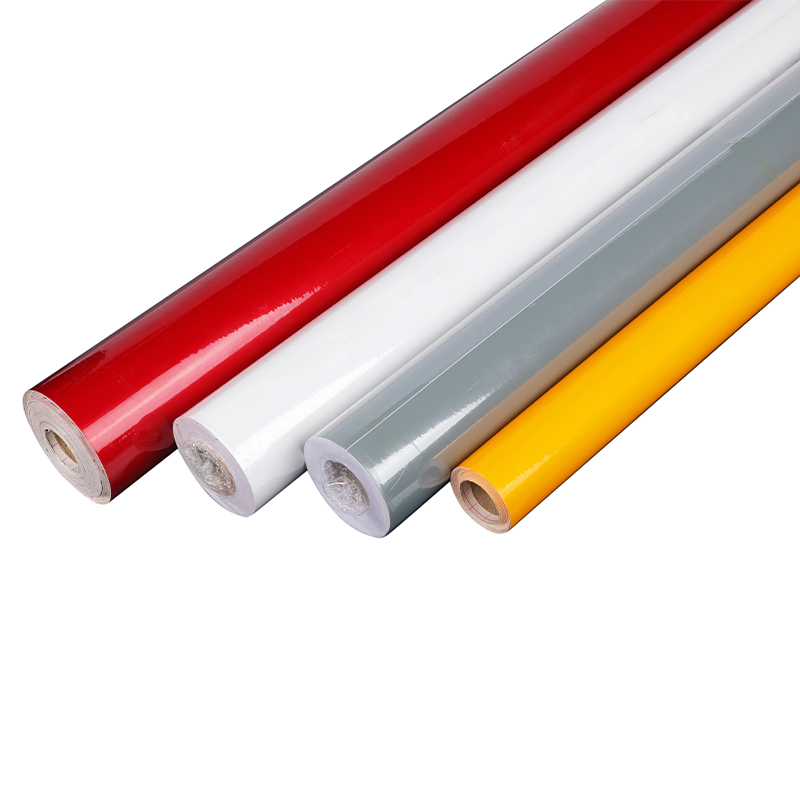
Outdoor durability claims are only meaningful when backed by accelerated testing rather than marketing language. ASTM G154 defines the standard method for exposing nonmetallic materials to fluorescent UV lamps and moisture cycling, giving manufacturers a repeatable way to measure how a vinyl film's color and surface hold up before it ever leaves the factory.
Three stress factors matter most in the field:
Most installation failures trace back to preparation rather than a defective adhesive. A reliable process looks like this:
Get the prep and technique right, and even a mid-range self-adhesive vinyl will outperform a premium product installed carelessly.

To increase our production capacity, Han Yang has invested in a range of advanced equipment, including gravure printing machines, lamination machines, coating machines, and embossing machines. Architectural Decorative Film Supplier and Decorative Film Factory in China.

 Previous