 English
 中文简体
中文简体 عربى
عربى
News
Content
Why PVC Cement Isn't the Right Choice for Vinyl
Short answer
No — not reliably. PVC cement is built to chemically weld rigid pipe, not to bond flexible vinyl. Skip down to the adhesives that actually work if you're mid-repair.
Someone squeezes PVC pipe cement onto a torn vinyl pool liner expecting a quick fix, and an hour later the patch peels away with barely a tug. This happens more often than it should, because PVC and vinyl are technically the same base polymer — polyvinyl chloride — even though manufacturers process them very differently depending on the end use.
Rigid PVC used in plumbing pipe is loaded with stabilizers and fillers that keep it stiff and dimensionally stable. PVC cement doesn't work like a typical glue at all; it works by chemically softening the outer layer of the pipe just enough that two pieces melt into each other and re-harden as one solid mass. That's closer to a solvent weld than an adhesive bond, and it depends on the pipe having a very specific, uniform surface chemistry.
Flexible vinyl — the kind used in pool liners, tubing, upholstery, and inflatable products — contains plasticizers that keep the material soft and pliable. Those plasticizers change the surface enough that solvent cement can't soften and re-fuse it the same way. Depending on the exact formulation, the cement either fails to react with the vinyl at all, or it softens the surface unevenly and leaves a weak, gummy bond that separates under the lightest stress. So the short answer to "does PVC adhesive work on vinyl" is no, not reliably — even though the shared chemistry on the label makes it seem like it should. For a broader look at how PVC-based materials perform in different applications, see how PVC decorative film performs across different substrates.
The Real Obstacle: Low Surface Energy
Here's the part most repair guides skip over. PVC and vinyl aren't hard to bond because they're "special" — they're hard to bond because of something called surface energy, which is really just a measure of how eagerly a material's molecules grab onto whatever touches them. Metal and glass sit high on that scale, so glue spreads across them the way water spreads across a clean plate. Vinyl and PVC sit lower, and 3M's own research on adhesion science puts them well under the level where a random tube of glue from the hardware store can be expected to hold.
What does that actually look like in practice? Picture rain hitting a car that's just been waxed — the water doesn't spread out, it collects into little beads and rolls right off. Adhesives do something similar on vinyl. Instead of soaking into a thin, even layer across the surface, a lot of glues just sit there in tiny domes, barely touching the material underneath. Chemists have a term for the good version of this — "wetting out" — which just means the adhesive is making full, continuous contact instead of touching down in scattered little islands.
A fast way to check this yourself: drop a bit of water onto the vinyl. If it beads up tight instead of spreading, the surface is fighting you — and a standard glue is going to struggle there too.
And that's really the whole story behind most failed vinyl repairs. It's rarely that the glue itself is weak — plenty of strong adhesives simply can't make enough contact with the surface to use that strength. Products built specifically for vinyl are formulated around this exact problem, which is the real reason they outperform anything pulled off a generic "plastic glue" shelf.
Adhesives That Actually Bond Vinyl
Skip the PVC cement, and there are really only three types worth considering — and picking between them comes down to three practical questions: does the joint need to keep bending after it dries, how big is the area, and how fast do you need it to hold?
Vinyl-specific flexible adhesive Stays flexible
Think inflatable seams, tubing joints, patio umbrella panels, or a torn seat cushion. These are built so the dried glue line stays soft and can move along with the material, instead of fighting it every time the vinyl bends. A rigid glue on a flexing joint is basically asking for a repeat repair.
Two-part epoxy Cures rigid
Best for a rigid, structural join — panels, model kits, or thicker sheet stock that isn't going anywhere. It cures hard, and it's more forgiving on surfaces that aren't perfectly flat since it fills small gaps that a thin liquid adhesive would just run out of.
Cyanoacrylate (super glue) Sets in seconds
Good for a quick, small fix — a nicked edge, a minor tear, something that doesn't call for clamps. The catch is that the bond ends up stiff, so it's better suited to small repairs than to a seam that needs room to move.
| Adhesive type | Initial set | Full strength | Flexibility after cure |
|---|---|---|---|
| Vinyl-specific flexible adhesive | ~10 minutes | 24 hours | High |
| Two-part epoxy | 5–30 minutes | 24–72 hours | Low |
| Cyanoacrylate | Seconds | 24 hours | Low |

Surface Prep Steps Before You Glue
Surface preparation matters more with vinyl than with most materials, precisely because of the low-surface-energy issue described above. Skipping prep is one of the most common reasons a correctly chosen adhesive still fails.
- Wipe both surfaces clean of dust, oil, and old adhesive residue using a lint-free cloth and isopropyl alcohol.
- Let the surfaces dry fully — trapped moisture is one of the most common causes of a bond that looks fine at first and separates days later.
- If the vinyl has a glossy finish, lightly scuff it with fine sandpaper so the adhesive has more physical texture to grip, not just a smooth, low-energy surface to bead up on.
- Avoid soaking flexible, plasticized vinyl in strong solvents beyond what the adhesive instructions call for — excess solvent exposure can leach plasticizer out of the material and leave the joint brittle over time.
- Test-fit the pieces before applying adhesive, especially with fast-setting glues like cyanoacrylate, since there's little room to reposition once the bond starts to grab.
Common mistake: clamping too hard, too fast. Most vinyl adhesives need light, even pressure — not a vise-grip squeeze — or they can push the glue line too thin to hold.
Self-Adhesive Vinyl Films: A Different Kind of Bond
Not every vinyl-to-surface question is really about glue joints — a lot of it is about covering a surface cleanly, and that's a separate category with its own solution. Self-adhesive vinyl films change the equation because they don't rely on a separate adhesive fighting vinyl's low surface energy on-site. The pressure-sensitive backing is engineered for the job before it ever reaches the installer, so there's no wetting-out problem left to solve in the field.
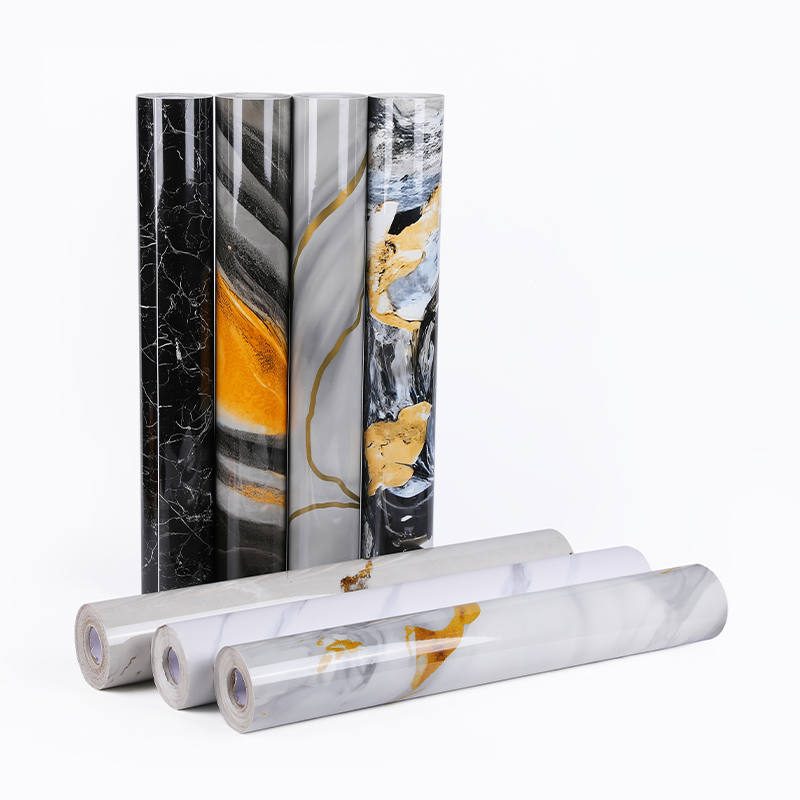
That's the logic behind products like self-adhesive PVC foil designed for smooth wall and furniture surfaces. The backing is formulated to grip PVC, wood, and painted substrates directly, without needing a primer or a separate glue step in between. For installations that need extra initial tack — a vertical panel, for instance, where the film has to hold its position before the bond fully sets — a high-glossy self-adhesive foil with strong initial tack performs more consistently than pairing a general-purpose glue with plain vinyl sheeting.
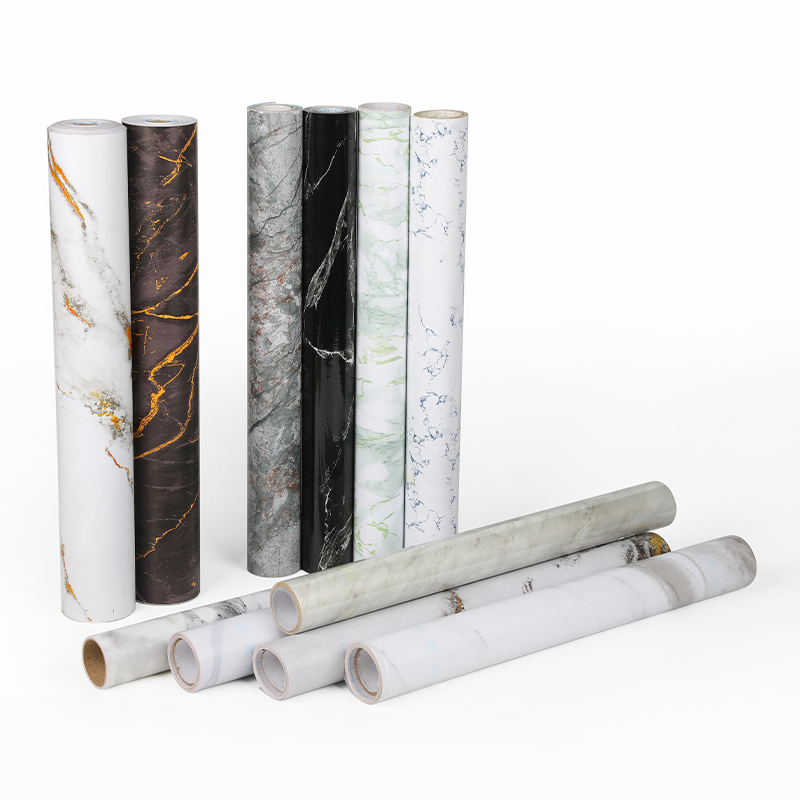
Wet environments raise a different challenge, since standing moisture is exactly what breaks down a marginal glue bond over time. A chemical-resistant marble-pattern adhesive foil built for wet-area substrates is designed to hold up under exactly those conditions rather than degrade the way a standard adhesive joint eventually would.
The same principle extends to flooring. A strong-adhesive LVT flooring built for repeated installation skips loose adhesive entirely and relies on an engineered backing instead — generally a more forgiving option for anyone installing it without professional tools or experience matching glue chemistry to a specific plastic substrate.
Choosing the Right Approach for Your Project
- Repairing a tear or seam? Skip PVC cement — use a vinyl-specific adhesive, epoxy, or cyanoacrylate based on flexibility and speed needs.
- Covering a surface? A self-adhesive vinyl film sidesteps the surface-energy problem entirely, since the adhesive is already matched to the material.
- Either way: clean, dry, lightly scuffed surfaces make a bigger difference than the brand of glue on the shelf.
Matching the method to the actual goal, rather than reaching for whatever's labeled "PVC," is what determines whether the bond holds for years or fails within the week.
 Previous