 English
 中文简体
 عربى

News
Content
- 1 Why "Very Strong" Tells You Nothing About a PVC Adhesive Vinyl
- 2 How Peel Strength Is Tested, and Why the Conditions Matter
- 3 Which Strength Does Your Job Need?
- 4 Why a Wall Isn't a Sheet of Glass
- 5 What Weakens the Bond Over Time
- 6 How to Check Adhesive Strength Before You Order a Container
- 7 Quick Answers About PVC Adhesive Vinyl Strength
Why "Very Strong" Tells You Nothing About a PVC Adhesive Vinyl
Ask two suppliers how strong their PVC adhesive vinyl is and both will say "very strong". Fine. Now what? You still can't tell which one to buy.
The trouble is that adhesive strength isn't one number. It's three, and they don't move together. A film can win on one and lose badly on another.
| Measurement | What it tells you | When it matters most |
|---|---|---|
| Peel adhesion | Force needed to pull the film off at a set angle and speed | Edges, corners, anything handled or removed |
| Tack | How firmly it grabs the instant it touches the surface | Vertical panels, fast installs |
| Shear resistance | How well the bond resists sliding under a steady load | Floors, heavy panels, tall walls |
A quick example makes the point. Here are three films, made up for illustration, scored against the best result in each column.
Three example films, three different strengths
■ Peel ■ Tack ■ Shear
Film A
Peel 90
Tack 40
Shear 55
Film B
Peel 60
Tack 85
Shear 50
Film C
Peel 65
Tack 55
Shear 90
Illustrative values on a relative scale of 0 to 100. Not data from any real product.
Film A resists peeling but barely grabs. Film B grabs at once and slips under load. Film C holds weight and peels off easily. Which is "strongest"? Depends entirely on the job. So before you compare products, decide which of the three your job really depends on.
One warning before we go further. The solvent cement sold for rigid pipe is a completely different animal, and it behaves badly on flexible film. If you're weighing glue against self-adhesive film, read why PVC cement fails on flexible vinyl first. This article is about films that carry their own pressure-sensitive layer.
How Peel Strength Is Tested, and Why the Conditions Matter
A peel figure with no test conditions is close to useless. The same film gives different numbers depending on the angle, the speed, the plate it's stuck to and how long it has sat there.
Most film and label makers follow FINAT FTM 1. The recipe is simple. Roll a 25 mm strip onto a clean float glass plate with a standard roller. Peel it back at 180 degrees at 300 mm per minute. Record the average force in newtons per 25 mm. Do it twice, once after 20 minutes and once after 24 hours, and treat the 24-hour reading as the ultimate adhesion. The FINAT FTM 1 test summary spells out the details.
ASTM D3330 is the tape-industry cousin. It has six methods, A to F. Five peel at 180 degrees, and Method F peels at 90. It also throws away the first 25 mm of the peel and averages the next 50 mm, so the start-up spike doesn't distort the reading. The ASTM D3330 method overview shows each setup.
| Detail | Why it changes the number |
|---|---|
| Peel angle (180° or 90°) | A 90° peel usually reads lower than a 180° peel on the same film |
| Dwell time (20 min or 24 h) | The adhesive keeps flowing into the surface, so the 24-hour value is higher |
| Test plate (glass, steel, other) | Each surface has a different surface energy |
| Strip width and speed | Results only compare at the same width and speed |
If a datasheet shows one peel number and none of the above, treat it as advertising, not data.

Which Strength Does Your Job Need?
"Stronger" isn't always better. On a painted wall, an aggressive adhesive can take the paint with it when the film finally comes off. On a floor, weak shear lets planks creep under foot traffic. The target depends on what the film has to survive.
What to prioritize, by application (5 = matters most)
■ Peel ■ Tack ■ Shear
Painted interior wall
Peel 3
Tack 3
Shear 2
Furniture and cabinet edges
Peel 5
Tack 3
Shear 3
Vertical panel
Peel 3
Tack 5
Shear 4
Floor tiles and planks
Peel 3
Tack 2
Shear 5
Reference ratings from general practice, not measured values. Use them as a starting point, then test on your own surface.
For painted interior walls, an initial tack of about 8 to 12 N/25 mm is a workable target, and a removable adhesive is the sensible choice for rentals. Peel needs balance here. Too much tack damages paint at removal. Too little and the edges lift. Our PVC self-adhesive foil range built for wall and furniture surfaces is designed around that balance.
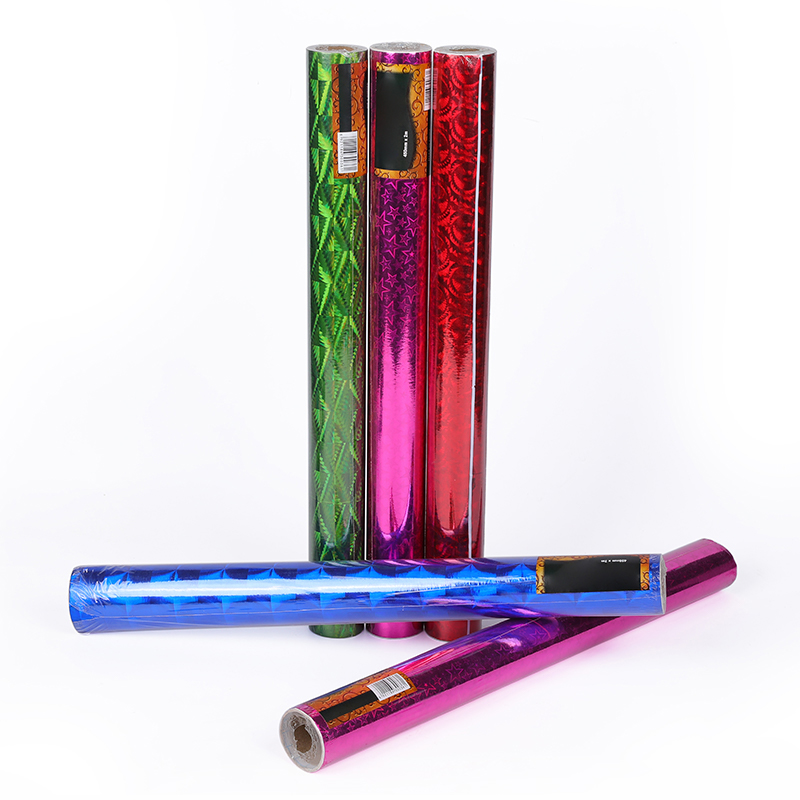
Where grip has to be instant, check films sold on first-contact hold, like this high-gloss self-adhesive foil with strong initial tack.
Why a Wall Isn't a Sheet of Glass
A peel number measured on glass tells you how the adhesive behaves on glass. Your wall isn't glass. Smooth, high-energy surfaces let adhesive spread into full contact. Rough or porous ones leave gaps, and the bond is only as strong as the area actually touching.
| Surface | What to expect | What helps |
|---|---|---|
| Glass | The easy case, high energy and smooth | Clean it, keep condensation off |
| Tile and stone | Rougher, often damp | A formulation made for wet areas |
| Bare gypsum board | Porous, bonds unevenly | A primer improves bonding noticeably |
| Painted wall | Depends on the paint | Make sure the paint has fully cured |
| Waxed wood | Wax undermines even a good adhesive | Clean off the finish first |
The adhesive type matters too. Acrylic systems age better and cope with sunlight and humidity swings more steadily than rubber-based ones, which grab fast but lose tack sooner in bright conditions. If you want the chemistry, we cover how acrylic and rubber pressure-sensitive adhesives differ in a separate guide.
And time changes everything. Permanent adhesives keep building strength over hours or days as they flow into the surface texture. A film that feels only moderately sticky when you install it can be hard to remove a day later. That's exactly why the 20-minute and 24-hour readings are different.
What Weakens the Bond Over Time
Most bond failures come from conditions, not from a faulty adhesive. A handful of causes show up again and again.
| Cause | What happens | Fix |
|---|---|---|
| Dust, oil or damp | Adhesive can't wet the surface | Wipe with isopropyl alcohol, let it dry |
| Trimming too early | Bond hasn't built shear strength yet | Leave the sheet flat for a few hours first |
| Heat and direct sun | Adhesive softens, film is stressed | Choose an acrylic system, avoid sun at install |
| Handling at corners | An edge works loose bit by bit | Press edges down firmly with a squeegee |
Edges deserve extra suspicion. They have the least contact area and take the most abuse. The usual story is that the film got trimmed too soon, a little dust sat under the edge, and ordinary handling did the rest within days. When an edge does lift, warm it gently and press it back. Pulling it straight up just tears the adhesive layer.
The film itself counts as much as the glue. Uneven coat weight gives strong spots and weak spots on the same roll, and the plasticizer balance and dimensional stability decide whether the film flexes with the surface or slowly pulls away. For a full troubleshooting sequence, see this guide on fixing bubbles, edge lifting and residue during lamination.

How to Check Adhesive Strength Before You Order a Container
A datasheet is where you start, not where you stop. Before committing to a bulk order, a short routine costs almost nothing and saves a lot of grief.
- Ask for peel values at both 20 minutes and 24 hours, plus the plate, angle and speed they used.
- Get a sample roll and stick strips on your real surface, not a clean glass plate.
- Press each strip the same way and look at it again after 24 and 48 hours, corners especially.
- Peel a strip slowly at a low angle and see whether it leaves residue or lifts the finish.
- Repeat after the sample has sat in the heat and humidity your customers will actually live with.
Check the roll too, not just the sample. Cut pieces from the start, the middle and the end, and compare them. A supplier with steady coating control shows very little difference between them. A big gap means a coat weight problem you'd rather find now.
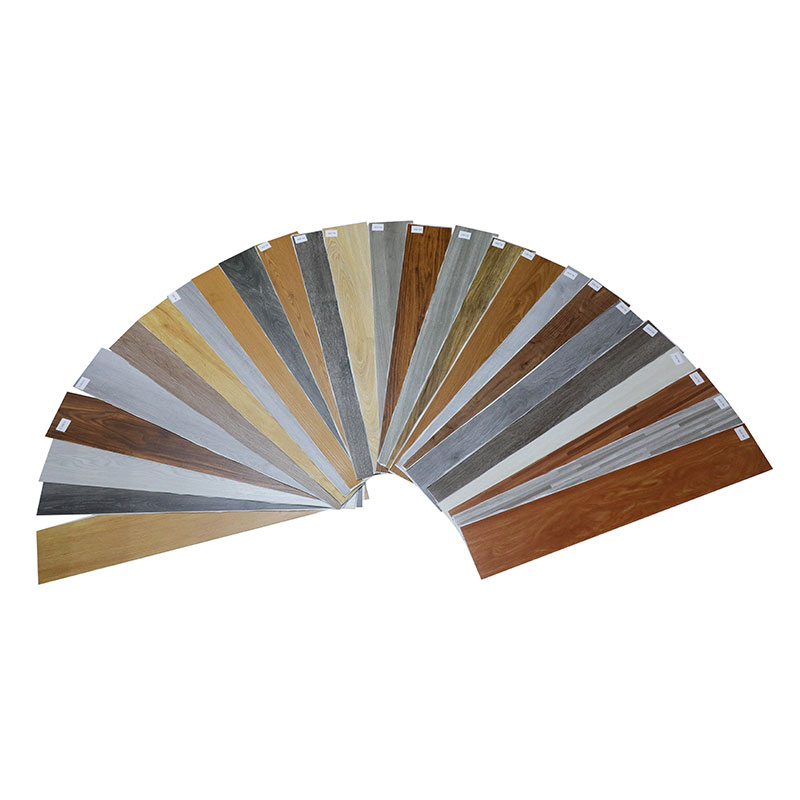
If bond strength is the whole selling point, as with a reusable LVT flooring with a strong adhesive backing, test shear and repositioning as well. Strong grip that also lets go cleanly is harder to build than either on its own, so test it. Don't assume it.
Quick Answers About PVC Adhesive Vinyl Strength
What is a good peel strength for PVC adhesive vinyl?
There's no single good number. It depends on the surface and on whether the film should come off later. For painted interior walls, an initial tack of about 8 to 12 N/25 mm is a workable target. Always compare figures that were tested the same way.
Why does my film hold well at first and lift later?
Usually dust, damp or early trimming. Sometimes the adhesive wasn't right for the surface. Check the surface and the edges before blaming the film.
Is a stronger adhesive always better?
No. Too much peel strength can damage paint or leave residue when you remove the film. Pick the strength for the job, not the biggest number on the sheet.
 Previous