 English
 中文简体
 عربى

News
Content
- 1 Why PVC Adhesive Vinyl Develops Bubbles During Lamination
- 2 Wrinkles, Silvering, and Uneven Lamination: Root Causes in PVC Film Bonding
- 3 Peeling, Edge Lifting, and Adhesive Residue: What's Going Wrong
- 4 Choosing the Right PVC Adhesive Vinyl to Prevent Lamination Problems from the Start
- 5 Environmental Controls That Make or Break a Lamination Job
- 6 A Practical Troubleshooting Checklist for PVC Adhesive Vinyl Lamination
Why PVC Adhesive Vinyl Develops Bubbles During Lamination
A shop runs a batch of PVC adhesive vinyl through the laminator, and by the third sheet, small dome-shaped bubbles start appearing under the film. The operator hasn't changed a single setting. Nine times out of ten, the culprit isn't the laminator — it's what was on the surface, or trapped in the layers, before the film ever touched the roller.
Three causes account for most bubbling in PVC film lamination:
- Surface contamination — dust, oil, or ink that hasn't fully cured creates a barrier the adhesive can't wet through, leaving a pocket of trapped air
- Uneven roller pressure — worn or misaligned rollers apply inconsistent force across the width of the sheet, pressing some areas flat while leaving others under-bonded
- Adhesive-substrate mismatch — pairing a low-tack PVC adhesive vinyl with a textured or porous substrate it wasn't formulated for prevents proper wet-out from the start
The underlying issue is bond strength, and it's measurable rather than a matter of guesswork. ASTM D903 defines the standard 180-degree peel test used to quantify adhesive bond strength between a flexible film and its substrate, and film manufacturers who publish these figures are giving buyers something concrete to compare rather than a marketing claim. A PVC decorative film engineered for consistent, bubble-free lay-flat performance starts from a formulation that's already been tested this way, which takes one variable out of the troubleshooting process before installation even begins.
Scale changes how forgiving bubbling is, too. On a small sample piece, a stray bubble the size of a pinhead is barely noticeable and easy to pop with a pin. On a full wall panel or a floor graphic run across several linear meters, the same root cause repeats across the entire sheet, and by the time it's spotted, the material and labor already spent on that run are wasted. That's why catching the cause early — dust, pressure, or mismatch — matters more on large-format PVC adhesive vinyl jobs than it does on a one-off decal.
Wrinkles, Silvering, and Uneven Lamination: Root Causes in PVC Film Bonding
Wrinkles and a hazy, streaked look called silvering both trace back to how evenly heat, pressure, and tension are distributed across the film during lamination — and PVC behaves differently under these forces than polyester or acrylic-based films.
| Defect | Typical Cause | Quick Fix |
|---|---|---|
| Wrinkles | Uneven supply roll tension or fast, uneven feeding | Slow the feed rate, check tension knobs on both sides |
| Silvering | Micro air pockets trapped between film and adhesive | Increase roller pressure slightly, add heat-assist |
| Uneven lamination | Roller misalignment or inconsistent heating across width | Check pressure with a test strip; realign rollers |
PVC's flexibility works in its favor here — it's more forgiving than rigid films when it comes to conforming to slightly uneven substrates — but that same flexibility means a poorly backed film can stretch under tension and distort. Supply roll tension is worth checking before blaming the film itself: too little tension lets the film ripple as it feeds; too much stretches it thin enough that it snaps back and wrinkles once released from the rollers. A quick way to gauge this is to release both supply roll knobs, then apply tension in small, matched increments on each side — uneven tension between the two sides is a common, overlooked cause of diagonal wrinkling that looks like a material defect but isn't.
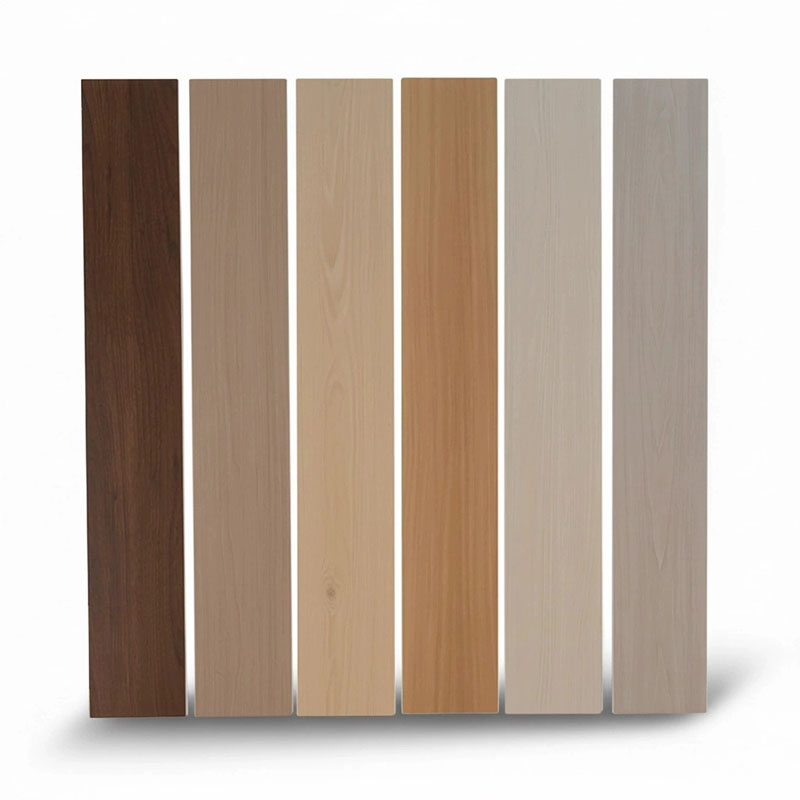
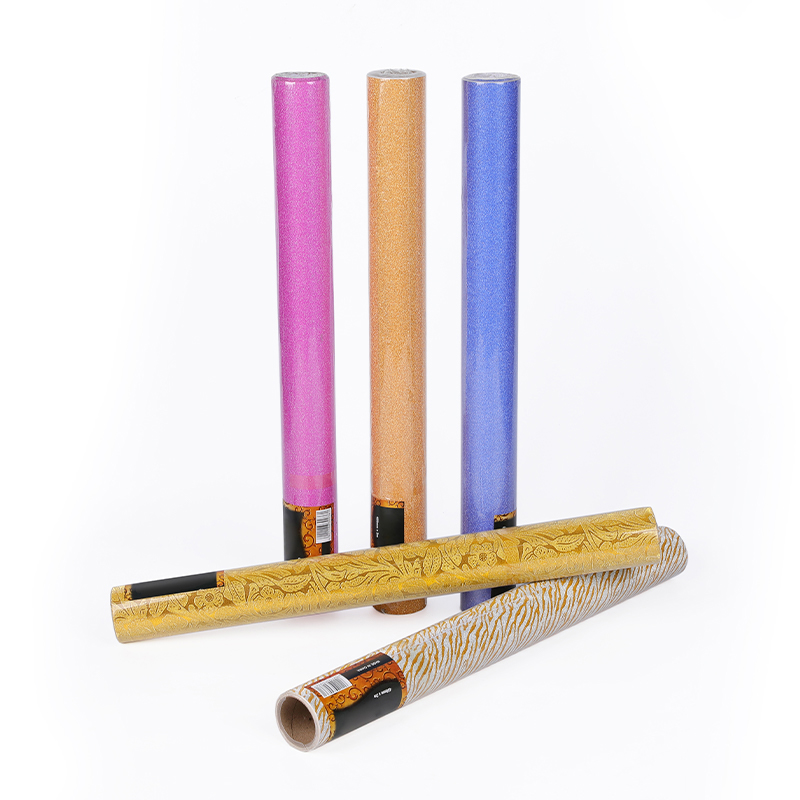
A wood-grain adhesive foil with 3D embossed back coating for reliable bonding illustrates the alternative: a backing layer designed to hold its shape under roller pressure instead of relying on the top film alone to stay flat.
Peeling, Edge Lifting, and Adhesive Residue: What's Going Wrong
Edges are almost always the first place a lamination job fails, and for a specific reason: they carry the least adhesive contact area and take the most physical handling during trimming and installation. When PVC adhesive vinyl starts lifting at the corners within days of installation, the sequence usually looks like this:
- The film was trimmed too soon after application, before the adhesive had time to build shear strength
- Residual dust or moisture at the edge prevented full contact during the initial bond
- Repeated flexing or handling at that corner gradually worked the edge loose
The fix is mostly about sequencing rather than materials: let a freshly laminated sheet sit flat for a few hours before trimming, press edges firmly with a squeegee working from the center outward, and warm a lifting edge gently before re-pressing it rather than pulling it straight up, which tears the adhesive layer instead of resetting it.
Adhesive residue tells its own story depending on where it shows up. Residue left behind after a failed lamination attempt usually means too much adhesive was applied relative to the film's design, and it responds well to isopropyl alcohol on a soft cloth rather than aggressive scraping. Residue that appears only at the edges, on the other hand, often points to over-trimming through a bond that hadn't fully set — the glue was still transferable when the blade cut through it. Distinguishing between the two saves time, since one calls for a cleaning fix and the other calls for a timing fix.
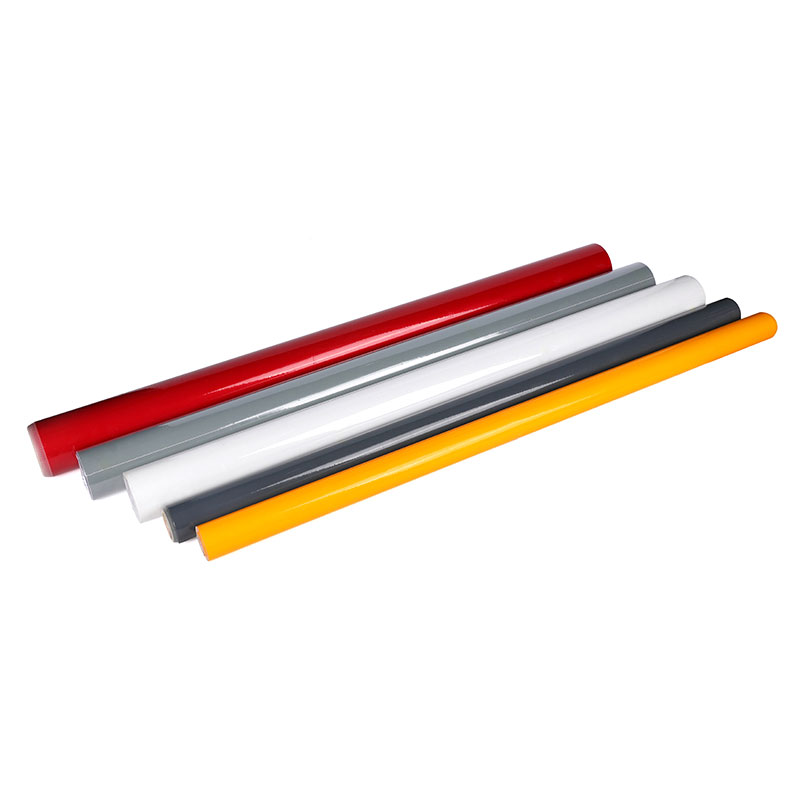
A holographic self-adhesive PVC foil with a consistent adhesive layer is a good example of why layer uniformity matters — an uneven coat weight is what causes both weak edges and excess residue in the first place.
Choosing the Right PVC Adhesive Vinyl to Prevent Lamination Problems from the Start
Most troubleshooting guides treat lamination problems as a process issue — fix the technique, fix the result. That's only half the picture. The PVC adhesive vinyl itself has variables that determine how forgiving or unforgiving the lamination process will be:
Plasticizer content and flexibility
PVC film that's too rigid resists conforming to slightly textured or curved substrates, which shows up as bubbling and edge lifting no matter how careful the operator is. Film with the right plasticizer balance flexes into surface irregularities during application instead of bridging over them.
Adhesive layer consistency
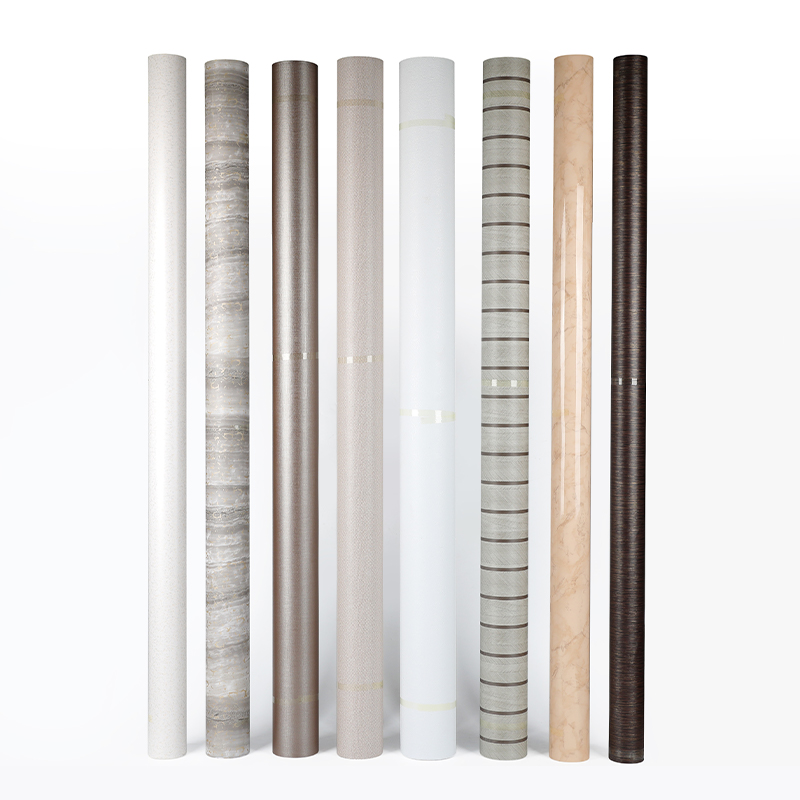
An uneven coat weight across the roll means some sections bond aggressively while others barely tack — the same roll can produce both silvering in one spot and peeling in another. PVC decorative film built to balance long-term durability with design flexibility shows how base material formulation and finish quality work together rather than being separate decisions.
Substrate-specific formulation
Wall panels, furniture surfaces, and floor applications each put different mechanical stress on a lamination bond. A heat-insulating, easy-to-clean PVC film built for wall panel applications is formulated with that specific substrate's thermal and cleaning demands in mind, rather than being a generic film adapted after the fact.
Monomeric vs. polymeric PVC film
The construction of the base film itself changes how it behaves under a laminator, and it's worth knowing which type is in front of you before troubleshooting a problem:
| Property | Monomeric PVC | Polymeric PVC |
|---|---|---|
| Typical lifespan | 1–3 years | 5–7 years or more |
| Flexibility | Lower, less conformable | Higher, better on curves and textured surfaces |
| Shrinkage risk over time | Higher, especially with heat exposure | Lower, more dimensionally stable |
| Best fit | Short-term signage, flat surfaces | Vehicle wraps, curved or long-term applications |
Using a monomeric film on a job that calls for polymeric-grade flexibility is a frequent, quiet cause of lamination problems that only show up weeks later, once the film has had time to shrink or stiffen under real-world temperature swings.

Environmental Controls That Make or Break a Lamination Job
Two lamination runs using identical PVC adhesive vinyl, on identical equipment, can produce completely different results if the room conditions differ. Humidity and temperature affect adhesive tack directly:
- High humidity lets moisture sit on or under the film before bonding, which is the primary driver of the foggy, cloudy finish operators often blame on the film itself
- Cold rooms stiffen the adhesive layer, slowing its ability to flow into surface texture and increasing the odds of bubbles and weak edge contact
- Direct heat or sunlight during application can cause premature tack, giving the operator no window to correct misalignment before the bond sets
Storage conditions matter just as much as the conditions during application. PVC adhesive vinyl left in a hot warehouse or stacked horizontally for weeks can develop flat spots, uneven tension, or a softened adhesive layer long before it ever reaches the laminator — problems that then get misdiagnosed as equipment or technique issues. Storing rolls vertically, in a stable temperature range, and away from direct sunlight prevents a surprising share of the defects that otherwise show up mid-production.
Manufacturers rely on standardized conditioning and testing environments for a reason. PSTC's published test methods specify controlled temperature and humidity conditions for measuring adhesive tack and peel performance, which is the same discipline worth applying on a production floor — a moderate, stable environment removes one more variable from the troubleshooting list before a job ever starts.
A Practical Troubleshooting Checklist for PVC Adhesive Vinyl Lamination
When a lamination job goes wrong, working through causes in order — rather than changing several settings at once — makes it far easier to identify what actually fixed the problem:
- Check the surface and film for dust, oil, or moisture before assuming an equipment fault
- Verify roller pressure is even across the full width using a test strip or pressure-sensitive film
- Confirm the laminator's temperature setting matches the specific PVC adhesive vinyl being used, not a generic default
- Rule out room conditions — humidity and temperature swings cause more failures than most operators assume
- If problems persist across multiple rolls, re-examine whether the film's adhesive layer and plasticizer content actually suit the substrate
Most lamination failures trace back to one of these five points rather than a defective machine. Working through them in order, rather than adjusting several settings at once, also makes it possible to keep notes on what actually solved a given problem — useful the next time the same defect shows up on a different roll or a different operator's shift.
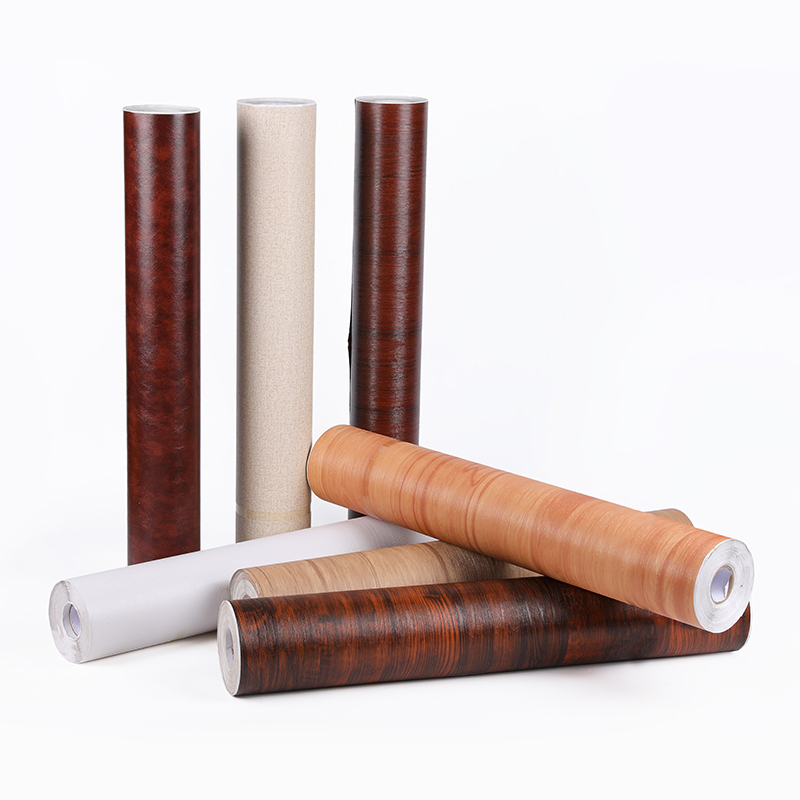
Getting the material choice right — as covered in PVC decorative film positioned as a versatile solution across home and industrial applications — removes a surprising share of these problems before the laminator is ever switched on. Technique and equipment maintenance still matter, but a well-formulated PVC adhesive vinyl gives every step downstream more room for error.
 Previous