 English
 中文简体
中文简体 عربى
عربى
News
Walk into any home improvement store or browse any window film supplier's catalog and you will find two fundamentally different product types sharing the same shelf: static cling film and adhesive window film. They look nearly identical in the roll. They serve similar purposes—privacy, decoration, UV protection, heat rejection. But how they attach to glass, how long they last, how they perform under heat and humidity, and how they come off are completely different stories.
Choosing the wrong type does not just mean disappointing performance—it can mean a removal job that takes half a day and leaves residue on glass you cannot easily clean. Getting the choice right from the start saves time, money, and frustration.
Content
- 1 How Each Type Actually Sticks to Glass
- 2 Installation: One Is More Forgiving Than the Other
- 3 Privacy, UV Blocking, and Heat Rejection Performance
- 4 Durability and Lifespan: The Sharpest Difference
- 5 Removal: Clean Exit vs. Sticky Situation
- 6 Cost Comparison: Upfront vs. Lifetime
- 7 Side-by-Side Comparison
- 8 Which Should You Choose?
How Each Type Actually Sticks to Glass
Despite its name, static cling film does not rely on static electricity. The name is a marketing convention. What actually holds the film to glass is molecular cohesion—the same phenomenon that makes a wet plastic bag cling to a surface it is pressed against. The film is made from highly plasticized vinyl that, when pressed firmly against a smooth, non-porous surface like glass, creates thousands of tiny suction-cup-like contact points across its surface area. No glue involved. The bond is physical, not chemical.
This is why static cling film only works on perfectly clean, smooth glass. Dust, fingerprints, or texture interrupt the contact area, and the film lifts. It also explains why the bond weakens over time: the plasticizers in the vinyl gradually migrate out of the material under UV exposure and heat, reducing the softness and flexibility that enable cohesion. Static cling is a temporary bond by design and by physics.
Adhesive window film works completely differently. A pressure-sensitive adhesive layer is applied to one face of a polyester (PET) film substrate. When the film is pressed against glass, the adhesive flows into microscopic surface irregularities and forms a chemical bond that grows stronger over time. Some adhesive films are dry-adhesive (requiring no water for installation); others use a wet-installation process similar to static cling but cure to a permanent bond as the water evaporates. Either way, the result is a film that is genuinely bonded to the glass—not just resting against it.
Installation: One Is More Forgiving Than the Other
Static cling film installation is the more forgiving of the two. The application process uses a soapy water solution that keeps the film repositionable until it is squeegeed down. If you misalign it, peel it back, re-spray, and try again. There is no time pressure, no permanent consequence for a positioning mistake, and no special tools beyond a spray bottle and a squeegee. Most installations take 15–30 minutes per window and require no prior experience.
Adhesive window film installation demands more precision. Wet-adhesive films also use a soapy water installation method and allow some repositioning before the adhesive sets, but the window of opportunity is shorter—the adhesive begins bonding as soon as water starts evaporating. Dry-adhesive films grab on contact and offer almost no repositioning window at all. Air bubbles trapped under adhesive film can be difficult or impossible to remove after the adhesive has set, particularly with dry-adhesive types.
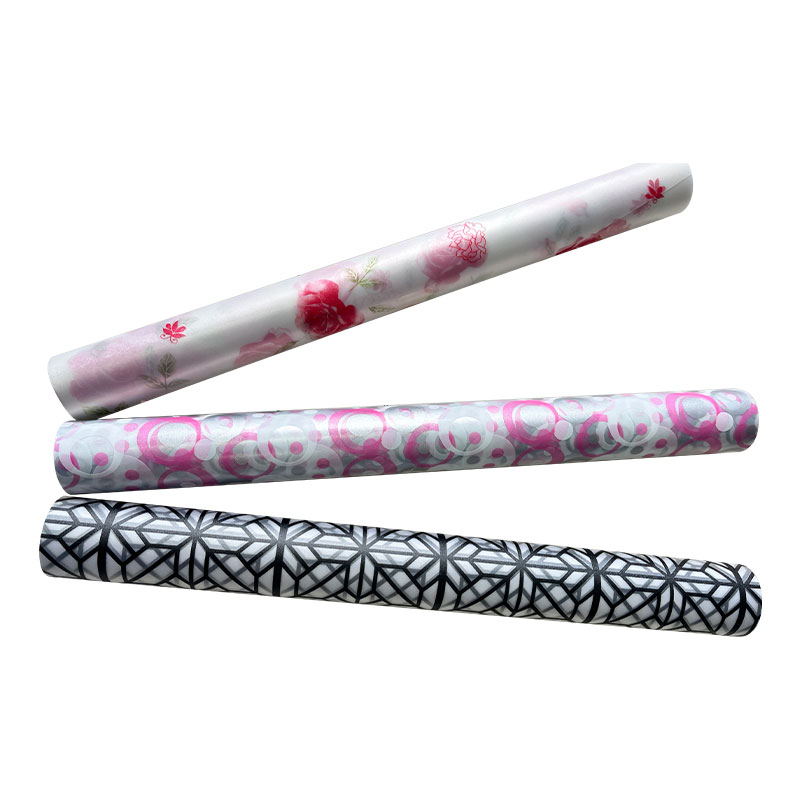
For DIY first-timers, static cling film is significantly easier to install without visible defects. Adhesive film installed professionally—with proper tools, technique, and experience—produces a cleaner, higher-clarity result, but the margin for error in self-installation is much smaller. For high-quality decorative glass effects achievable by non-professionals, our glue-free static cling glass film with close-fit adsorption is designed specifically for clean DIY results on standard interior glass surfaces.
Privacy, UV Blocking, and Heat Rejection Performance
This is where adhesive film has a clear, measurable advantage. Because adhesive films use a polyester (PET) substrate rather than vinyl, they can be manufactured with a much wider range of functional coatings: metallized layers for solar heat rejection, ceramic particles for infrared blocking, dye layers for UV absorption, and surface hardcoating for scratch resistance. High-performance adhesive solar control films can reject 50–80% of solar heat and block 99% of UV radiation.
Static cling films, made from plasticized vinyl, are thicker and softer by nature. Functional coatings can be applied but are more limited in their effectiveness. Privacy performance—achieved by opacity, frosting, or patterning—is generally comparable between the two types. But thermal performance and UV blocking are areas where quality adhesive film, particularly heat-resistant building film, outperforms static cling by a significant margin.
For south-facing or west-facing windows where solar heat gain is a real energy and comfort problem, our heat-resistant window film range provides professional-grade thermal insulation and UV protection with adhesive bonding for lasting performance. For decorative applications—privacy patterns, frosted effects, stained glass designs—where functional performance matters less than aesthetics, static cling offers equivalent visual results at lower cost and installation complexity.
Durability and Lifespan: The Sharpest Difference
Lifespan is where the gap between static cling and adhesive film is most dramatic.
| Condition | Static Cling Film | Adhesive Window Film |
|---|---|---|
| Indoor, low UV, temperate climate | 3–5 years | 10–15 years |
| High UV, south-facing windows | 1–2 years | 7–12 years |
| High humidity (bathrooms, kitchens) | 6–18 months | 5–10 years |
| Exterior application | Not recommended | 3–7 years (exterior-rated film) |
Static cling film degrades primarily through plasticizer migration—the plasticizers that keep the vinyl soft and cohesive gradually evaporate, leaving the film brittle, discolored, and prone to lifting at edges. Heat accelerates this process significantly. High-humidity environments like bathrooms and kitchens cause the film to swell and contract with temperature changes, progressively weakening the cohesive bond. Static cling film should never be installed on exterior glass surfaces—rain, temperature swings, and wind will cause it to fail within weeks.
Adhesive film ages very differently. The polyester substrate is inherently UV-stable and dimensionally stable across temperature ranges. The adhesive forms a bond that actually strengthens over time as it fully cures. Adhesive film in direct sun typically lasts 7–12 years before the adhesive begins to degrade; in interior applications with indirect sun, 15 years or more is achievable with quality film.
Removal: Clean Exit vs. Sticky Situation
Static cling film removes in seconds. Lift a corner with a fingernail, peel, and it is done. No residue. No solvent. The glass underneath is exactly as it was before installation. This makes static cling film the natural choice for renters, for temporary seasonal applications, and for anyone who changes their interior décor frequently. The film itself can often be washed gently and reused.
Adhesive film removal is a different project entirely. The adhesive bond must be broken, typically by applying heat with a heat gun to soften the adhesive layer, then peeling the film away slowly while keeping the adhesive warm. Any adhesive remaining on the glass must then be dissolved with an adhesive remover and scraped off with a razor blade. On older installations where the adhesive has fully cured into the glass surface, professional removal may be the most practical option to avoid scratching the glass.
This removal complexity is not a flaw—it is a direct consequence of the stronger bond that makes adhesive film so durable. The rule is simple: if permanence and performance matter, choose adhesive; if flexibility and residue-free removal matter, choose static cling.
Cost Comparison: Upfront vs. Lifetime
Static cling film typically costs less per square meter than equivalent adhesive film. The vinyl material and simpler manufacturing process keep costs lower, and installation requires no professional labor. For a budget-conscious one-time decorative project, static cling is the more economical choice upfront.
Over a ten-year window, the picture changes. If static cling film on a high-UV window needs replacing every two years, five replacements at lower individual cost may exceed the one-time cost of quality adhesive film installed once. For permanent installations on owned property, the cost-per-year calculation often favors adhesive film even when accounting for professional installation.
Adhesive film also offers a wider range of performance tiers—from entry-level decorative film at accessible price points to premium solar control film with multi-layer metallic coatings. Our adhesive decorative glass film with rich aesthetic patterns bridges both needs—decorative appeal with the durability of a properly bonded adhesive film.
Side-by-Side Comparison
| Factor | Static Cling Film | Adhesive Window Film |
|---|---|---|
| How it adheres | Molecular cohesion (no glue) | Pressure-sensitive adhesive |
| Installation difficulty | Easy — fully repositionable | Moderate — less margin for error |
| Removal | Instant, residue-free | Requires heat + solvent, time-consuming |
| Reusable? | Yes, multiple times | No |
| Lifespan (interior, moderate UV) | 2–5 years | 10–15 years |
| UV / heat rejection | Limited | High (with performance coating) |
| Suitable for humid areas | Limited | Yes |
| Exterior use | No | Yes (exterior-rated only) |
| Best for renters? | Yes — ideal choice | No — permanent installation |
| Upfront cost | Lower | Moderate to higher |
Which Should You Choose?
The decision comes down to four questions. Answer them honestly and the right film type becomes obvious.
- Do you own the property? Renters should default to static cling—no risk of lease violations or removal complications. Owners can weigh the long-term performance benefits of adhesive film.
- How long do you want the film to stay? Temporary seasonal applications, holiday decoration, or style changes more frequent than every three years favor static cling. Permanent or semi-permanent installations on owned windows favor adhesive.
- Is thermal or UV performance a priority? If you are trying to meaningfully reduce solar heat gain, lower cooling costs, or protect furnishings from UV fading, choose a quality adhesive heat-control film. Static cling provides some UV benefit but cannot match the performance of a properly specified adhesive solar film.
- Where is the window located? Exterior windows, bathroom windows, or kitchen windows adjacent to cooking steam should use adhesive film. The moisture and temperature cycling in these locations degrades static cling far faster than in a dry interior living space.
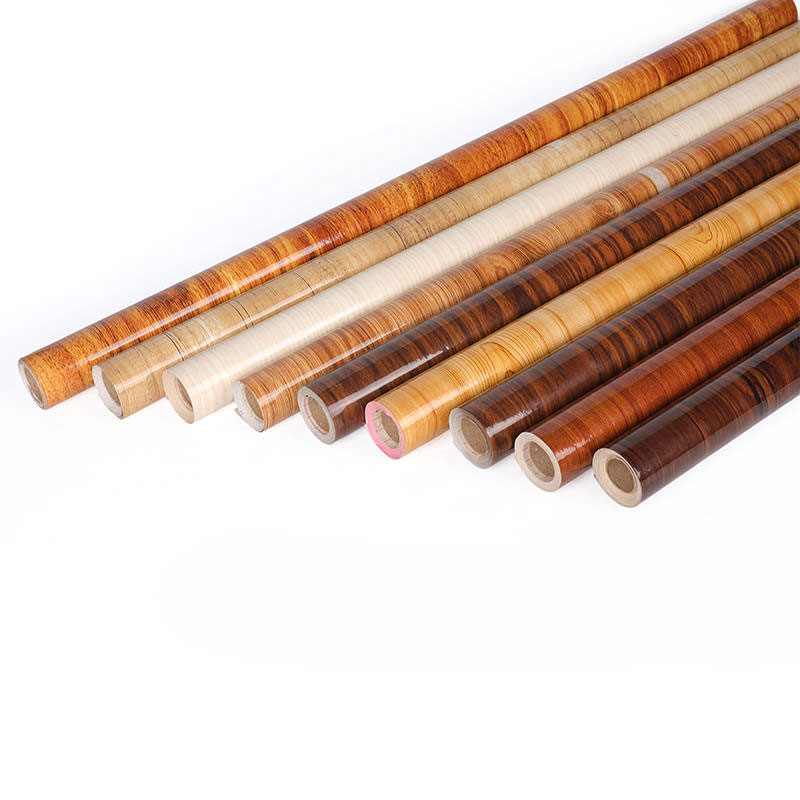
For projects where a range of both types makes sense—different rooms, different requirements—our complete glass decorative film collection includes both static cling and adhesive options across a wide range of patterns, opacity levels, and functional specifications. For surface decoration beyond glass—walls, furniture, and cabinetry—our PVC self-adhesive foil and wall sticker range delivers durable, high-pattern coverage with professional-grade adhesive bonding on smooth interior surfaces.
 Previous