 English
 中文简体
中文简体 عربى
عربى
News
Content
What Self-Adhesive Vinyl Actually Is
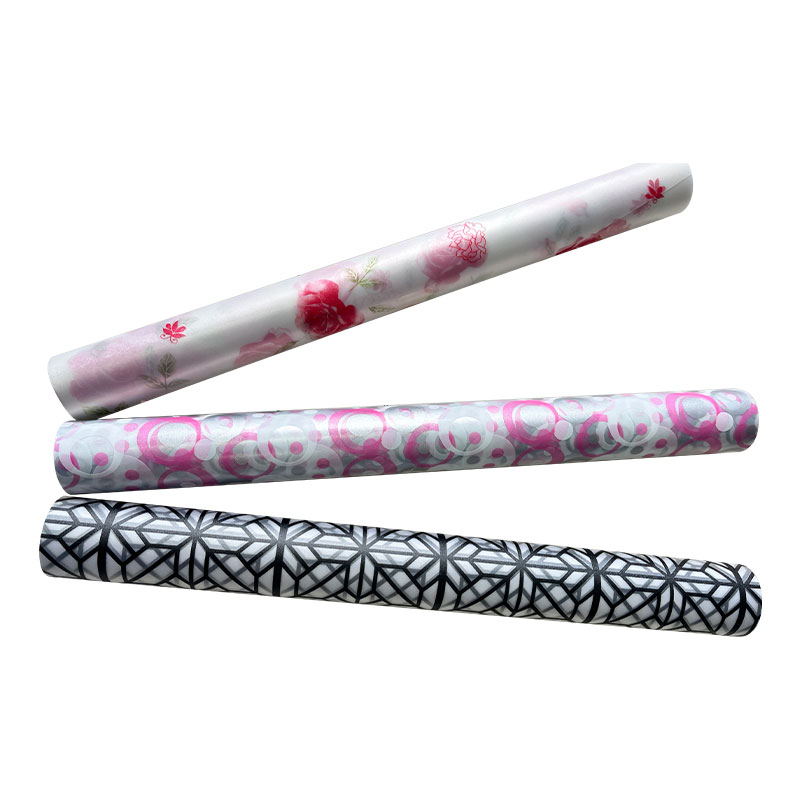
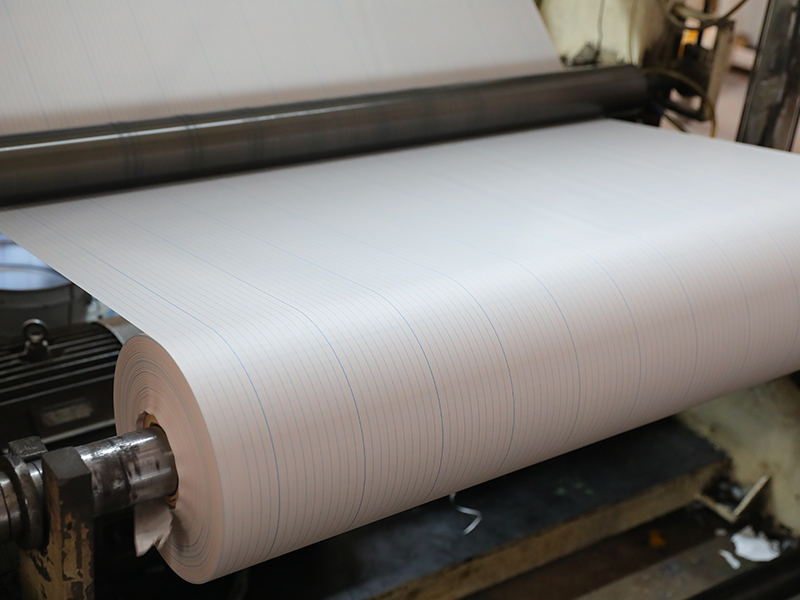
Peel back the release paper on a roll of self-adhesive vinyl and you will find three distinct layers, not one. A printed or solid-color PVC film sits on top, a pressure-sensitive adhesive coating sits underneath it, and a silicone-treated liner protects that adhesive until installation. Each layer is engineered separately, then laminated together on the production line, which is why two rolls that look identical on the surface can behave very differently once applied.
Manufacturing method is the first fork in the road. Calendered vinyl is extruded and rolled under heat and pressure, which keeps costs down but leaves some internal stress in the film — over months, that stress can show up as slight shrinkage or edge lifting, especially on curved or high-heat surfaces. Cast vinyl is poured as a liquid and cured, producing a thinner, more dimensionally stable film that conforms to contours without memory-related pullback. For flat walls, furniture panels, and short-to-mid-term signage, calendered film is usually the more economical choice; for wraps, curved trims, or installations meant to last several years, cast film earns its higher price.
Thickness typically runs from around 100 to 180 microns for interior decorative grades, with the adhesive coating adding another 20 to 40 grams per square meter depending on bond strength requirements. Buyers sourcing at volume should ask for both figures separately — total roll thickness alone does not tell you how much of that is film versus adhesive, and that ratio affects both durability and cost. A closer look at a full PVC self-adhesive foil and wall sticker range shows how these variables shift across product lines built for different budgets and use cases.
How the Adhesive Layer Determines Performance
Two adhesive chemistries dominate this category. Rubber-based adhesives offer strong initial tack and a lower price point, making them common in budget-grade craft and short-term decorative vinyl. The tradeoff is aging: rubber adhesives soften and yellow faster under UV exposure and heat cycling, so a roll that bonds beautifully on day one can leave residue or fail at the edges within a year of sun exposure. Acrylic pressure-sensitive adhesives cost more to formulate but hold their bond strength far longer under fluctuating temperature and humidity, which is why they show up in vinyl rated for outdoor signage, kitchens, and bathrooms.
Peel strength is not a marketing term — it is a measurable property, and ASTM D3330 defines the standardized test methods used to quantify how much force is needed to separate an adhesive tape or film from a substrate at a controlled angle and speed. When a supplier quotes a peel strength figure, ask which method (A through F) and substrate it was tested against, since results are not directly comparable across different testing panels.
Finishes and Surface Types to Choose From
Finish is usually the first thing a buyer evaluates, but it is worth remembering that texture affects maintenance as much as looks. Matte and embossed surfaces tend to hide fingerprints and light scratches better than gloss, while high-gloss film reflects more light and reads as brighter and more premium in retail or showroom settings — at the cost of showing every smudge.
| Finish type | Surface character | Best-suited applications |
|---|---|---|
| High gloss | Reflective, smooth, mirror-like sheen | Cabinet fronts, retail fixtures, accent panels |
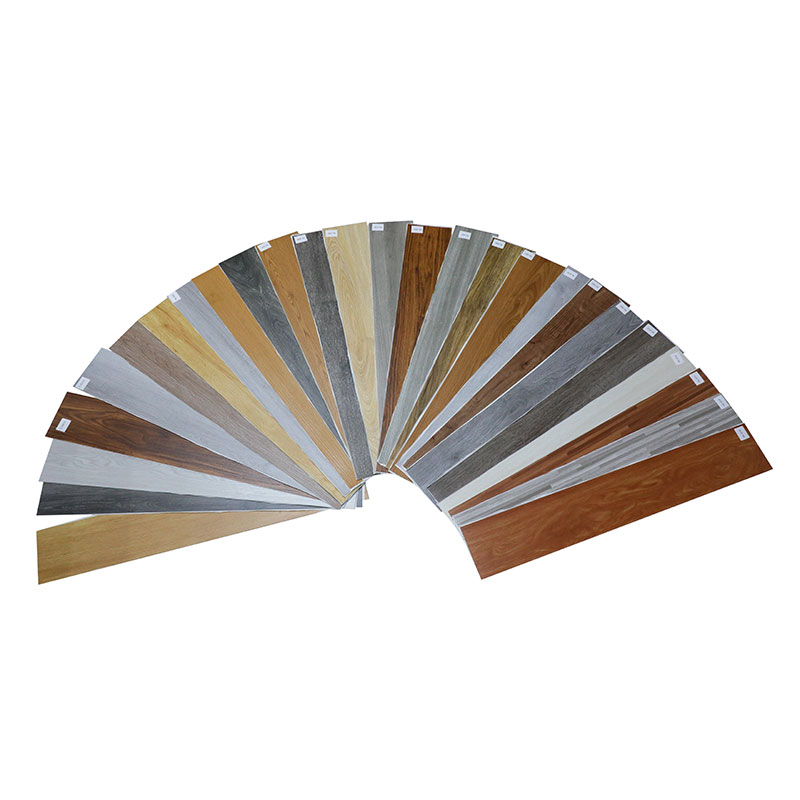
| Wood grain, embossed | Textured, synchronized with printed grain | Furniture resurfacing, wall panels, doors |
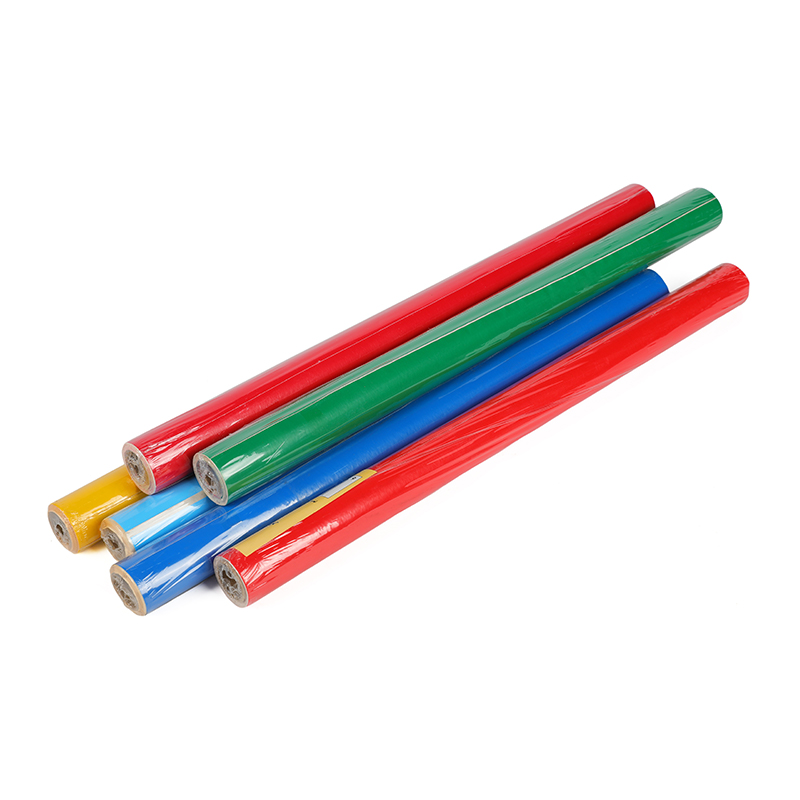
| Solid color, matte | Flat, non-reflective, fingerprint-resistant | Full walls, shelving, DIY furniture refacing |
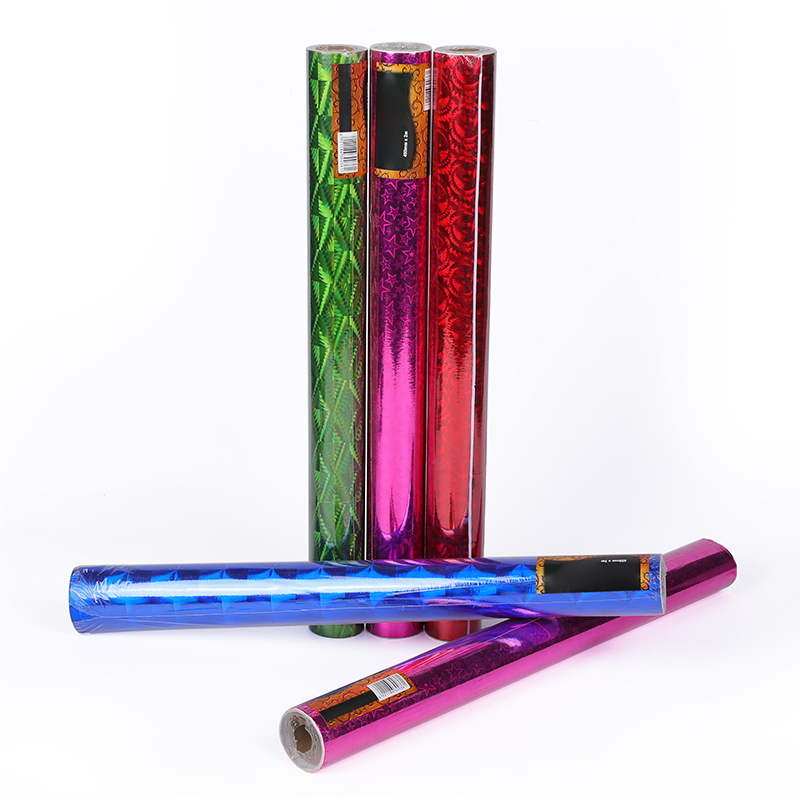
| Holographic or pearl | Shifting light effect, decorative accent | Packaging, signage, small feature areas |
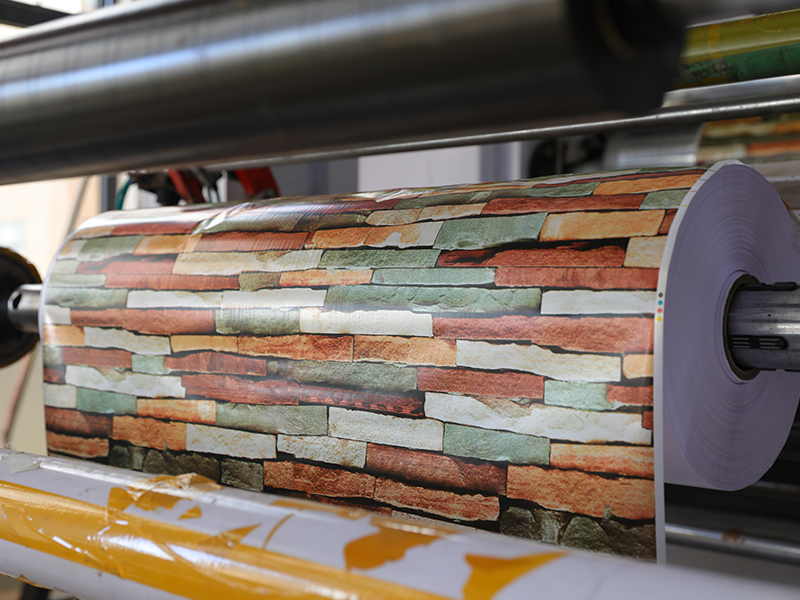
Embossed woodgrain and marble finishes rely on a manufacturing step called synchronized embossing, where the texture rollers are aligned to the printed pattern so grain lines and surface relief line up — misalignment is the giveaway of a lower-quality print run. A high-gloss wood grain PVC film with anti-scratch coating illustrates how that alignment, combined with a protective top layer, extends visible life on high-traffic furniture. For projects that call for a single uniform color rather than a printed pattern, a solid-color self-adhesive foil avoids print registration issues entirely, and a high-gloss self-adhesive foil covers the reflective end of the spectrum.
Where Self-Adhesive Vinyl Is Used
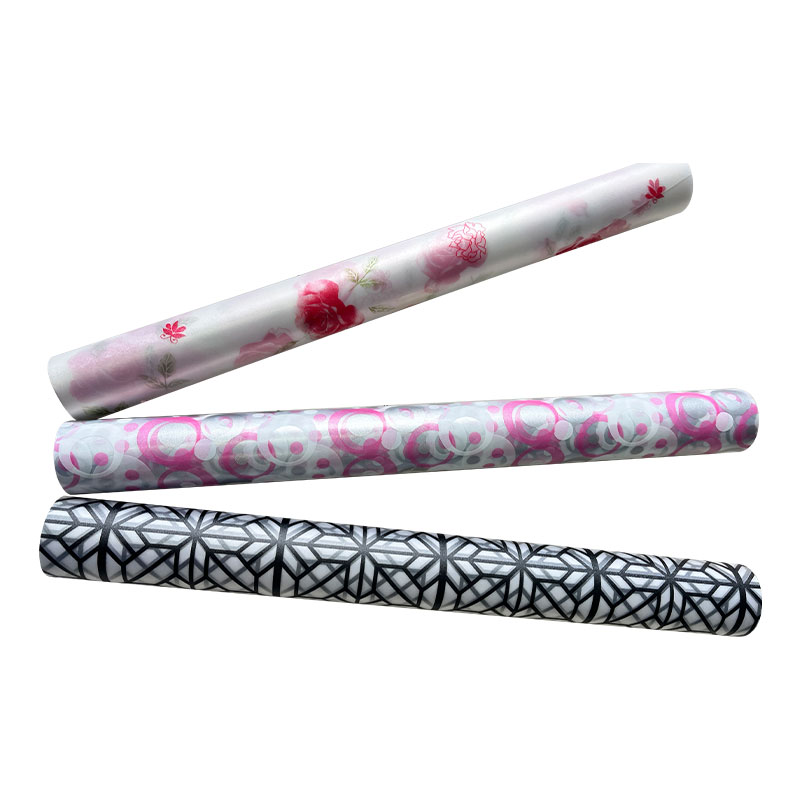
Interior walls and furniture remain the largest use case, since the material lets a room or piece of furniture be refreshed without paint, primer, or drying time. But the same base construction — PVC film plus pressure-sensitive adhesive — extends well beyond walls once the finish and adhesive are matched to the substrate.
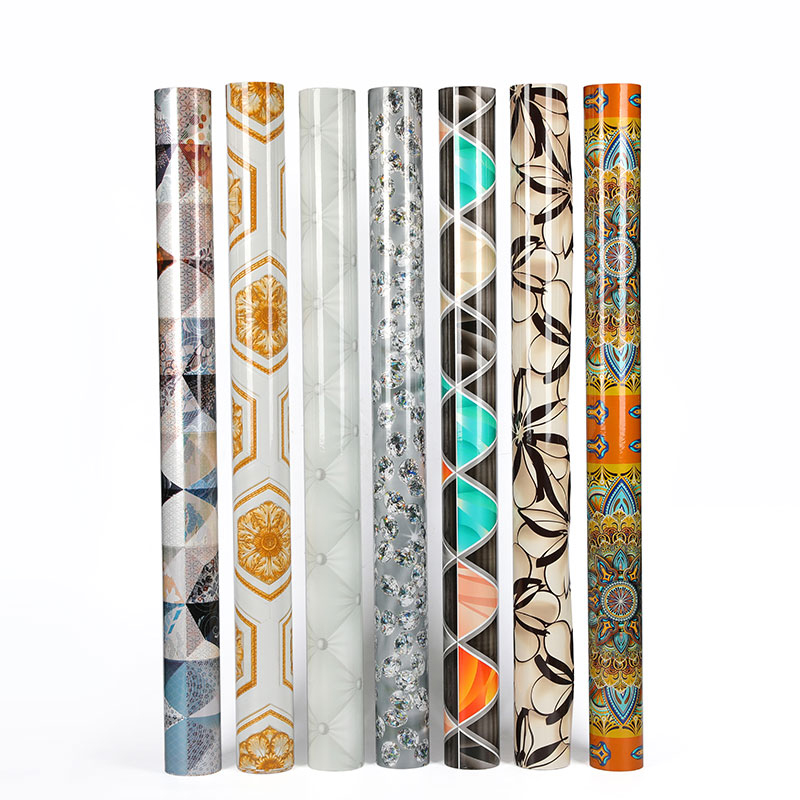
Glass is a common application, provided the film is formulated to bond to a non-porous, low-surface-energy substrate rather than the drywall-oriented adhesives used for wall film. A glass adhesive film with decorative patterning is built for that surface energy difference, giving privacy or decorative effects on windows and partitions without etching or sandblasting.
Tile and flooring applications push the material's water resistance and abrasion tolerance harder than any wall installation does. Wear-resistant tile stickers sold by the roll are formulated to survive splashback and cleaning chemicals in kitchens and bathrooms, while dedicated self-adhesive vinyl flooring is built thicker and rated for foot traffic, spills, and repeated mopping — a different performance tier from decorative wall or furniture film even though the underlying chemistry is related.
Key Selection Criteria for Buyers
Once finish and general application are decided, the real differentiation between suppliers shows up in a handful of technical specifications that are easy to overlook on a product page:
- Film and adhesive thickness — reported separately, since a thicker film does not always mean a stronger bond
- Peel strength and adhesive type — acrylic for long-term or outdoor use, rubber-based for short-term indoor decoration
- Moisture and stain resistance — critical for kitchens, bathrooms, and flooring, less so for a bedroom accent wall
- UV and colorfastness rating — relevant for anything near a window or exposed to direct sunlight
- VOC and formaldehyde compliance — increasingly requested by importers shipping into the EU and North America
- Batch-to-batch color consistency — matters most on large orders where multiple rolls will be installed side by side
For bulk or export orders, that last point deserves more attention than it usually gets. A single roll can look perfect in isolation, but color drift between production batches becomes obvious the moment two rolls are installed on adjoining walls or floor sections.
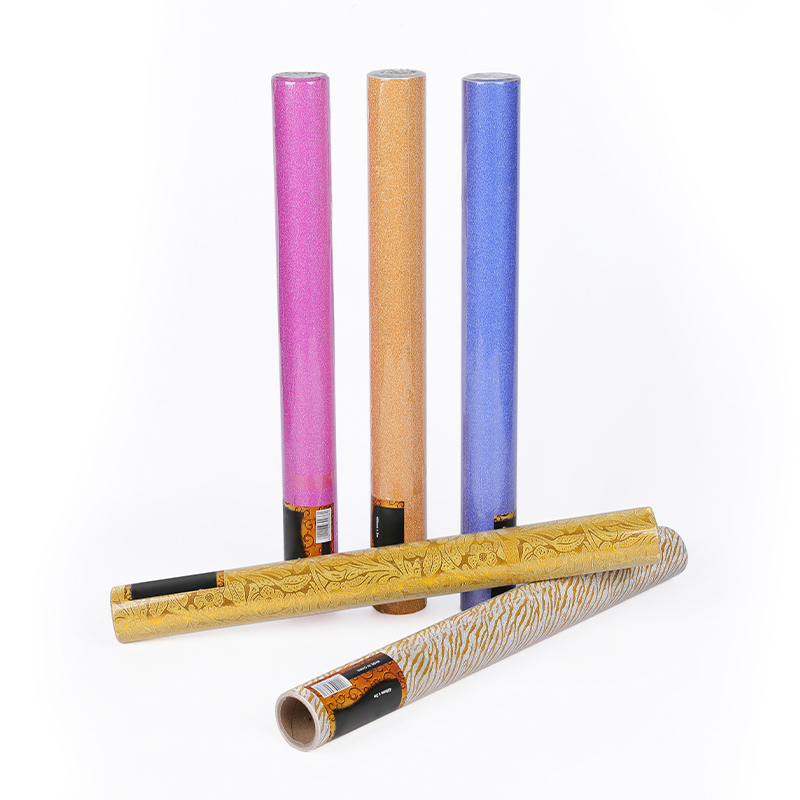
Installation and Handling Best Practices
Surface preparation accounts for more installation failures than the film itself. Substrates should be clean, dry, and free of grease, with moisture content below roughly 8 percent for porous materials like drywall or MDF — applying film over a damp or dusty surface is the single most common cause of early edge lifting and bubbling.
Application temperature matters more than most installers expect. Most PVC self-adhesive films bond best between 18°C and 25°C; below that range the adhesive stiffens and grips poorly, and above it the adhesive can flow too fast, trapping air before it can be squeegeed out. A felt-edge squeegee, applied from the center outward, pushes air toward the edges rather than trapping it in pockets, and controlled heat — typically 40°C to 60°C from a heat gun — helps the film conform around corners and curved edges without stretching the print pattern out of shape.
Removal behavior is worth testing before a full installation, particularly on painted walls. A short adhesion test on an inconspicuous patch confirms whether the film will release cleanly later, which matters most for rental properties or any surface where the underlying finish needs to stay intact.
 Previous