 English
 中文简体
中文简体 عربى
عربى
News
Content
- 1 PVC Adhesive Vinyl vs. PVC Glue: Clearing Up the Terms
- 2 The Three Layers Behind PVC Adhesive Vinyl
- 3 Why PVC Specifically Works So Well for This
- 4 Thickness and Weight: Reading the Spec Sheet
- 5 Permanent, Removable, and Repositionable Adhesive Systems
- 6 Matching Finish to Application
- 7 Real-World Applications Across Surfaces
- 8 Sourcing PVC Adhesive Vinyl at Scale
PVC Adhesive Vinyl vs. PVC Glue: Clearing Up the Terms
Search for "PVC adhesive vinyl" and two very different product categories show up side by side. One is a tube of liquid cement — sold under names like liquid PVC or vinyl repair glue — meant to weld cracked pool liners or window frames back together. The other, and the one this guide covers, is a roll of thin PVC film with a pressure-sensitive adhesive already coated on the back, ready to be peeled and stuck onto a surface with no glue bottle involved at all.
The confusion is understandable, since both products share the word "PVC" and both involve adhesion in some form. But the difference matters for anyone actually shopping: if you need to repair a torn vinyl seam, you want a chemical cement. If you need a decorative or functional surface covering — for a wall, a cabinet door, a sheet of glass, or a section of flooring — you want a self-adhesive PVC vinyl film, and everything below is about that second category.
The Three Layers Behind PVC Adhesive Vinyl
A roll of PVC adhesive vinyl is a laminate, not a single sheet. The top layer is the PVC film itself — the part that carries color, print, or texture. Underneath it sits a pressure-sensitive adhesive coating, applied at a controlled weight so it bonds evenly across the whole roll rather than in patches. A release liner, usually silicone-treated kraft paper or a PET film, protects that adhesive during storage and shipping and gets peeled away right before installation.
What separates a well-made roll from a poorly made one usually comes down to how evenly those three layers were laminated together. Uneven adhesive coating shows up later as patches that bond too weakly at the edges while gripping too hard in the center, which is exactly the combination that produces bubbling during installation and lifting months afterward. This is why coating uniformity, not just raw material cost, tends to separate manufacturers in this space.
Why PVC Specifically Works So Well for This
Polyvinyl chloride was not the obvious first choice for adhesive-backed film — polyethylene and polyester films exist too — but PVC won out for a combination of reasons that are more chemical than aesthetic. As a material class, PVC is valued for its combination of chemical resistance, inherent flame retardancy, and the fact that it can be formulated anywhere along a spectrum from rigid to highly flexible depending on how much plasticizer is blended in during production. That flexibility range is what makes it possible to produce a film that stays soft and conformable enough to wrap around a door edge, while a completely different PVC formulation is rigid enough to be extruded into pipe.
For adhesive vinyl specifically, the plasticized, flexible grade of PVC is what gets used. It takes gravure printing well, holds fine embossed detail, resists most household chemicals and cleaning agents, and does not become brittle at typical indoor temperatures the way some thinner alternative films can. None of that happens by accident — it is a direct result of choosing PVC's chemistry over a cheaper but less chemically resistant base film. A full PVC self-adhesive foil and wall sticker range shows how far that base chemistry gets stretched across different finishes and thicknesses within a single product family.
Thickness and Weight: Reading the Spec Sheet
Thickness is usually quoted in microns, and interior decorative grades of PVC adhesive vinyl generally fall somewhere between 100 and 200 microns for the film layer alone. A thinner film, closer to 100 microns, is lighter, easier to wrap around tight corners, and cheaper per roll — but it is also more prone to showing surface imperfections underneath it once applied. A heavier film in the 150 to 200 micron range hides substrate flaws better and resists puncture and scuffing, which matters more on furniture and cabinet fronts that get handled daily.
Adhesive coating weight is a separate number, usually reported in grams per square meter, and it is worth asking about even when a supplier does not volunteer it. Two rolls with identical film thickness can have very different bond strength depending on how much adhesive was actually coated onto the back — a detail that rarely shows up in a photo but shows up quickly during installation on a textured or slightly uneven wall.
- 100–130 micron film — lightweight decorative use, short-to-mid-term wall or furniture accents
- 140–180 micron film — general-purpose interior use, cabinet doors, standard wall coverage
- 180+ micron film — high-traffic surfaces, tabletops, areas needing extra puncture resistance
Permanent, Removable, and Repositionable Adhesive Systems
Not all PVC adhesive vinyl is meant to stay in place forever, and the adhesive chemistry is what determines that. Permanent-grade adhesive, typically an acrylic pressure-sensitive formulation, is engineered to build bond strength over the first 24 to 72 hours after application and resist high heat and UV exposure over years of service — the right choice for kitchens, bathrooms, or any surface that will not be redecorated soon. Removable adhesive is deliberately formulated with lower initial tack so it can be peeled away later without stripping paint or leaving residue, which is the standard choice for rental properties and temporary commercial displays.
Repositionable adhesive sits somewhere in between: strong enough to hold the film flat during handling and initial placement, but forgiving enough to allow lifting and realigning before final pressure is applied — a feature that matters most for large single-panel installations where getting the alignment right the first time is difficult by hand.
Peel strength is not something to take on faith from marketing copy alone. ASTM D3330 lays out the standardized test methods used to measure how much force is required to peel a pressure-sensitive tape or film from a test panel at a controlled angle and speed, and asking a supplier which method and substrate their peel-strength figures were tested against is a reasonable way to compare quoted numbers across different rolls rather than taking a single unverified figure at face value.
Matching Finish to Application
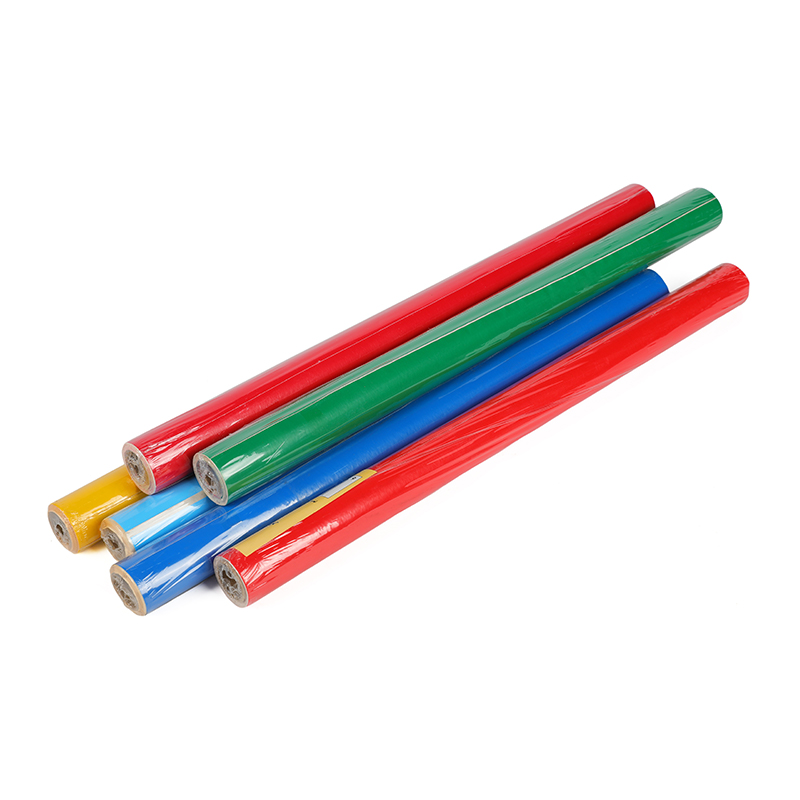
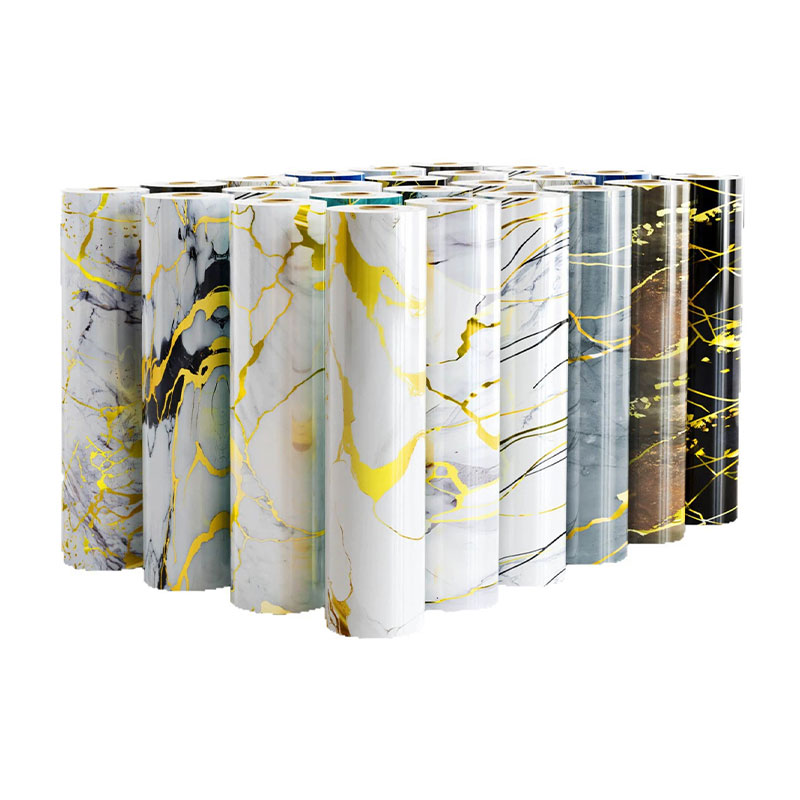
Finish selection is where most buyers start, but it works better as a second-stage decision once thickness and adhesive type are settled, since not every finish is available across every thickness or adhesive grade. Solid, flat colors are the simplest option and the easiest to keep consistent from batch to batch, since there is no print registration to align — a solid-color self-adhesive foil covers that end of the spectrum well for buyers who want a uniform look across a large order.
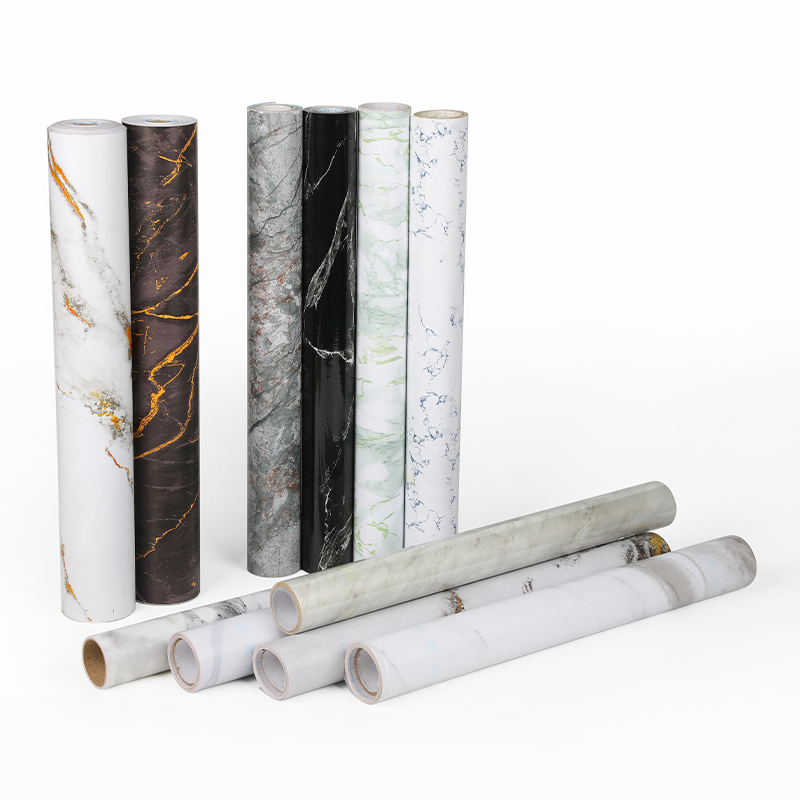
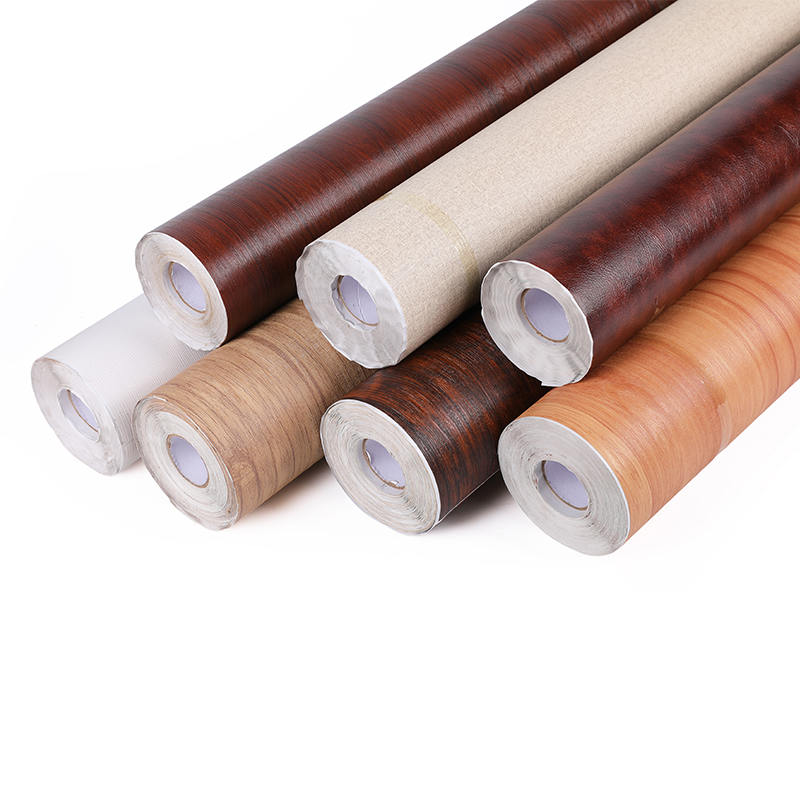
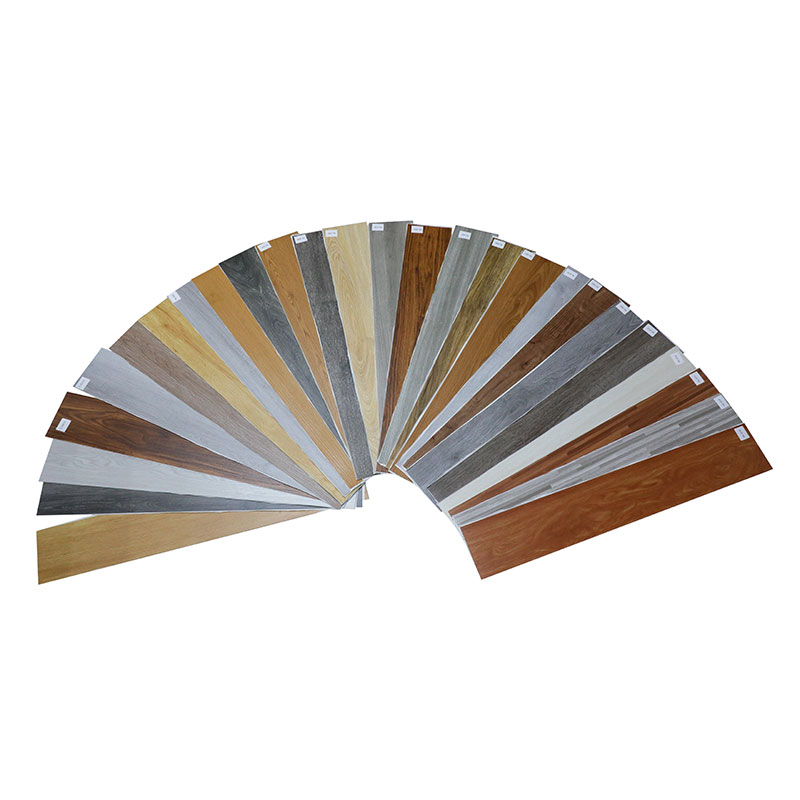
Printed and embossed finishes carry more visual complexity and, correspondingly, more manufacturing steps. Wood grain patterns rely on synchronized embossing, where the texture rollers are mechanically aligned to the printed grain lines so the surface relief matches the visual pattern rather than sitting slightly offset from it — a mismatch that is subtle in a photo but obvious in person. A high-gloss wood grain PVC film with scratch-resistant coating demonstrates how that alignment, paired with a protective top layer, holds up under daily handling on cabinet fronts and furniture panels.
Real-World Applications Across Surfaces
Walls and furniture remain the most common destination for PVC adhesive vinyl, largely because both surfaces are flat, indoor, and forgiving of standard interior-grade adhesive. Refacing a worn door or cabinet front is a particularly common use case, since it avoids the cost and downtime of full replacement — an easy-replacement PVC film built for old doors is formulated with enough flexibility to wrap rounded edges and curved trim without cracking, which flat wall film is not always designed to do.
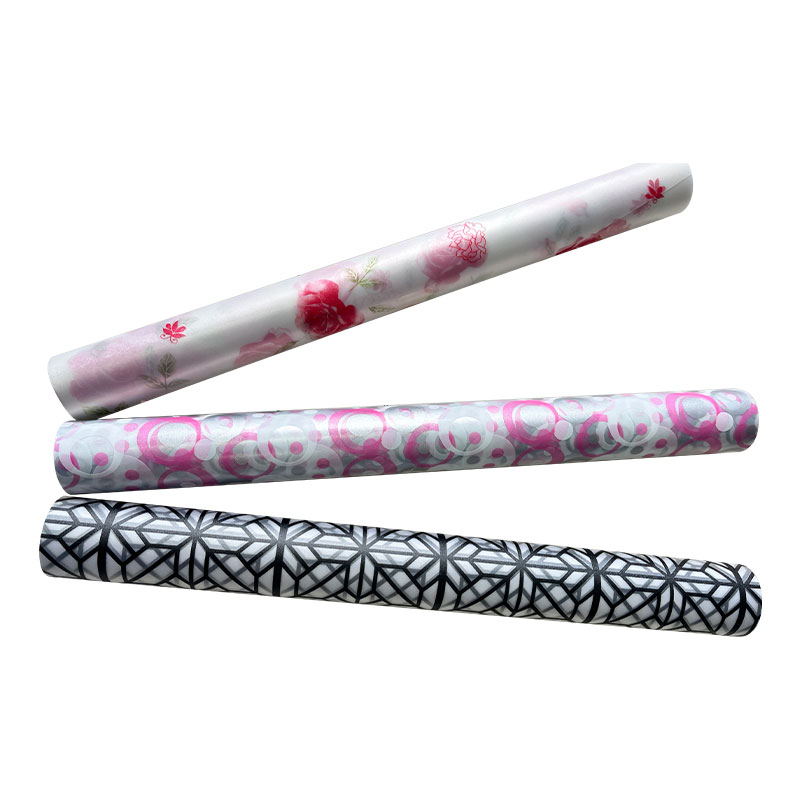
Glass requires a different adhesive formulation entirely, since glass is a low-surface-energy, non-porous substrate that many wall-oriented adhesives do not bond to as reliably. A glass adhesive film with decorative patterning is built around that surface-energy difference, making it suitable for windows, shower partitions, and glass doors where a wall-grade adhesive would eventually fail.
Tile and flooring push the same base chemistry into a much harder-working environment — constant moisture, cleaning chemicals, and foot traffic. Wear-resistant tile stickers sold by the roll are formulated for that splashback-heavy environment in kitchens and bathrooms, while dedicated self-adhesive vinyl flooring is built at a heavier gauge specifically to withstand foot traffic and repeated mopping, a performance tier above what decorative wall or furniture film is designed to handle.
Sourcing PVC Adhesive Vinyl at Scale
Buying a single roll for a home project and sourcing PVC adhesive vinyl for resale or a large-scale installation are different exercises, and the questions worth asking shift accordingly. Minimum order quantity, available roll widths, and turnaround time on color-matched or custom-printed runs tend to matter more at scale than they do for a one-off purchase, since they determine whether a supplier can actually fit a project's timeline.
Batch-to-batch color consistency deserves specific attention on any order large enough to be installed across multiple rolls. A shade that looks identical on a single sample swatch can drift slightly between production runs, and that drift only becomes visible once two rolls are installed side by side on the same wall or floor — by which point reordering to fix it is expensive and slow. Requesting a physical sample before committing to a full production run remains the most reliable way to confirm gloss level, texture depth, and adhesive tack in person, since none of those three properties translate perfectly through a spec sheet or a product photo.
Export packaging and documentation are worth clarifying early as well, particularly for buyers shipping into markets with specific VOC, formaldehyde, or fire-rating requirements. A supplier able to speak clearly to roll packaging for long-distance transit, humidity control, and destination-market compliance documentation is generally the one that saves a buyer from a costly reorder somewhere down the line.
 Previous