 English
 中文简体
中文简体 عربى
عربى
News
Content
- 1 What Is PVC Self Adhesive Foil, and How Is It Different From Contact Paper
- 2 Thickness, Adhesive Type, and Other Specs That Actually Matter
- 3 Matching the Foil to the Application
- 4 Installation and Common Mistakes to Avoid
- 5 Compliance and Safety Certifications Buyers Should Ask For
- 6 Choosing a Reliable Supplier
What Is PVC Self Adhesive Foil, and How Is It Different From Contact Paper
Grab a strip of ordinary contact paper and a strip of PVC self-adhesive foil, hold them side by side, and you'll feel the difference before you even glance at a spec sheet. Contact paper is paper at its core, sometimes with a thin vinyl coating on top. PVC self-adhesive foil isn't. It's solid polymer all the way through, with the pattern printed or pressed straight into that plastic rather than glued onto a paper backing.
The build matters. Peel back a roll and there are usually four layers stacked together: a printed or solid-color PVC face, often with an embossed texture worked into it, a coating of pressure-sensitive adhesive underneath, and a silicone liner that comes off right before you stick it down. Since the base is PVC and not paper, the finished sheet shrugs off moisture, steam, and most kitchen chemicals. It won't swell at the edges or fade the way a paper product eventually does.
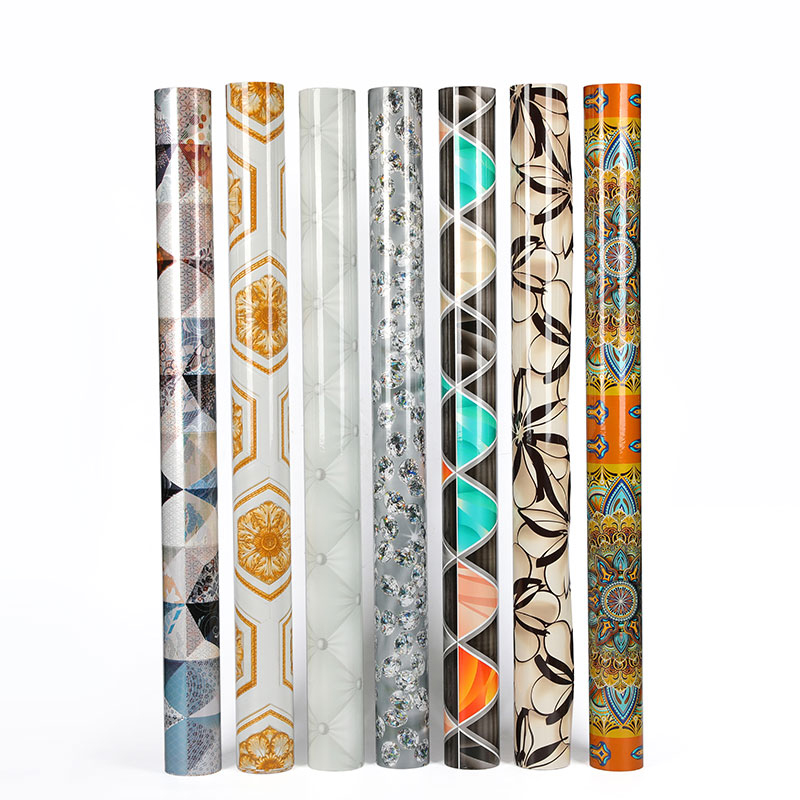
That's the reason you see it on kitchen cabinets, bathroom vanities, and countertops - surfaces where anything paper-based tends to give up within a year. Buyers who order in volume, whether they're running a furniture line, fitting out retail stores, or managing renovation projects, are rarely picking one SKU. They're usually working through a supplier's whole range of PVC self-adhesive foil and wall sticker products, because the color options, textures, and gloss levels all come from the same base film and the same production run.
One thing that trips people up: catalogs don't always use consistent naming. "PVC self-adhesive foil," "self-adhesive PVC film," and "PVC wall sticker" frequently point at the exact same product, just marketed differently depending on whether the seller has furniture wrapping, wall decor, or general renovation in mind. What doesn't change is the PVC-plus-adhesive layering. So when you're comparing quotes from different factories, it pays to ask about base material and layer count directly instead of trusting the product name on its own.
Thickness, Adhesive Type, and Other Specs That Actually Matter
Two things decide most of the real performance differences between rolls: how thick the film is, and what adhesive sits underneath it.
Commercial-grade PVC self-adhesive foil usually falls somewhere between 0.1mm and 0.5mm, or 100 to 500 microns if that's how your supplier quotes it. On the thinner end, say 100 to 150 microns, the film wraps curved MDF edges and small trim pieces without much fuss. It just doesn't hide flaws as well. Push into the 250 to 400 micron range and you get something that holds up on flat, high-traffic surfaces - tabletops, cabinet doors - where a bit of heft and dent resistance actually counts for something.
| Thickness Range | Typical Surface | Notes |
|---|---|---|
| 100–150 microns | Curved MDF edges, small moldings | Conforms easily, shows flaws sooner |
| 150–250 microns | Cabinet doors, furniture panels | Reasonable balance overall |
| 250–400 microns | Countertops, high-traffic flat panels | Holds up best against dents |
Adhesive chemistry gets less attention than it deserves in most supplier listings, which is a shame, because it's often the bigger factor in how long an installation actually lasts. Acrylic pressure-sensitive adhesives cope with UV and humidity swings far better than rubber-based alternatives, which have a habit of yellowing and losing grip after a couple of years in a sunny room. If you're specifying for painted interior walls, initial tack around 8 to 12N/25mm tends to work fine. For rentals or anything temporary, ask for a lower-tack, removable formula instead - you'll want it to come off clean later without tearing the paint underneath.

Weight per square meter and embossing depth round out the technical picture, though neither tells you much on its own. A data sheet that only lists thickness isn't really giving you enough to compare products fairly. Ask for thickness, adhesive type, and tack value together. A thick film on a weak, rubber-based adhesive can still underperform a thinner one built on a decent acrylic glue.
Surface finish is its own variable, separate from the printed pattern. The same wood-grain or marble design might ship matte, high-gloss, super-matte, or soft-touch, and that choice changes both how it looks and how much upkeep it needs. Matte and soft-touch surfaces are more forgiving - they hide light scratches and fingerprints reasonably well, which helps on furniture that gets touched all day. High-gloss looks sharper in a showroom photo, but it shows dust, drag marks, and installation slip-ups far more easily.
Matching the Foil to the Application
Different rooms call for different combinations of thickness, gloss, and pattern, and this is where a lot of buying mistakes actually happen.
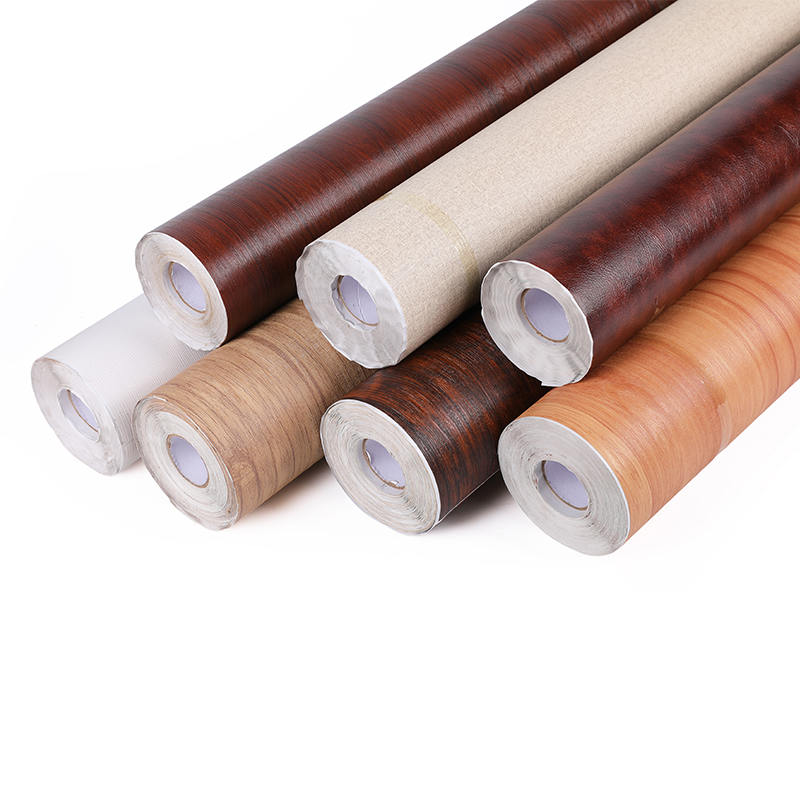
Kitchen cabinets, countertops, anything that gets wiped down constantly - a medium-thickness film, roughly 200 to 300 microns, tends to hold up best here. Wood-grain with textured embossing is a popular pick for this kind of surface, mostly because the texture hides fingerprints and small scuffs better than something flat and glossy. A wood-grain foil with 3D embossed back coating was built with exactly this in mind, where grain depth and a durable backing matter more than shine.
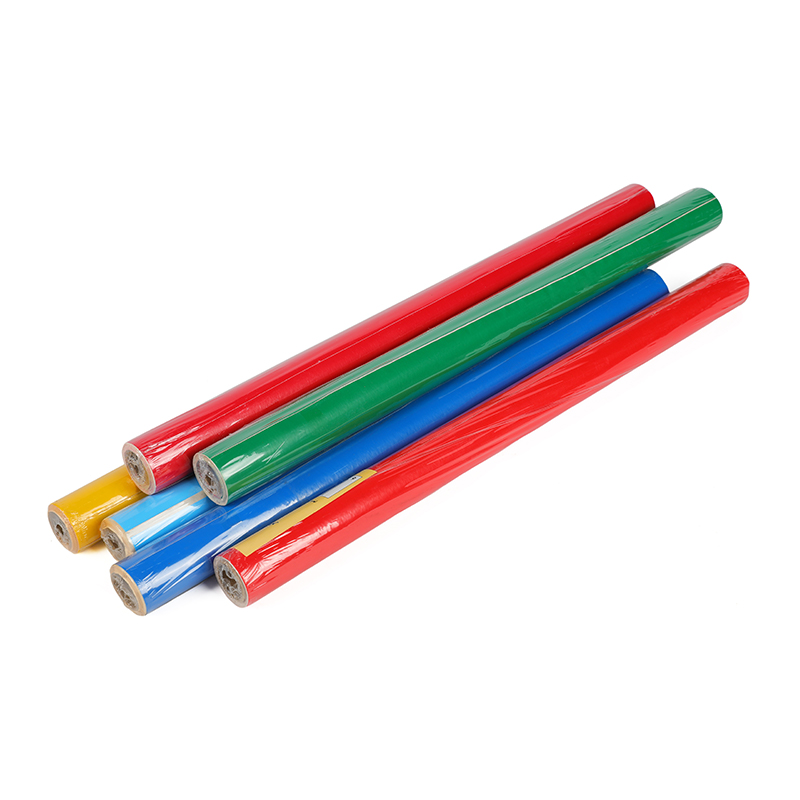
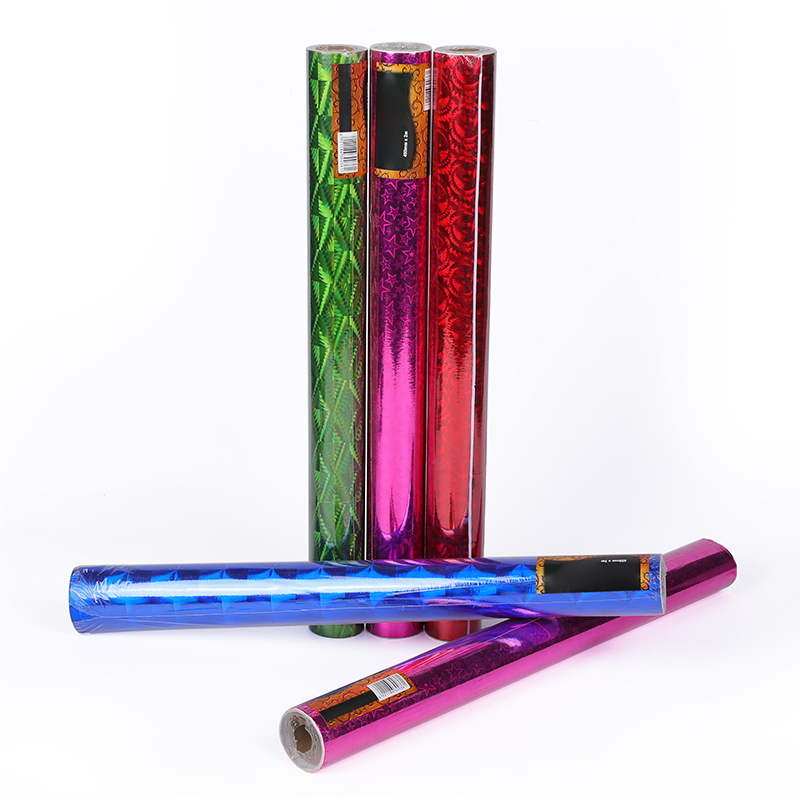
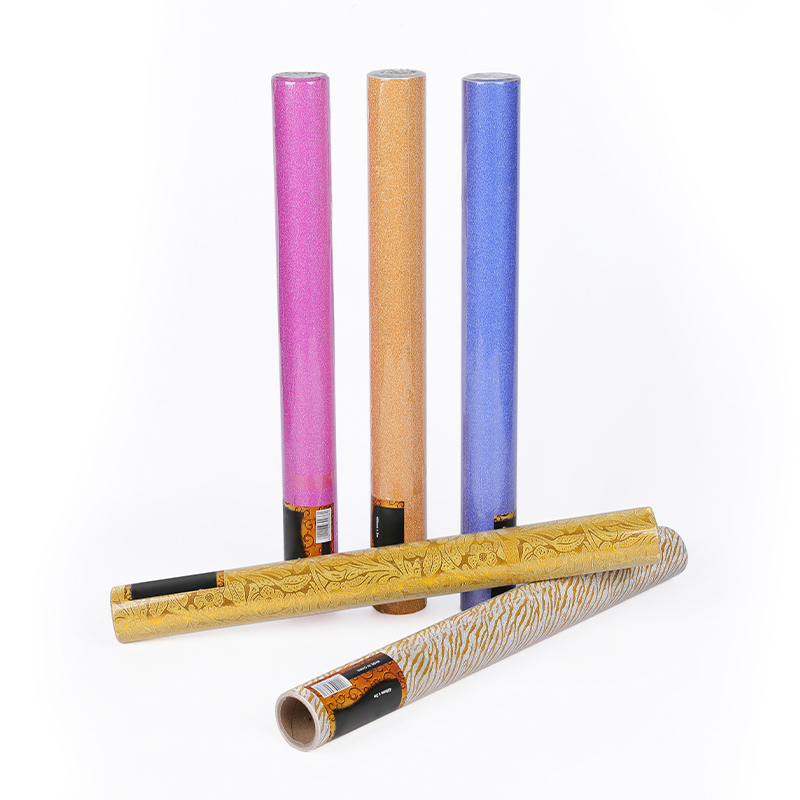
Walls are more forgiving on thickness since they don't take the same physical beating, which opens things up for finishes that wouldn't last on a countertop. Holographic foil and glitter-finish foil both show up a lot on feature walls, retail displays, hotel lobbies - anywhere the point is visual impact rather than durability. If you're covering a large wall run and don't want to fight with seam-matching across a busy pattern, solid-color foil is the safer bet.
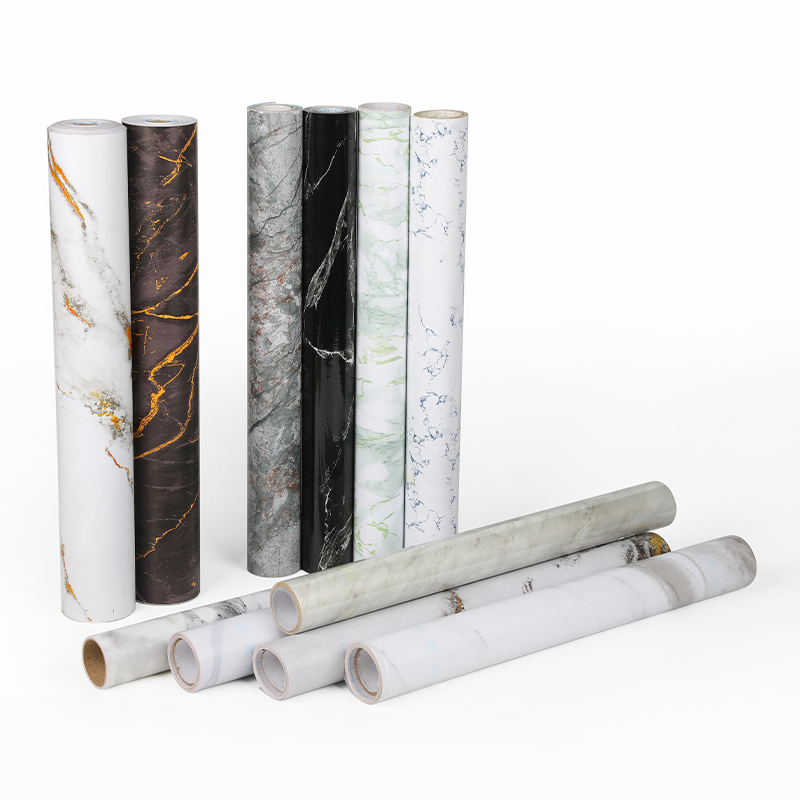
Countertops and tabletops are a different story again, with cleaning chemicals, hot pans, and the occasional citrus spill to deal with. A chemical- and corrosion-resistant marble-pattern foil is formulated specifically to handle the alcohol-based cleaners and acidic spills that standard decorative film was never rated for.
Doors and bigger flat panels generally need the heavier end of the thickness range - partly so they survive shipping without denting, partly because a thin film will telegraph every flaw in the substrate underneath. If a single project spans several of these categories, it's usually smarter to source everything from one supplier's coordinated line rather than piecing specs together across vendors. Color and texture consistency matters a lot once the rolls are actually sitting next to each other on a wall or a row of cabinets.
Installation and Common Mistakes to Avoid
How something gets installed affects the final look more than the spec sheet ever will.
Surface prep is the step people skip when they're in a hurry, and it shows. The substrate needs to be clean, dry, and free of dust or grease before the liner comes off. Any residue left underneath will telegraph through as a bump or a shadow, especially under a glossy finish where light catches every imperfection. A high-gloss self-adhesive foil shows flaws faster than a matte or embossed film does, so prep matters even more when that's what's going on the wall.
A bit of heat helps. Something in the 40 to 60°C range from a heat gun or even a hair dryer loosens the film enough to wrap curved edges and rounded corners without cracking. Too much heat too fast, though, and you'll stretch the film unevenly and warp the pattern.
On bigger panels, work the air out from the center outward rather than from one edge in. A felt-edge squeegee is worth the extra cost here - a stiff plastic one will leave drag marks on anything with gloss.
A handful of conditions cause problems no matter how good the product is: sticking foil onto a wall that was painted too recently, working in a room under about 15°C where the adhesive won't activate properly, or skipping the acclimation step entirely. Let rolls sit in the installation room for at least a day before use so the material settles into the room's temperature and humidity first.
Compliance and Safety Certifications Buyers Should Ask For
Anyone sourcing PVC self-adhesive foil for the EU, UK, or similar markets needs paperwork, not just a supplier telling them the product is "eco-friendly."
REACH, officially Regulation (EC) No 1907/2006, is the EU rulebook covering how chemical substances in manufactured goods get registered, evaluated, and restricted, PVC film included. It's also what set up the European Chemicals Agency in the first place. If a supplier says they're REACH compliant, ask them to actually produce a chemical safety report or test summary. A certificate number by itself doesn't prove much. Buyers can check the regulation's scope directly on the European Chemicals Agency's REACH legislation page.
Beyond REACH, there are three documents worth chasing before a bulk order goes out: a third-party test report on heavy-metal and phthalate limits, a phthalate-free statement if the film is going anywhere near living spaces or kids' furniture, and a fire-retardancy rating if local codes call for one on commercial jobs. None of this guarantees the installation will go smoothly. But if a supplier can't produce any of it, that's worth noticing before committing to a large order.
Choosing a Reliable Supplier
Specs and certificates narrow the list. Production capability decides whether a supplier can actually deliver at the volume and consistency a project needs.
How many production lines a factory runs, and what they can output daily, says a lot about whether they'll hit delivery windows during a busy season. A factory doing gravure printing, laminating, coating, and embossing in-house usually has tighter control over color matching between runs than one farming any of that out, which starts to matter once an order gets split across several purchase orders over a few months.
Sample policy tells you something too. A supplier confident in what they're selling will usually get samples to you before asking for a bulk commitment, because color, texture, and adhesive feel just don't come through in a product photo. And pay attention to how fast they answer technical questions, not sales questions - that's usually the clearest early sign of how they'll handle a problem once the order has already shipped.
When comparing several factories side by side, ask each one for the same paperwork: thickness tolerance, adhesive tack data, compliance reports, sample lead time. That's a fairer comparison than picking on price alone.
MOQs and shipping know-how tend to separate real manufacturers from trading middlemen. A factory that quotes MOQs based on actual roll length, rather than some round number pulled out of thin air, and can talk specifically about container loading and port distance, is usually further along in export experience than one that gets vague when you ask. None of that shows up in a product photo, but it shapes the whole ordering experience just as much as the material does.
 Previous