 English
 中文简体
中文简体 عربى
عربى
News
Content
- 1 Self-Adhesive Foil Isn't One Thing. Here's What People Actually Mean By It
- 2 What's Actually Inside a Roll of PVC Self-Adhesive Foil
- 3 How It's Made: From PVC Resin to Finished Roll
- 4 Where Each Finish Type Gets Used
- 5 Durability Factors Worth Understanding
- 6 Where This Fits in the Broader Decorative Film Category
Self-Adhesive Foil Isn't One Thing. Here's What People Actually Mean By It
Search "self-adhesive foil" and the results won't agree with each other. Some point to craft supplies. Some point to tape and packaging. Only a slice of the results cover what most furniture and interior companies actually mean when they say it. Same two words, three industries that barely talk to each other.
- Craft and transfer foil. The stuff people cut with a Cricut or press onto scrapbook paper with heat. Thin, metallic or colored, sold in sheets or small rolls. Not food-safe. Not going anywhere near a wall or a cabinet door.
- Foil tape and label foil. Narrow adhesive strips for signage, magnets, sealing packaging, sometimes duct insulation. Nobody buys this for how it looks - it just needs to stick and hold, usually sold by the strip rather than by area.
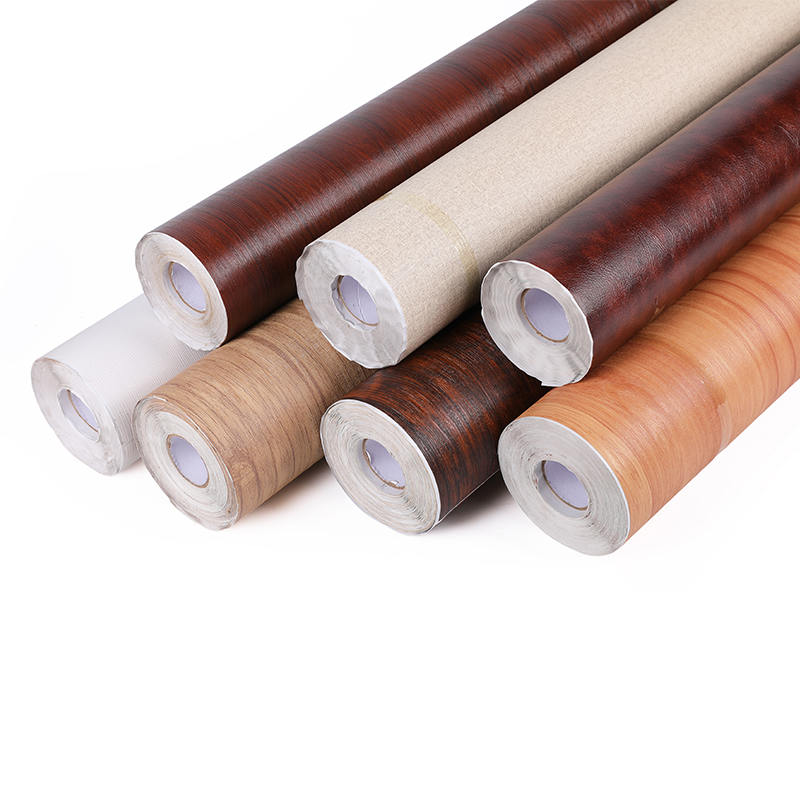
- PVC self-adhesive decorative foil. A solid polymer film, printed or embossed, with adhesive on the back. Goes on furniture, cabinets, walls, doors. If a furniture factory or interior contractor asks for "self-adhesive foil," this is almost always what they mean, and it's what the rest of this article is about.
Mixing these up costs real time in a sourcing conversation, not just a wasted search. Ask a craft foil supplier for a quote and they'll talk sheet count and heat-transfer temperature. Ask a PVC foil manufacturer the same question and the reply comes back in microns, linear meters, and adhesive tack. Two completely different conversations wearing the same name.
One quick way to tell which one you're actually talking to: if a quote mentions vacuum press or membrane press compatibility, that's a decorative PVC foil supplier. Craft foil suppliers never bring that up. It has nothing to do with what they sell.
What's Actually Inside a Roll of PVC Self-Adhesive Foil
It looks like one sheet when it's rolled up on a shelf. It isn't. Peel one apart mentally and there are four layers, each doing a different job.
- Surface layer. The part you actually see. Printed pattern or solid color, sometimes with a gloss, matte, or textured coating over the top.
- Embossed texture. Not on every product, but common enough. A pattern gets pressed into the surface after printing so wood grain or stone effects have real depth instead of just looking flat and printed on.
- Adhesive coating. Pressure-sensitive, usually acrylic-based, because it handles UV exposure and humidity swings better than a rubber-based glue would.
- Release liner. Silicone-coated paper that keeps the adhesive protected until installation, then gets peeled off and tossed.
Thickness for the whole stack usually lands somewhere between 0.12mm and 0.6mm, and standard rolls tend to come in widths around 1260mm, 1400mm, or 1430mm. Almost none of that thickness is adhesive. The glue layer stays thin no matter how heavy the finished roll feels in your hand - it's really the PVC film doing all the work.
Not every roll gets the embossed layer, either. Flat, high-gloss finishes skip it and go straight from printing to adhesive, which is one reason gloss tends to run a little cheaper than a heavily textured wood-grain product. Embossing adds machine time and its own quality check, and that cost has to land somewhere. Usually the price tag.

How It's Made: From PVC Resin to Finished Roll
The production process behind PVC self-adhesive foil is fairly linear, though the equipment involved is specialized enough that not every manufacturer runs every step in-house.
- Calendering. PVC resin, plasticizers, and stabilizers get heated and rolled into a continuous flat film at a controlled, uniform thickness.
- Printing. The base film runs through gravure printing rollers, which lay down the pattern - wood grain, marble, solid color, or a custom design - in multiple color passes.
- Embossing. A heated engraved roller presses texture into the printed surface, syncing the physical grain with the printed pattern so the two line up visually.
- Coating. Adhesive gets applied across the back of the film in a controlled, even layer - this step matters more than it might seem, since inconsistent coating weight causes bubbling and peel-strength problems later during installation.
- Laminating the release liner. The silicone liner gets pressed onto the adhesive side, and the finished material gets wound onto rolls and cut to standard widths.
Quality control usually happens at two points: right after embossing, to check pattern depth and clarity, and right after coating, to check adhesive weight consistency. A factory running gravure printing, laminating, coating, and embossing all on one site tends to catch problems between these stages faster than one that outsources any single step, simply because there's no handoff between separate facilities where a batch can sit unchecked.
Roll length varies by product line, but 80 to 500 meters per roll is a common commercial range, packaged either loose on a core or palletized for export shipping. Buyers ordering container volumes usually want to know this number early, since it affects how many rolls fit per pallet and how freight gets calculated.
Where Each Finish Type Gets Used
Finish and pattern aren't just cosmetic choices. Different surface treatments end up suited to fairly specific applications, mostly because of how they handle light, wear, and touch. Someone specifying a finish for a hotel lobby feature wall is solving a very different problem than someone specifying one for a kitchen cabinet door that gets touched fifty times a day, even though both might technically be "PVC self-adhesive foil" on a spec sheet.
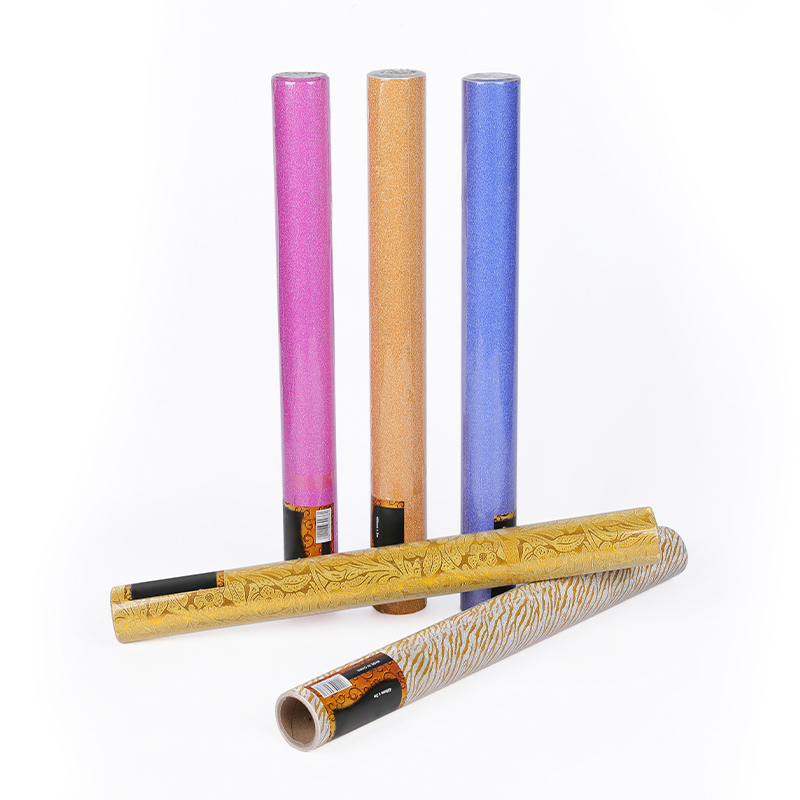
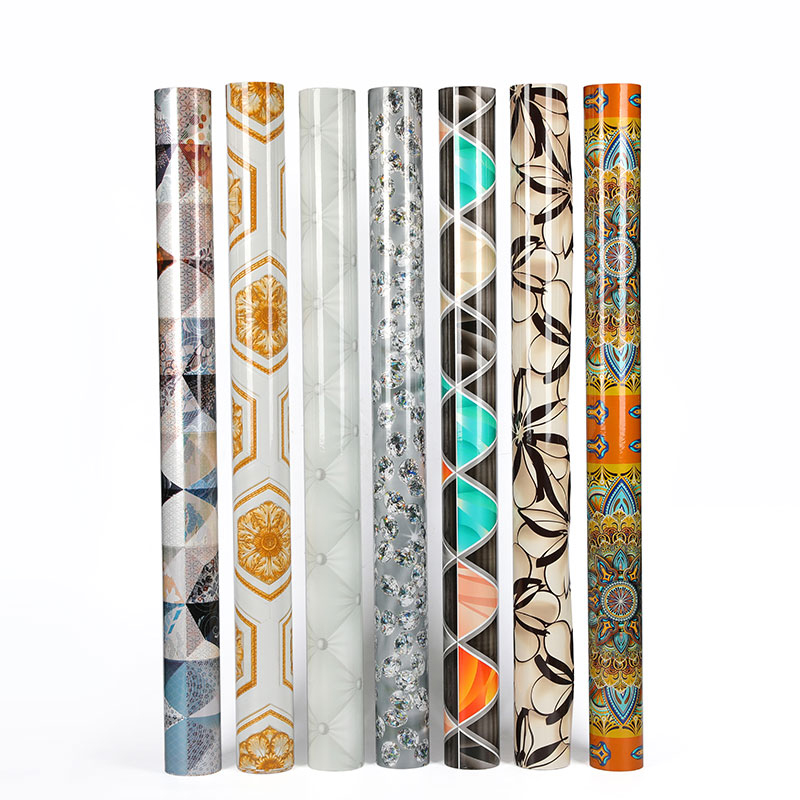
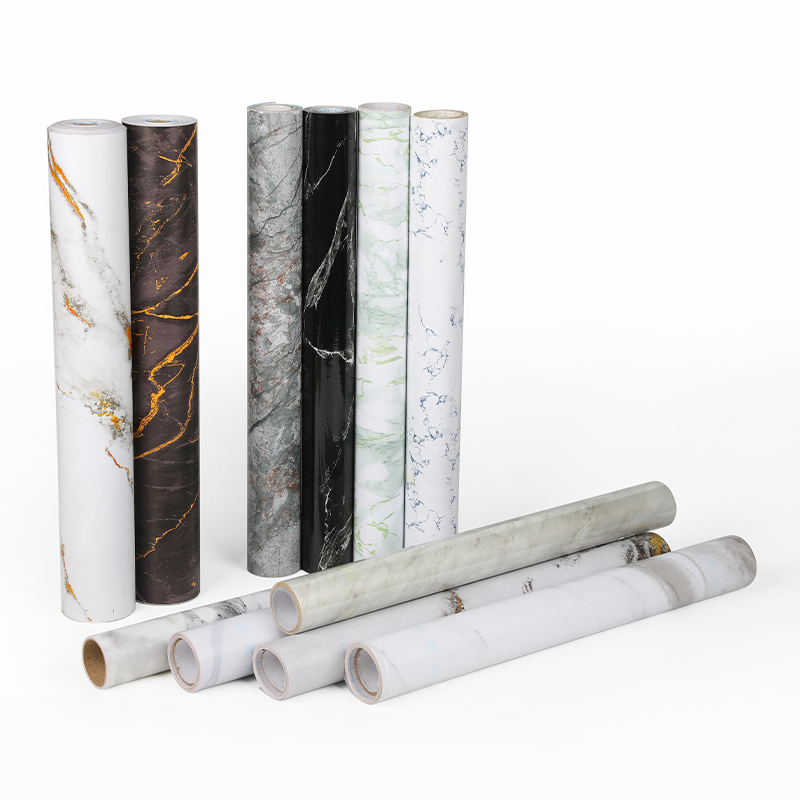
- Printed patterns for everyday surfaces. A modern printed adhesive foil covers most furniture-facing and cabinet applications where a specific pattern or color scheme needs to match an interior design plan.
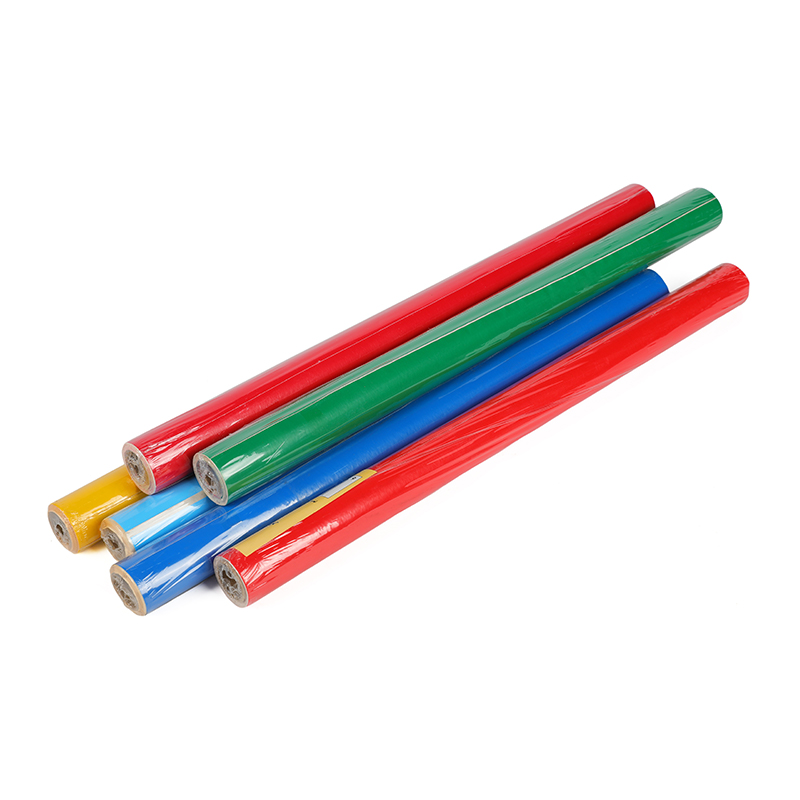
- Solid colors for large, uninterrupted runs. A plain color self-adhesive foil avoids the pattern-matching headaches that come with covering wide wall sections or long runs of cabinetry using a printed roll.
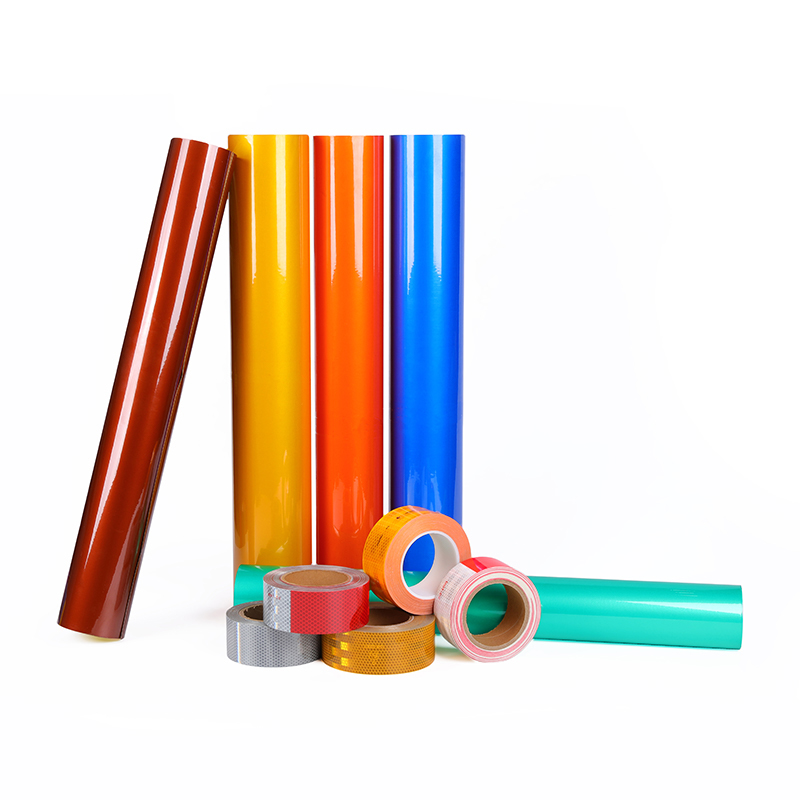
- High-gloss for visual impact. A high-gloss self-adhesive foil reflects light strongly enough to read as "premium" in showrooms and retail displays, though it also shows dust and installation flaws more readily than a matte finish.
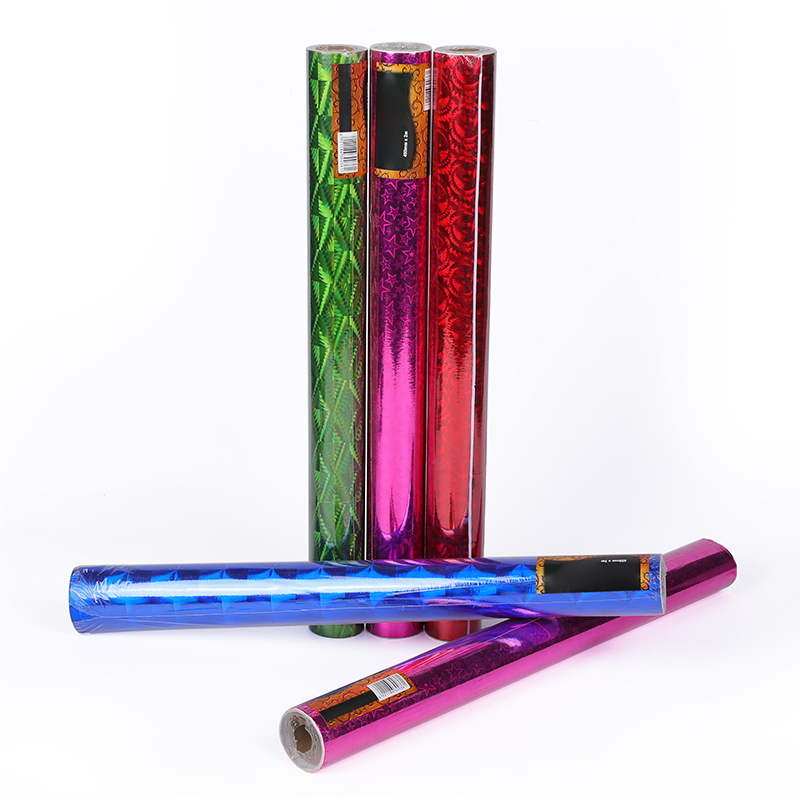
- Holographic and specialty effects for feature surfaces. A holographic self-adhesive foil gets used where visual impact matters more than long-term wear resistance - feature walls, event décor, retail displays that get refreshed periodically.
None of these finishes is objectively "better." The right one depends entirely on where the roll is going and how much daily wear that surface takes.
Durability Factors Worth Understanding
Two rolls can look identical in a product photo and perform very differently once installed. A handful of factors explain most of that gap.
- Adhesive chemistry. Acrylic pressure-sensitive adhesives resist UV and humidity changes far better than rubber-based systems, which tend to yellow and lose grip within a couple of years in sunlit rooms.
- Base film thickness. Thinner films (100-150 microns) conform more easily to curves but show wear sooner. Thicker films (250-400 microns) resist dents and scratches better on flat, high-traffic surfaces.
- Coating consistency. Uneven adhesive application during manufacturing leads to bubbling, edge lifting, and inconsistent peel strength across a single roll - something that's hard to spot until installation is already underway.
- Storage and handling before installation. Rolls stored outside a stable temperature range, or installed before acclimating to room conditions, are more prone to curling and seam misalignment regardless of how well they were manufactured.
- Surface certification. Products intended for the EU or similar regulated markets should come with documentation covering chemical safety, not just a verbal claim of being eco-friendly - this becomes especially relevant for anything going into living spaces or furniture used daily.
A supplier that can speak specifically to these five points, rather than just repeating "high quality" in a product listing, is generally easier to trust with a large order. Vague answers to direct questions about adhesive type or coating process are usually a sign the person answering isn't close enough to the production floor to know the details firsthand.
Where This Fits in the Broader Decorative Film Category
PVC self-adhesive foil sits inside a larger family of decorative film products, and it's not always the right fit on its own. Static cling window films, non-adhesive glass films, and other PVC decorative film products solve similar design problems on surfaces where a permanent adhesive isn't practical, like rented spaces or glass that needs to stay removable.
Choosing between them usually comes down to one question: does the surface need a permanent bond, or does it need to come off cleanly later? Self-adhesive foil answers the first case. The rest of the decorative film category tends to answer the second.
Most projects end up needing more than one type once the full scope is mapped out - permanent foil on kitchen cabinets, removable film on a rented office's glass partitions, maybe a static cling option on a storefront window that changes seasonally. Working from one manufacturer's coordinated product range makes that kind of mixed order far simpler to manage than sourcing each category from a different factory.
 Previous