 English
 中文简体
 عربى

News
Content
Label Glue, Wall Glue: Same Family, Different Jobs
Picture a buyer comparing two quotes for PVC self adhesive wallpaper. One supplier sends a neat datasheet. The numbers look familiar, because they come straight out of label-industry testing. Peel strength, tack, shear. All there.
Fine. But the buyer wonders: if the adhesive is basically a labeling adhesive, does that matter?
It does. A little.
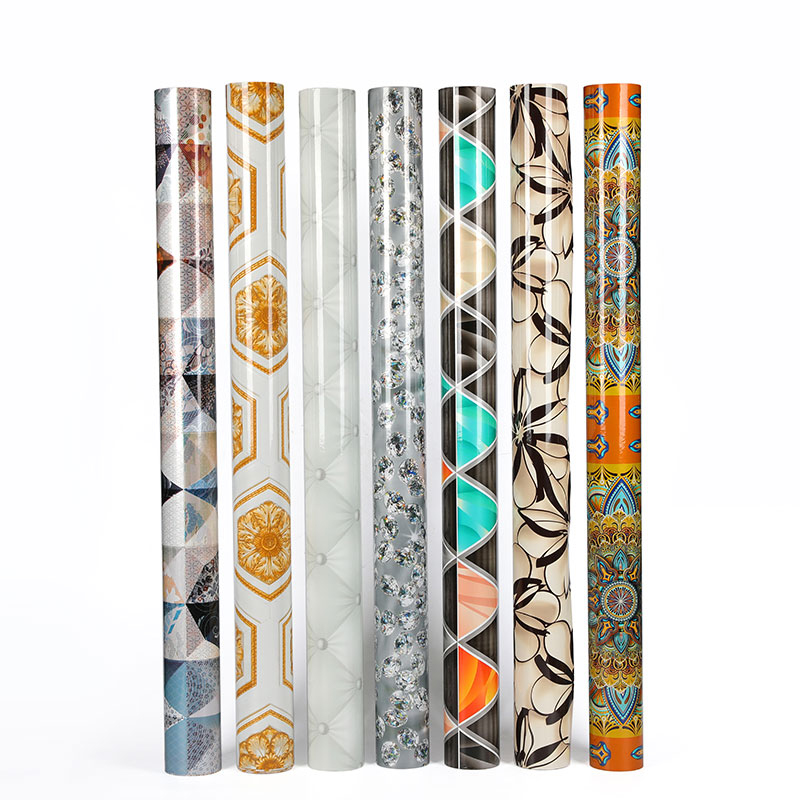
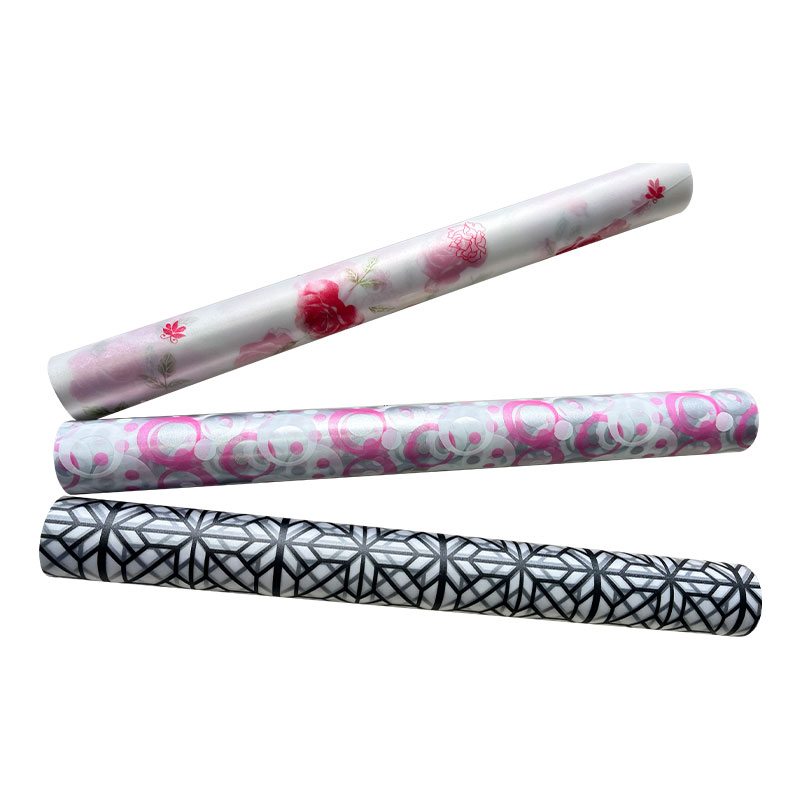
A label and a roll of wallpaper have the same bones: PVC film, pressure-sensitive adhesive, a liner you throw away. The resemblance stops about there. One sits on a bottle, 5 cm wide, applied by a machine in a fraction of a second. The other hangs on a living room wall as a strip three meters tall, pressed on by a person with a squeegee and a bit of hope. You can browse the PVC self-adhesive wallpaper range for walls and furniture to see what the finished product looks like, then come back for the reading-the-spec part.
What the Label World Gets Right
Credit where it's due. Label makers have been measuring adhesives for a long time, and they agreed on standard methods so that one lab's number can be compared with another's. The FINAT technical handbook collects them: peel adhesion at 180 and 90 degrees, loop tack, resistance to shear, and quite a few more.
You don't need the codes. You need the vocabulary:
- Tack
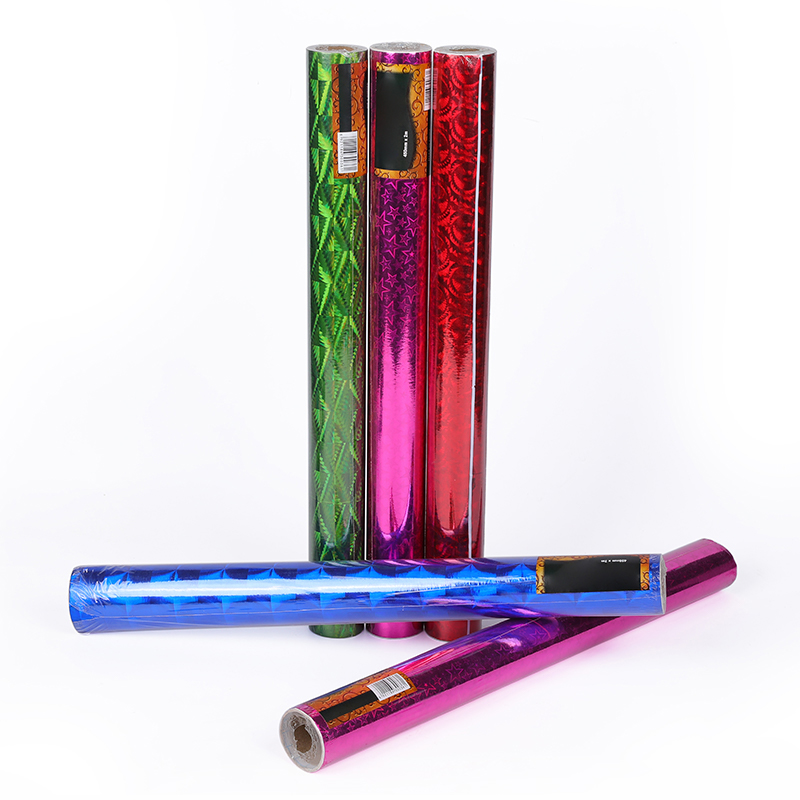
- The first touch. How much the adhesive grabs before you've pressed anything. A glossy sheet like our high-gloss self-adhesive foil is a decent reminder of why this matters while you're lining up an edge.
- Peel
- The force needed to pull the strip off at a fixed angle and speed, usually quoted in newtons per 25 mm of width.
- Dwell time
- How long the adhesive sat on the surface before the test. Easy to overlook. Peel after 20 minutes and peel after 24 hours can differ a lot, because the bond keeps building.
- Shear
- Resistance to sliding. Think of a tall strip with gravity tugging at it all day, every day. Shear decides whether it creeps.
People talk about peel most. For a wall, I'd care about shear nearly as much, and it's the number that's missing from datasheets more often than you'd expect.
A 5 cm Label Against a 3 m Strip
| Typical label | PVC self adhesive wallpaper | |
|---|---|---|
| Area | A few square centimeters | Square meters per strip |
| Surface | Smooth glass, plastic, coated board | Paint, plaster, board; often uneven |
| Who applies it | Usually a machine | A person, sometimes in a hurry |
| How long it stays | Until the product is used or binned | Months to years, and then someone may want it gone |
| What goes wrong | Label falls off | Corners lift, bubbles, paint comes away on removal |
Look at the last row. A dropped label is a small annoyance. A lifted wall strip is a visible job that somebody has to redo.
Moisture complicates things too. Many interior foils use water-based adhesive, which copes well in a dry hallway and less well in a steamy bathroom. Which side of that line your room falls on is covered in where water-based adhesive works and where it falls short on foil.

The Plasticizer Problem Labels Rarely Show
Soft PVC stays bendy because it's loaded with plasticizer. And plasticizer moves. Given time, some of it drifts into the adhesive layer and softens it. The glue didn't get worse. It got diluted from underneath.
How that looks on a wall, roughly:
- Day one. Smooth, flat, looks great.
- A few months in. Nothing visible. The grip is quietly fading.
- Somewhere around month six to ten. One corner lifts. You press it down. It lifts again.
On a small label the same drift might go unnoticed, or just get swapped out with the next print run. Spread across a big sheet, it turns into a complaint. Better makers deal with it in the formula or add a barrier layer. When you talk to a supplier, ask them straight out. A hesitant answer tells you something, and a specific one tells you more.
Permanent, Removable, Repositionable
Three words, constantly confused.
- Permanent
- Built to stay. Sensible for counters, commercial walls, anything that gets scrubbed.
- Removable
- Meant to come off later without damage, within reason.
- Repositionable
- You can lift it and set it down again while installing. That's about handling, and says nothing about how it comes off a year later.
How is "removable" actually judged? One testing lab, Fogra, on its label testing page, compares removable adhesives against a reference of under 8 N/25 mm and expects no residue on the glass test plate. That's a lab rule for labels, so don't treat it as a promise about your wall. It does show the logic: a number, plus a clean surface.
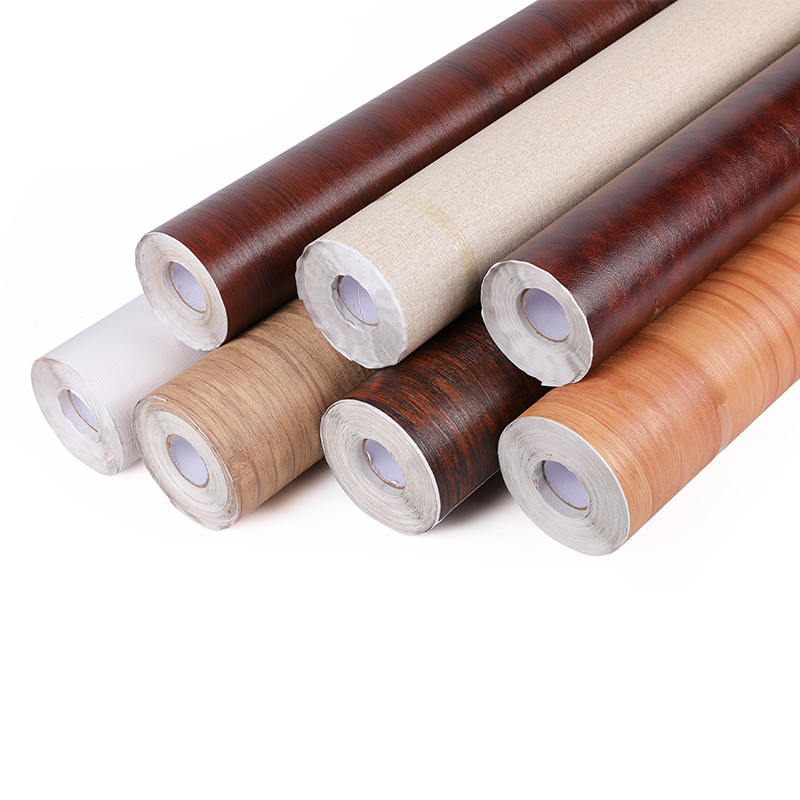
Daily-wear furniture usually wants the firm option, something like a wood-grain foil with an embossed back coating. If a clean exit matters most, the tile sticker roll that removes cleanly is built around that idea: hold during use, leave the tile alone afterwards.

Spec Sheet Red Flags
Ask again, or walk, if you see any of these:
- A peel figure with no method, no test plate and no dwell time
- Tack described with adjectives ("strong", "super") instead of a number
- No shear or holding-power result anywhere on the sheet
- "Special formula" where the adhesive type should be
- "Easy to remove" with nothing behind it, such as a residue check
- Silence when you bring up plasticizer
The first one is the big one. Two suppliers can quote an identical number and mean quite different things.
Try It on Your Own Wall
A datasheet is a claim. A strip on your wall is evidence. If a supplier will post a sample, here's how I'd use it:
- Cut three or four strips, each about as long as your hand.
- Wipe the real wall or board (the actual one, not an offcut) and let it dry fully.
- Press the strips on dry, then rub the ends down hard.
- Leave them alone for two days.
- Look at the corners. Then peel one slowly and see what it does to the paint.
Lifting corners after two days is a bad sign. Flat and firm is encouraging, though not proof. A solid-color foil as a simple sample order keeps things clean for this, since there's no pattern to match and you can watch the glue by itself.
And for the inquiry email, something like this saves a few rounds of back and forth:
We're comparing PVC self adhesive wallpaper for an interior project. Could you send peel, tack and shear values, with the test method and plate used? Is the adhesive acrylic, and is it water-based? How do you control plasticizer migration? Is there a removable grade? Can you send a sample roll?
Short Answers
Can a label adhesive go on wallpaper?
Not safely. It's tuned for small, smooth surfaces and quick application. A wall is bigger, rougher and has to last longer.
Is higher peel strength better?
Only if the job is permanent. A very high number can mean paint comes away with the strip.
What does N/25 mm mean?
Newtons of force to peel a strip 25 mm wide. It means little without the method, the surface and the dwell time.
Repositionable or removable?
Different things. One helps while you install. The other describes how it comes off months or years later.
 Previous