 English
 中文简体
 عربى

News
Content
- 1 Eco Friendly Adhesives on Self Adhesive Foil: Start With the Boring Questions
- 2 The Glue Is the Only Layer Worth Arguing About
- 3 What Actually Leaves the Glue and Enters Your Room
- 4 Water-Based, Solvent-Based and the Plant Stuff
- 5 Why Foil Starts Peeling Around Month Eight
- 6 Match the Glue to the Room
- 7 A Cheap Two-Day Test
- 8 What to Send Your Supplier
- 9 Questions People Keep Asking
Eco Friendly Adhesives on Self Adhesive Foil: Start With the Boring Questions
I'll say it plainly. "Eco friendly" printed on a roll of self adhesive foil tells you close to nothing. Nobody audits the phrase. A seller can stamp it on a roll with the same glue as everyone else's and no one will blink.
So skip the phrase. Ask the boring stuff instead: what is the glue, how was it tested, and will it still be flat on my wall next spring? Boring questions get real answers. That's the whole trick, and the rest of this article is just a longer version of it.
The Glue Is the Only Layer Worth Arguing About
Pull one corner of a roll back and you get three layers. A printed PVC film on top, a liner at the bottom that you'll throw away, and in between a sticky coat that does all the work. When people say "eco friendly adhesive" that middle coat is what they mean. Whatever you think of the PVC above it, a different glue won't change it.
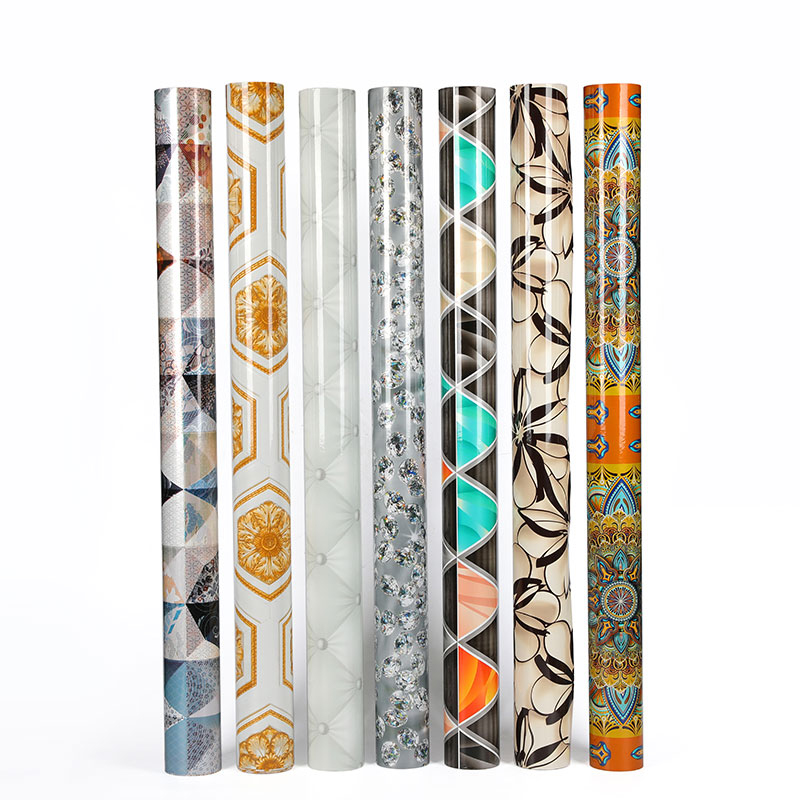
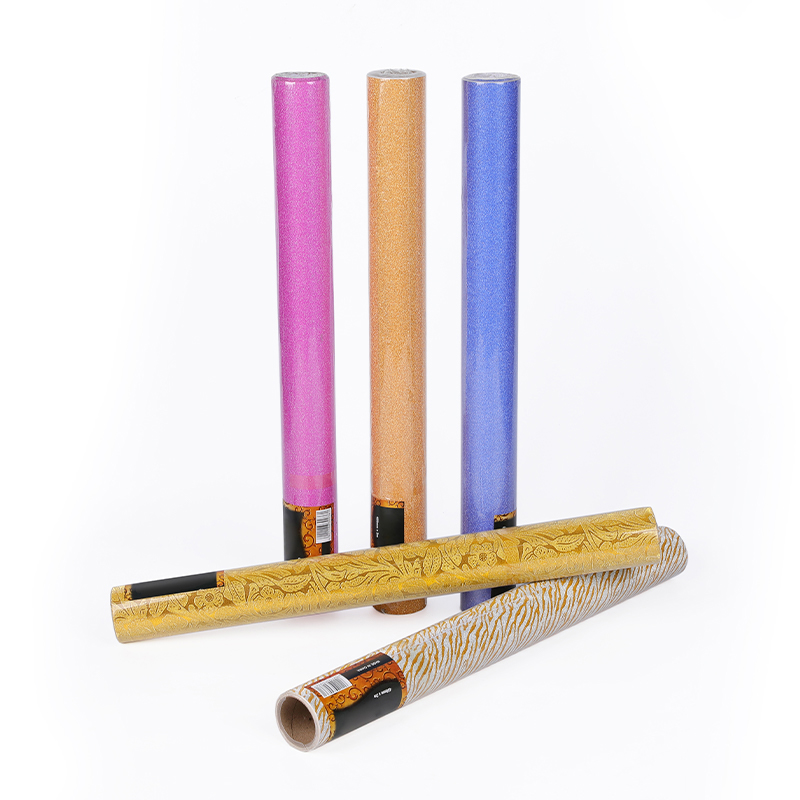
Nearly all decorative foil uses an acrylic pressure-sensitive adhesive. It grabs when you press, no heat, no water, no waiting around. Acrylic beat the old rubber glues mostly because it ages better and doesn't go gummy in a warm room. The PVC self-adhesive foil range for walls and furniture is a good place to see the same idea under very different looks, from gloss to glitter to wood grain.

What Actually Leaves the Glue and Enters Your Room
Volatile organic compounds, VOCs, are the usual worry. The EPA's page on VOCs and indoor air quality says its studies found common organic pollutants at about two to five times higher levels indoors than outside, and plenty of everyday products feed that number. Glues and coatings are on the list.
Can you smell it? Sometimes. But not reliably (some of the nastiest compounds have no odor, and some harmless things smell strong). My own rule is simple. If a supplier can't point to a test report, "low VOC" is a hope, not a fact.
Water-Based, Solvent-Based and the Plant Stuff
Water-based acrylic arrives at the factory as a milky liquid. It gets coated on the film, the water dries away, and the tacky layer stays. Less solvent vapor in production, and a milder smell on the finished roll. The catch is damp. Emulsions don't enjoy living in a steamy bathroom.
Solvent-based is the same family of polymer, just dissolved in a chemical solvent instead of water. It holds well over the long haul. It also means more solvent to handle at the factory.
| Type | Good at | Weak at |
|---|---|---|
| Water-based acrylic | Lower solvent use, milder smell | Constant moisture |
| Solvent-based acrylic | Long-term grip | Solvent emissions at the plant |
| Plant-oil based | Renewable ingredients | Still mostly in the lab |
That last row is exciting, and I don't want to wave it off. This review of polyurethane adhesives made from vegetable oils shows how much work is going into it. It also reads like work in progress. I wouldn't count on finding it in the roll you buy this month.
For most indoor jobs I'd start with water-based acrylic. Whether it suits a specific room is another matter, and the note on where water-based adhesive works and where it falls short on foil goes through it.

Why Foil Starts Peeling Around Month Eight
You've probably seen this. A cabinet wrap goes on beautifully. Nothing happens for half a year. Then one corner lifts, you press it down, it lifts again, and by the time winter's over you're peeling the whole thing off.
A common culprit is plasticizer. Soft PVC is full of it, that's how it stays bendy, and plasticizer likes to wander. It drifts toward the glue and softens it. The glue was fine on day one. It just lost its grip slowly, without telling anyone. Careful makers deal with this in the formula or with a barrier layer. Cheap film often doesn't.
Why bring that up in an article about eco friendly adhesives? Because a roll that fails gets replaced, and the replacement erases whatever green credit the first one had. Longevity is part of the deal, whether the label says so or not.
Some failures are the installer's fault, of course. Paint that's dry to the touch but not cured. A dusty wall. A cold room. And edges that nobody pressed down hard enough.
Match the Glue to the Room
Bedroom or hallway. Water-based is fine. If you rent, get a removable grade so the landlord's paint survives.
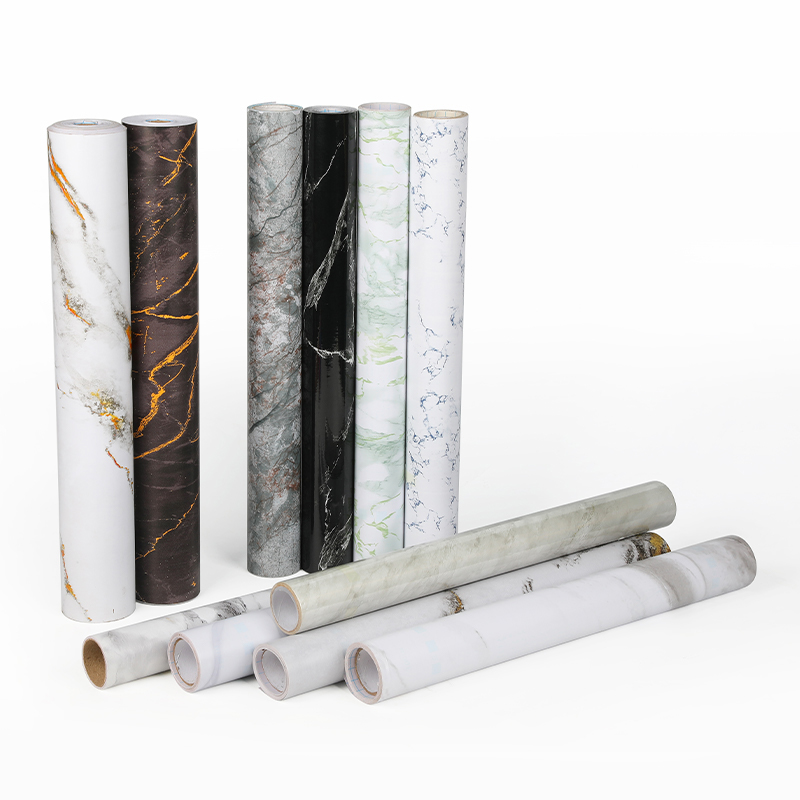
Kitchen cabinets. Also fine, but the edges take the beating, so press them down properly. A wood-grain foil that refreshes old furniture instead of replacing it only counts as the greener option if it survives long enough to justify skipping the new cabinet.
Bathrooms. Check the moisture performance before you buy anything. This is where emulsions struggle.
Pop-ups and displays. Removable, every time. Short life, clean exit. The same logic sits behind a wear-resistant tile sticker roll that removes cleanly, which leaves the tiles underneath alone.
Busy counters. Permanent acrylic. Weak glue here just guarantees a redo.
A Cheap Two-Day Test
Datasheets only go so far. If a supplier will post you a sample, this costs almost nothing and tells you a lot.
- Cut a few strips about the length of your hand.
- Wipe the real surface (the actual wall, not a scrap) and let it dry completely.
- Stick them on dry. No application spray with water-based glue, the liquid gets trapped and slows the grip.
- Rub the ends down hard.
- Leave them two days. Then look at the corners.
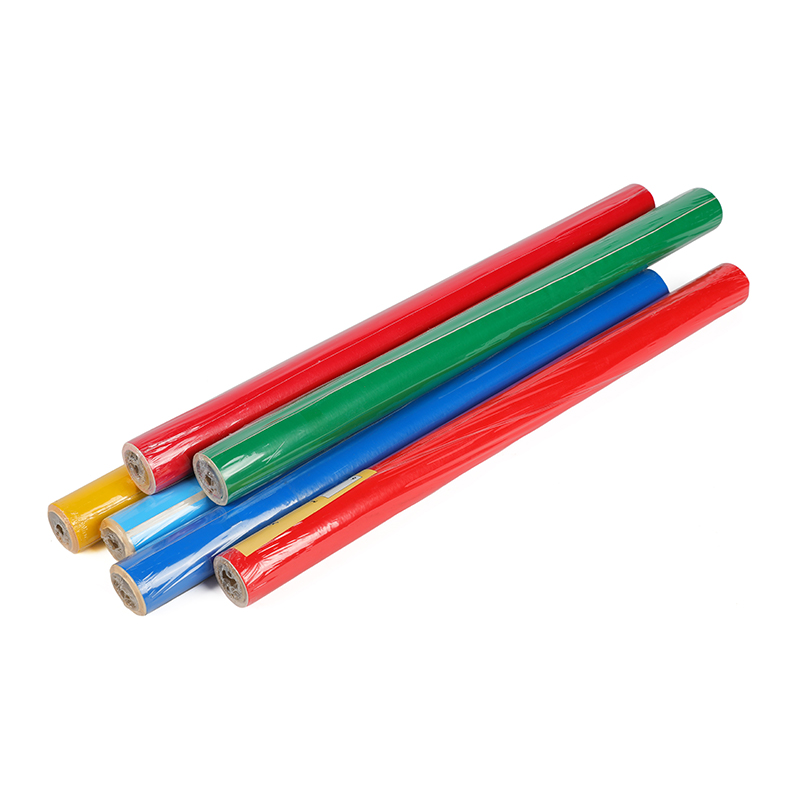
Lifting corners after two days? Bad sign. Flat and firm is a decent start, not a verdict. A solid-color self-adhesive foil as a low-risk sample order suits this fine. With no pattern to line up, you're watching the glue and nothing else.
What to Send Your Supplier
Copy this into your next inquiry and change whatever you like:
We're comparing self adhesive foil for an interior job. Is the adhesive water-based or solvent-based, and is it acrylic? Do you have a removable version? How did you test peel strength (surface, wait time)? What stops plasticizer moving into the glue? Can you send a sample roll so we can test it on our own wall?
A supplier who knows the product will answer in a few lines. If you get vague replies, or silence on plasticizer and test method, well, that's an answer too.
Questions People Keep Asking
Is water-based adhesive always the greener choice?
No. It uses less solvent to make, but if the foil fails early in a damp room and gets replaced, you've lost the benefit. Room first.
Does low smell mean low VOC?
Not reliably. Ask for a test report.
Is removable adhesive weaker?
It's built for a different job. It holds well for the time you need and then lets go cleanly. I wouldn't put it on a wet wall or a busy counter and expect it to last for years.
Can self adhesive foil be fully eco friendly?
The glue layer can be improved, and good choices there cut emissions and waste. The PVC film is a separate question, so I'd be a bit skeptical of "100% green" anywhere on the packaging.
 Previous