 English
 中文简体
中文简体 عربى
عربى
News
Content
- 1 Glass Decorative Film: A Practical Way to Transform Any Glass Surface
- 2 Types of Glass Decorative Film and Their Visual Effects
- 3 Adhesive vs. Static Cling: Which Film Type Suits Your Application
- 4 Key Specifications to Compare When Buying Decorative Glass Film
- 5 Common Applications for Glass Decorative Film
- 6 Decorative Film vs. Specialist Glass: A Realistic Comparison
- 7 Step-by-Step Installation Guide for Glass Decorative Film
- 8 How to Clean and Maintain Glass Decorative Film
- 9 What Separates Quality Decorative Films from Budget Products
Glass Decorative Film: A Practical Way to Transform Any Glass Surface
Glass decorative film is a thin, adhesive or static-cling polymer sheet applied directly to glass surfaces to alter their appearance, privacy level, or light transmission — without replacing the glass itself. It is one of the most cost-effective ways to add frosted, stained, etched, or patterned effects to windows, doors, partitions, and mirrors in both residential and commercial settings. A professional-looking frosted privacy window that would cost hundreds of dollars in sandblasted or acid-etched glass can be achieved with decorative film for a fraction of the price, in a single afternoon.
The global window film market was valued at approximately $10.4 billion in 2023, with decorative films representing a rapidly growing share driven by interior design trends, commercial fit-out demand, and the increasing quality of digitally printed film products. This guide covers the main types of decorative glass film, how to select the right one for a specific application, installation method, performance expectations, and the factors that separate quality products from budget options that peel and bubble within months.
Types of Glass Decorative Film and Their Visual Effects
Decorative glass films are manufactured in a wide range of visual styles, each producing a distinct aesthetic effect. Understanding the categories helps narrow the choice before comparing specific products.
Frosted and Etched Films
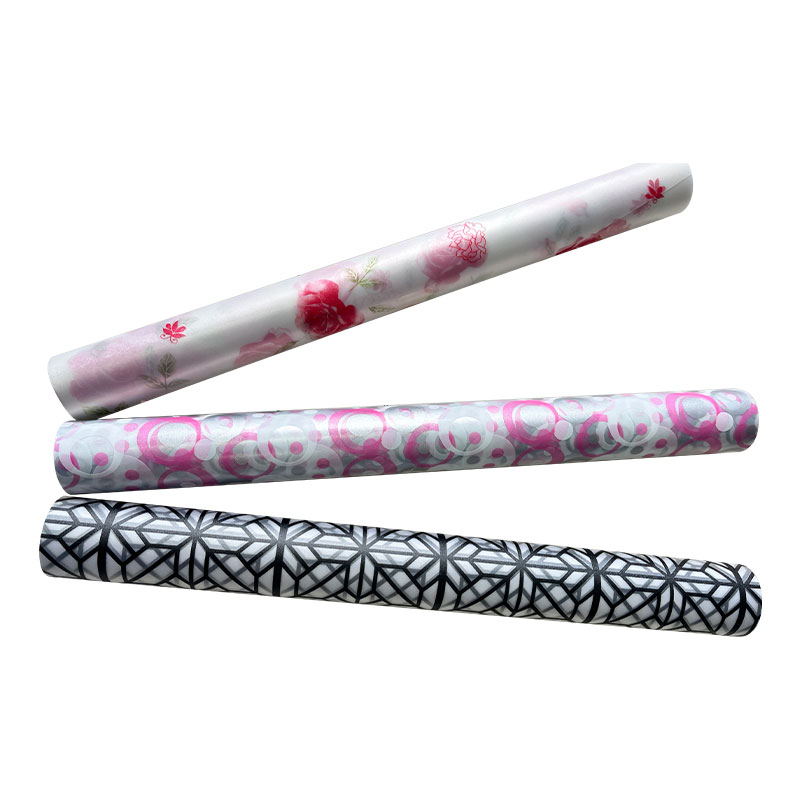
Frosted decorative film is the most widely used category. It replicates the appearance of sandblasted or acid-etched glass by diffusing transmitted light through a semi-opaque white or grey polymer layer. The result is a soft, hazy finish that provides daytime privacy while maintaining light flow — you can see that light is coming through but cannot make out clear shapes or details. Frosted film is available in uniform opacity or with printed patterns that create the effect of etched designs — geometric borders, foliage, text, and custom logos are all achievable. Most frosted films transmit 50–75% of visible light while blocking a clear view from either side at normal viewing distances.
Stained Glass and Colored Films
Colored decorative films use dyed or pigmented polymer layers to transmit colored light, simulating the effect of traditional stained glass at a small fraction of the cost and installation complexity. They range from solid single-color tints to elaborate multi-color printed designs with leaded line effects that closely resemble artisan stained glass. When backlit by sunlight or artificial light, high-quality stained glass films produce vivid, jewel-toned color effects. The limitation is that the effect is strongest when the light source is behind the glass; when viewed from the lit side in the absence of backlighting, the colors appear muted.
Mirror and Reflective Films
Mirror decorative films have a metallic reflective layer that creates a one-way mirror effect during daylight — the brighter side sees a reflection, while the darker side can see through. They are popular for exterior windows, bathroom mirrors with additional functions, and interior design features. True decorative mirror film (as opposed to solar control mirror film) prioritizes the visual reflective effect over heat rejection. At night, when interior lighting is brighter than exterior, the privacy function reverses — a limitation that users frequently overlook when selecting these films for residential privacy applications.
Digitally Printed Custom Films
Digital print-on-demand technology has transformed the decorative film category. High-resolution images, company branding, architectural patterns, nature scenes, and completely custom designs can be printed onto film substrate and cut to precise dimensions. Commercially, digitally printed films are extensively used for office partition branding, retail graphics, hotel feature windows, and architectural statement pieces. Print resolution on quality films typically reaches 1440 dpi or higher, producing photographic-quality imagery when viewed at normal distances. Most digitally printed decorative films use solvent or UV-cured inks rated for 5–10 years of interior durability before noticeable fading.
Textured and Patterned Films
Some decorative films incorporate a surface texture — linen weave, hammered glass, rice paper, or geometric relief — that replicates premium glass types at a fraction of the cost. These films add depth and visual interest beyond what a flat printed film achieves, and are particularly effective when used for cabinet glass, interior partitions, and decorative panels where touch experience is less of a priority than visual effect.
Adhesive vs. Static Cling: Which Film Type Suits Your Application
All glass decorative films attach to the glass surface by one of two mechanisms. The choice between them affects installation ease, removability, and long-term performance.
Pressure-Sensitive Adhesive (PSA) Films
PSA films use a thin, permanent or semi-permanent acrylic adhesive layer coated onto the back of the film. They bond to the glass surface with finger pressure during installation — typically applied wet (using a soapy water solution) to allow repositioning before the adhesive grips fully. PSA films are the dominant type for professional installation and commercial applications because they provide superior adhesion stability over time, resist edge lifting in humid or outdoor environments, and are available in a wider range of materials and finishes. High-quality PSA films rated for 7–12 years of interior use are available from leading manufacturers. The trade-off is that removal can leave adhesive residue on the glass, particularly if the film has been in place for several years or has been exposed to elevated temperatures.
Static Cling Films
Static cling films adhere through electrostatic attraction — no adhesive is involved. They attach to glass simply by pressing onto a clean, smooth surface, and can be peeled off and repositioned indefinitely without leaving residue. This makes them ideal for rental properties, temporary seasonal decorations, trade show displays, and any application where the film will be removed and relocated regularly. The limitation is bonding reliability: static cling films are more susceptible to edge lifting, particularly in humid environments or when applied to textured or low-E glass surfaces. They also lose cling performance over time as the electrostatic charge diminishes, typically after 2–5 years depending on environmental conditions.
Key Specifications to Compare When Buying Decorative Glass Film
Marketing descriptions for decorative glass films often emphasize visual appearance while omitting technical specifications that determine performance and longevity. The following parameters should be verified before purchase, particularly for commercial or long-term residential applications.
| Specification | What It Indicates | Typical Range | Guidance |
|---|---|---|---|
| Film thickness | Durability and conformability | 50–350 microns | Thicker films are more durable; thinner films are easier to apply bubble-free |
| Visible light transmission (VLT) | How much light passes through | 5–95% | Higher % = more light; frosted films typically 50–75% |
| UV rejection | Protection from UV-induced fading | 50–99%+ | Higher rejection protects furnishings and extends film life |
| Rated service life | Expected years before significant degradation | 2–12+ years interior | Interior ratings only; exterior-rated films specified separately |
| Scratch resistance | Surface durability for cleaning | Hard coat / standard | Hard-coated films resist cleaning abrasion significantly better |
| Operating temperature range | Suitability for hot climates or south-facing glass | −30°C to +90°C (typical) | Critical for films on double-glazed or tinted glass — heat buildup risk |
The Heat Buildup Risk on Double-Glazed Units
One of the most commonly overlooked compatibility issues involves applying decorative film to insulated double-glazed (IGU) or low-emissivity (low-E) glass. Certain films, particularly dark or reflective types, can cause significant solar heat buildup in the glass unit by absorbing solar energy that would otherwise be reflected. This heat buildup can crack the inner glass pane or damage the IGU seal, voiding the window warranty. Always verify with the film manufacturer whether their product is approved for double-glazed or low-E glass before applying to these window types. Many quality film manufacturers provide an online compatibility checker or written approval for specific glass types.
Common Applications for Glass Decorative Film
Decorative glass films solve a range of practical and aesthetic problems in both residential and commercial environments. Understanding the most common applications illustrates the breadth of what is achievable.
Residential Privacy Windows and Bathroom Glass
Bathrooms, sidelights next to front doors, and ground-floor windows facing streets or neighbors are the most common residential applications for frosted and patterned decorative film. The film provides daytime visual privacy while maintaining natural light — a combination that curtains and blinds do not achieve simultaneously. For bathrooms, films rated for high-humidity environments with moisture-resistant adhesive are essential — standard office-grade films can delaminate in steam environments within months. Premium bathroom-rated films use a more flexible polymer base and a humidity-stable PSA formulation.
Office Partitions and Commercial Glazed Walls
Open-plan offices with glass partitions are one of the highest-volume commercial application categories for decorative film. Film provides visual privacy between meeting rooms and open workspaces, enables company branding through logo and pattern integration, and creates a premium aesthetic without the cost of specialist architectural glass. Compliance with workplace privacy regulations — which in many countries require visual privacy in meeting rooms where sensitive discussions occur — is frequently achieved using frosted band films applied at eye level across glass partitions. A frosted band covering the middle 900–1,500mm of partition height is the standard specification for most office privacy film installations.
Retail Storefronts and Branded Glazing
Retail environments use decorative window film for promotional graphics, semi-permanent branding, opening hour displays, and seasonal decoration. Perforated window films — which display an opaque image on the outside while maintaining visibility from the inside — allow storefront windows to carry full-colour graphics without blocking natural light for staff and customers inside. Digitally printed frosted films with cut-out logo effects (clear logos in a frosted field) are a cost-effective alternative to etched glass signage at 10–20% of the cost of equivalent sandblasted glass.
Interior Design and Feature Glass
Decorative film is increasingly used as an interior design element in its own right — not merely as a functional covering for existing glass, but as a deliberate visual feature. Stained glass films on interior windows, skylights, and cabinet glass panels create dramatic color effects without custom glazing. Geometric frosted patterns on shower screens and wardrobe mirror doors add texture and visual interest. Architectural mirror films applied to wall panels create the illusion of additional space in narrow hallways and compact rooms.
Decorative Film vs. Specialist Glass: A Realistic Comparison
Decorative film is frequently positioned as a direct substitute for specialty glass treatments. Understanding where it matches and where it falls short guides realistic purchase decisions.
| Criteria | Decorative Film | Sandblasted / Acid-Etched Glass | Stained / Leaded Glass |
|---|---|---|---|
| Cost | Low–Moderate ($5–40/m²) | High ($80–300/m²) | Very High ($200–1,000+/m²) |
| Visual quality | Good to Excellent (digitally printed) | Excellent | Exceptional (artisan) |
| Installation speed | Hours | Days (glass replacement required) | Weeks (bespoke fabrication) |
| Reversibility | Fully removable | Permanent | Permanent |
| Durability | 5–12 years (quality products) | Permanent (glass lifespan) | Decades to centuries |
| Scratch resistance | Moderate (hard coat improves) | High | High |
| Custom design flexibility | Very High (digital printing) | Moderate | High (limited by lead lines) |
For most residential and commercial applications where budget, turnaround time, and reversibility matter, high-quality decorative film is the clearly superior practical choice over specialist glass. The visual quality gap, particularly for digitally printed films, has narrowed significantly in the past decade. The permanent superior tactile quality and glass-surface longevity of etched or stained glass remain advantages that film cannot fully replicate, but for the majority of projects these are secondary to cost and practicality.
Step-by-Step Installation Guide for Glass Decorative Film
A successful decorative film installation that is bubble-free, properly aligned, and durable for years depends more on thorough surface preparation than on application technique. Rushing the preparation phase is the single most common cause of poor results.
Tools Required
- Spray bottle filled with a diluted solution of a few drops of baby shampoo or dish soap per 500ml of water (for wet application of PSA films)
- Hard rubber or felt-edged squeegee (not a silicone squeegee — too flexible)
- Sharp craft knife or precision scalpel with fresh blades
- Steel ruler or straight edge for trimming
- Clean lint-free microfibre cloths
- Glass cleaning solution (ammonia-free) or isopropyl alcohol diluted to 70%
Installation Process
- Clean the glass thoroughly. Use an ammonia-free glass cleaner and then wipe with isopropyl alcohol to remove any residual grease, fingerprints, or cleaning product film. Even invisible contamination causes adhesion failure. Allow to dry completely.
- Measure and cut the film. Cut the film 5–10mm larger than the glass area on all sides. This allows for precise final trimming after application and avoids short cuts from measurement error.
- Apply the slip solution. Mist the clean glass surface generously with the soapy water solution. Also lightly mist the adhesive side of the film after peeling the liner. The slip solution allows the film to be repositioned on the glass before it grips.
- Position the film. Place the film adhesive-side down onto the wet glass. Align to the edges. The film can still be slid into position at this stage — take time to get it exactly right.
- Squeegee from center outward. Starting at the center, use firm, overlapping strokes working toward each edge. Push water and any trapped air bubbles out from under the film. Work methodically — do not chase bubbles randomly.
- Trim the edges. Using the craft knife and steel ruler pressed firmly against the edge of the frame or glass, trim the excess film cleanly. A dull blade drags and tears the film — use a fresh blade for trimming.
- Final squeegee pass. Run the squeegee firmly over the entire surface once more, paying attention to edges and corners where lifting can occur.
- Allow to cure. PSA films require 5–7 days of curing time before residual moisture fully evaporates and the adhesive bonds completely. During this period, small remaining water pockets (milky areas) will typically clear. Avoid cleaning the film surface during the curing period.
Avoiding the Most Common Installation Mistakes
- Applying film to dirty or greasy glass: The most common cause of edge lifting and bubble formation. No amount of squeegeeing corrects adhesion failure caused by contamination.
- Using too little slip solution: Insufficient wetting causes the film to grip immediately on contact, preventing repositioning and trapping air beneath large sections.
- Applying film in direct sunlight or on hot glass: Heat accelerates adhesive grip and makes the film harder to reposition. Install in shade or in the morning before glass heats up, ideally at ambient temperatures of 10–25°C.
- Cutting on the glass with a blade directly on the film: Scoring the glass surface damages the adhesive bond at the cut edge and risks glass cracking on thin panes. Always use a frame edge or ruler as a cutting guide.
How to Clean and Maintain Glass Decorative Film
Proper cleaning extends the life of decorative film significantly. The wrong cleaning products and tools can degrade the surface coating, lift edges, and dull the visual finish within a year of installation.
- Use only ammonia-free, alcohol-free glass cleaners on decorative film. Ammonia and isopropyl alcohol both degrade PSA adhesive bonds over time, causing edges to lift. Products specifically labeled "window film safe" are the safest choice.
- Use soft microfibre cloths only. Paper towels, abrasive cloths, and squeegees with grit particles scratch hard-coated film surfaces. A fresh microfibre cloth dampened with film-safe cleaner is sufficient for routine cleaning.
- Do not use high-pressure water jets on films installed with PSA adhesive — particularly on exterior-applied films. Sustained high-pressure water penetrates edges and disrupts the adhesive bond.
- Inspect edges annually. If edge lifting begins, press the affected area back down firmly with a soft cloth, or apply a small amount of clear, non-silicone edge sealant. Catching edge lift early prevents the film from peeling progressively from that point.
- Avoid abrasive scrubbing pads for stubborn marks — even on hard-coated films. Soak difficult spots with damp cloth first, then wipe gently. The surface appearance of decorative film is a printed or coated layer that cannot be restored once abraded.
What Separates Quality Decorative Films from Budget Products
The decorative film market spans an enormous quality range. Films sold at similar price points can differ dramatically in longevity, appearance, and installation behavior. Knowing what distinguishes the better products prevents purchasing decisions based solely on visual appearance or low price.
- UV-stabilized polymer substrate: Quality films use a UV-absorbing additive in the polyester base film that prevents yellowing and brittleness from long-term light exposure. Budget films yellow noticeably within 2–3 years in south-facing applications.
- Hard-coat surface protection: A silica-based hard coat on the exposed face resists scratching from cleaning and accidental contact. Films without a hard coat show surface scratches within months of regular cleaning.
- Stable, non-reactive PSA adhesive: Acrylic PSA formulations from established manufacturers (such as 3M, Avery Dennison, or Lintec adhesives) maintain consistent bond strength over temperature cycling and do not yellow or migrate into the glass surface over time. Unknown adhesive systems can become permanently difficult to remove or stain glass surfaces.
- Documented performance data: Quality manufacturers publish VLT, UV rejection, rated service life, and operating temperature specifications. The absence of any technical data sheet is a strong indicator of a commodity product with unverified performance claims.
- Brand-name film with installation warranty: Leading brands including 3M, Llumar, Solargard, Purlfrost, and Contra Vision back their products with manufacturer warranties of 5–12 years on interior applications. A film sold without any warranty term offers no protection against premature failure.
For commercial installations, specifying a named brand film with a documented product datasheet and installer warranty is always the correct approach — the cost difference between budget and quality film is small relative to the labor cost of removal and reinstallation when a substandard film fails prematurely.
 Previous