
 English
 中文简体
中文简体 عربى
عربىNews
Home / News / Industry News / Solvent-Based Adhesives: Types, Applications, and How to Choose the Right One
Professional manufacturer of architectural decorative film, Decorative Film Supplier in China

Content
Peel back the label on almost any high-performance industrial bonding product and you will find a solvent carrier doing the quiet, essential work. Solvent-based adhesives dissolve a polymer—acrylic, polyurethane, or rubber—into a liquid solvent. Once the adhesive is applied to a surface, the solvent evaporates and the dissolved polymer chains settle into direct contact with the substrate, forming a tight, durable bond as the material cures.
The evaporation mechanism is what sets these adhesives apart from water-based systems. Organic solvents evaporate faster than water under typical workshop or production-line conditions, which means solvent-based formulas reach handling strength in minutes rather than hours. This rapid open-time profile makes them the default choice wherever throughput and bond reliability both matter.
There is a second function that often goes unnoticed: the solvent slightly softens or activates the top layer of certain substrates—particularly plastics and PVC—before it leaves. This surface interaction creates mechanical interlocking between adhesive and substrate at a microscopic level, producing bonds that outlast many structural joinery methods.
| Property | Solvent-Based | Water-Based |
|---|---|---|
| Drying Speed | Fast (minutes) | Slower (hours) |
| Non-Porous Surface Adhesion | Excellent | Limited |
| Moisture Resistance After Cure | High | Moderate |
| Heat Resistance | High | Low to Moderate |
| VOC Emissions During Application | Higher | Lower |
| Substrate Compatibility | Broad (porous & non-porous) | Better for porous substrates |
Three chemistry families dominate the solvent-based adhesive market, each optimized for a different combination of flexibility, strength, and environmental resistance.
Acrylic copolymers dissolved in ethyl acetate or similar esters form the backbone of most pressure-sensitive adhesive (PSA) tapes, decorative foils, and protective films. They cure to a clear, UV-stable layer and hold across a wide temperature range—typically from −20°C up to 80°C or beyond depending on the cross-linking agent used. Acrylic PSAs are the standard choice for PVC-based decorative films because they preserve optical clarity, resist plasticizer migration from the PVC layer, and remain stable over years of indoor exposure without yellowing.
One- or two-component polyurethane systems carry exceptional flexibility after cure, making them the preferred adhesive wherever substrates expand and contract—laminated panels, flooring underlays, and profile wrapping in window manufacturing. Their strong hydrogen-bonding chemistry gives them adhesion to metals, wood composites, and rigid plastics that acrylic PSAs cannot always match. Two-component versions, mixed just before application, develop much higher shear strength and are used in structural lamination.
Natural or synthetic rubber dissolved in hydrocarbon solvents creates contact-bond adhesives: both surfaces receive a coat, both are allowed to flash off, then the surfaces are pressed together for an immediate, full-strength bond. No clamping time is needed. This makes rubber contact adhesives the workhorse of furniture assembly, upholstery bonding, and large-surface lamination where repositioning is not an option.
| Type | Best Substrate Fit | Flexibility | UV/Aging Stability | Typical Use Case |
|---|---|---|---|---|
| Acrylic PSA | PVC, polyester, glass | Moderate | Excellent | Decorative films, labels, tapes |
| Polyurethane | Wood, metal, plastics | High | Good | Panel lamination, profile wrapping |
| Rubber / Contact | Foam, fabric, laminates | High | Moderate | Furniture assembly, upholstery |
Solvent-based adhesives are embedded throughout the decorative surface materials industry, operating invisibly between the film and whatever it is bonded to. Understanding where they appear helps specifiers and procurement teams match the right adhesive chemistry to their product requirements.
Self-adhesive PVC foils are manufactured with a factory-applied acrylic PSA layer coated under controlled conditions and protected by a release liner until installation. The solvent-based acrylic coating provides the initial tack needed to adhere to painted drywall, MDF cabinets, or glass surfaces, while its cohesive strength prevents edge lifting under humidity. For interior renovation products, coating weights between 25–40 g/m² strike the balance between repositionability and permanent hold. Browse the full range of PVC self-adhesive foil and wall sticker products that rely on this adhesive technology.
Glass is a demanding substrate: non-porous, thermally conductive, and prone to stress cracking if bonded too rigidly. Solvent-based acrylic PSAs used in glass films are formulated with lower cross-link density than standard PSAs, allowing the adhesive layer to flex with glass expansion without delaminating. A well-engineered glass film adhesive also resists hydrolysis—the gradual bond degradation caused by condensation and cleaning products—keeping the film optically clear for years. See how these adhesive principles are applied in patterned glass adhesive film for interior decoration.
Wet-environment applications push adhesive performance harder than almost any other interior use case. Tile stickers must survive repeated moisture exposure, thermal cycling from cooking heat, and cleaning chemicals. Solvent-based PSAs in this category typically incorporate cross-linking agents that increase water resistance and prevent plasticizer migration from the PVC face layer into the adhesive. The result is a bond that holds on smooth ceramic or porcelain without the white-residue failure mode common in cheaper water-based formulations. Explore the kitchen and bathroom tile stickers with self-adhesive backing engineered for exactly these conditions.
Beyond interior decoration, solvent-based adhesives bond automotive interior trim, insulation panels, carpet backing, and sound-dampening films. In each case the same principles apply: fast tack, broad substrate compatibility, and resistance to the temperature extremes and vibration that weaker adhesive systems cannot sustain over a product's lifetime.

The case for solvent-based adhesives in professional and industrial contexts comes down to four consistent performance advantages that water-based systems still struggle to match.
The performance advantages of solvent-based adhesives come with a well-documented trade-off: volatile organic compound (VOC) emissions during application. Organic solvents—ethyl acetate, toluene, hexane, and similar compounds—evaporate into the working environment as the adhesive cures. Prolonged exposure to high concentrations can irritate the respiratory tract and, in some formulations, pose more serious health risks.
Responsible use requires adequate ventilation wherever solvent-based products are applied. Industrial coating lines typically use enclosed spray booths with exhaust systems that dilute VOC concentrations well below occupational exposure limits. The U.S. EPA has documented the impact of adhesive VOCs on indoor air quality—relevant guidance for both manufacturers and end users can be found in the agency's overview of volatile organic compounds and their effects on indoor air quality.
Several practical measures reduce VOC exposure without sacrificing bond performance: using high-solids formulations that carry more polymer per unit volume of solvent, applying adhesives in thin, consistent coats rather than heavy single passes, and scheduling adhesive work during periods when ventilation rates are highest. Many modern solvent-based acrylic PSAs are also available in low-VOC variants that meet CARB and EU regulatory limits while retaining most of their technical performance.
With several chemistry families and dozens of product grades available, selecting the correct solvent-based adhesive requires matching three variables: the substrate pair being bonded, the environmental demands of the end application, and the processing method available on your production line or job site.
High-energy surfaces like glass, metal, and ceramic accept a wide range of adhesive chemistries. Low-energy surfaces—most polyolefins and some painted substrates—require specially formulated acrylic PSAs or polyurethane adhesives with built-in surface activators. When in doubt, a simple peel test on the actual substrate at the expected application temperature will reveal bond failure modes before they appear in the field.
Outdoor signage, bathroom tile stickers, and automobile trim face fundamentally different stress profiles. UV resistance, water resistance, and thermal cycling tolerance should each be specified before selecting a product. Acrylic PSAs generally lead on UV and aging stability; polyurethane systems lead on flexibility and chemical resistance; rubber contact adhesives lead on immediate full-surface tack for large-area lamination.
Not every application calls for a permanent bond. Rental property renovations, temporary retail displays, and any product intended for end-user repositioning require adhesive systems with controlled peel strength—typically 8–12 N/25mm for interior wall applications. Higher cross-link density increases permanence; lower density preserves removability. Specifying the correct peel-to-shear ratio is as important as specifying the chemistry. For decorative surfaces that need to be updated periodically, explore how PVC decorative film for walls, doors, and furniture surfaces balances long-term adhesion with practical replaceability.
Factory-applied adhesive coating offers the most consistent results: uniform thickness, controlled coat weight, and cleaner handling on-site. For field-applied adhesives, spray application distributes solvent-based contact adhesives most evenly over large surfaces, while roller application gives better control on flat panels. Whatever the method, applying in two thin coats rather than one heavy coat reduces solvent entrapment and produces a more consistent bond line—a best practice that applies equally to tile stickers, laminated panels, and structural bonding applications.
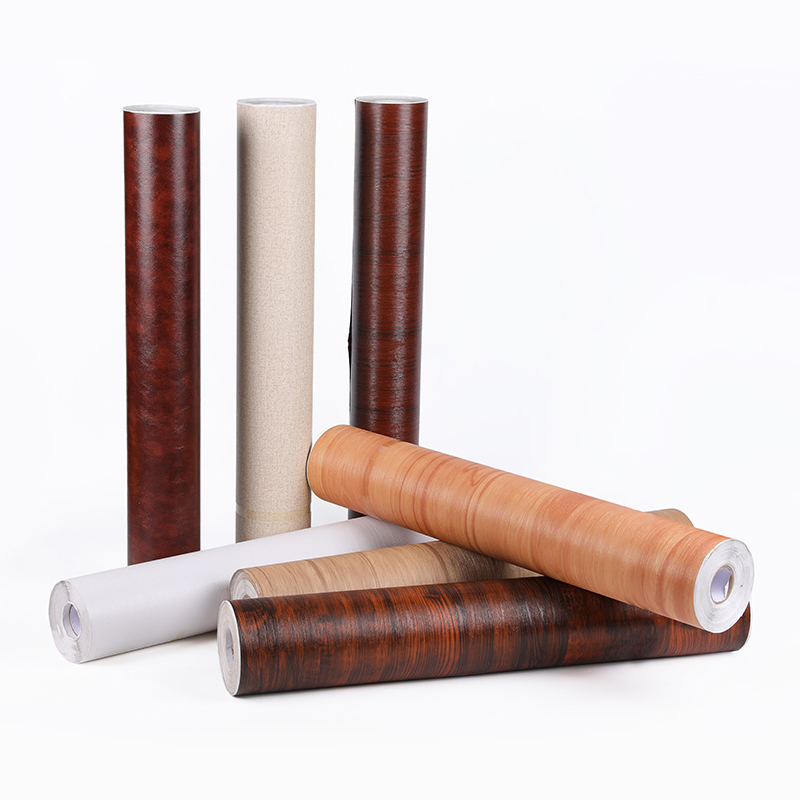 Easy-to-Clean & Highly Practical PVC Film for Furniture
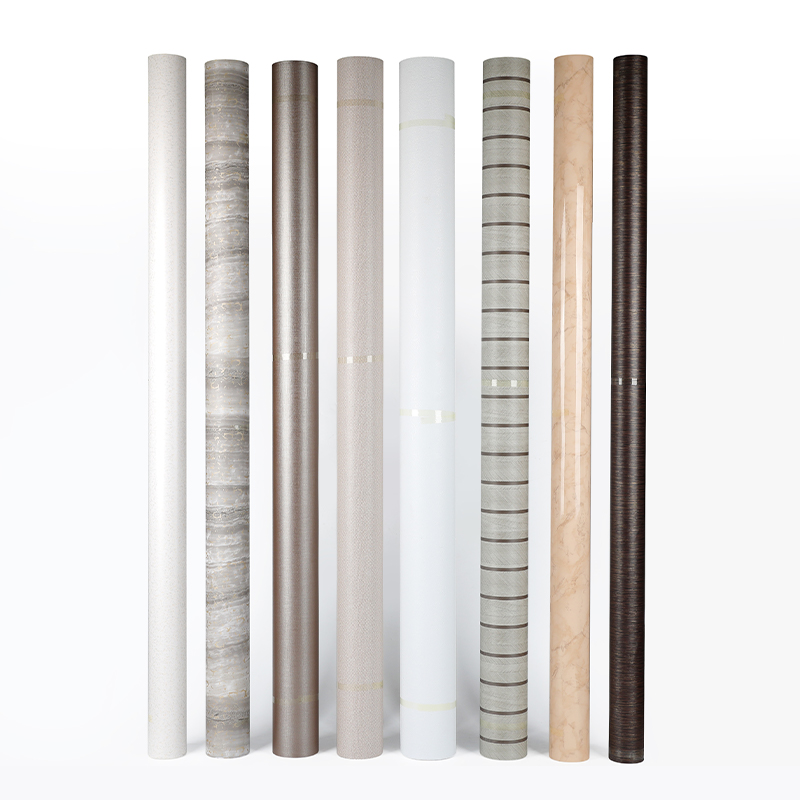 Heat Insulation & Easy-to-Clean PVC Film for Wall Panels
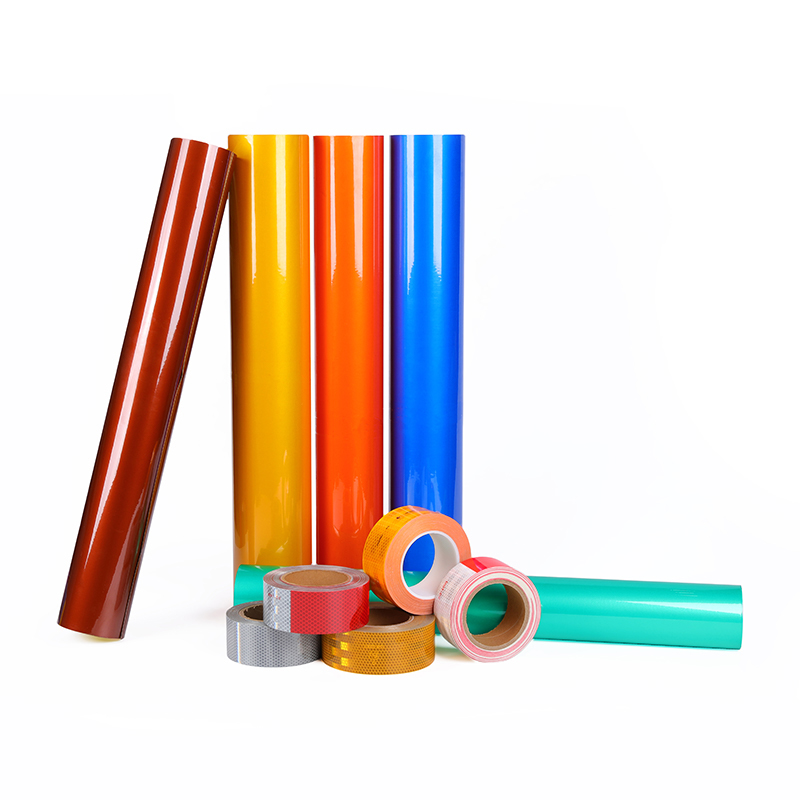 Wear-Resistant and Waterproof Reflective Advertisement film
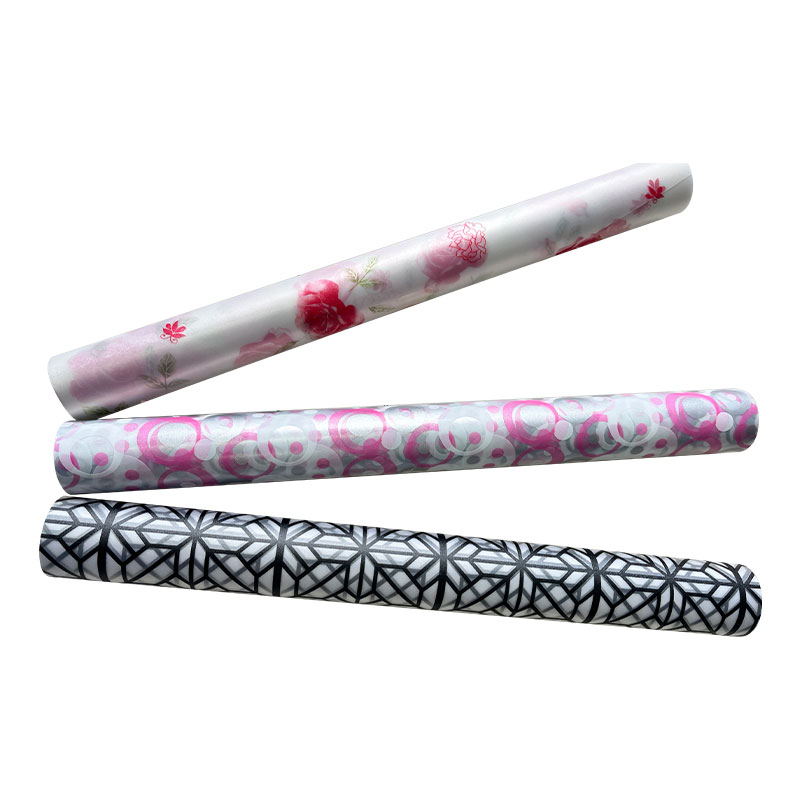 Glass Adhesive Film with Rich Aesthetic Patterns
 Silent and comfortable Snap-in Design SPC Flooring
 Strong Thermal Insulation Building Heat Resistant Film

To increase our production capacity, Han Yang has invested in a range of advanced equipment, including gravure printing machines, lamination machines, coating machines, and embossing machines. Architectural Decorative Film Supplier and Decorative Film Factory in China.

 Previous