 English
 中文简体
中文简体 عربى
عربىNews
Home / News / Industry News / PVC Decorative Film: Types, Applications, and How to Choose the Right One
Professional manufacturer of architectural decorative film, Decorative Film Supplier in China

Content
PVC decorative film is a flexible surface material manufactured from polyvinyl chloride — the third most produced synthetic polymer globally — that is printed, embossed, and finished to replicate the visual and tactile qualities of natural materials including wood grain, marble, stone, leather, and metal. Applied to furniture, interior panels, cabinet doors, and architectural surfaces, it delivers aesthetic transformation at a fraction of the material and labor cost of working with real natural substrates.
The commercial appeal of PVC decorative film lies in its unique combination of design versatility and functional performance. A single product category covers everything from ultra-realistic wood grain laminates for kitchen cabinetry to high-gloss marble finishes for feature walls, unified by the underlying performance properties of PVC: resistance to moisture, abrasion, and UV degradation, combined with the dimensional flexibility needed to wrap complex surface profiles without cracking or delaminating.
For interior designers, furniture manufacturers, and construction material distributors, PVC decorative film represents a reliable, cost-effective specification with a well-established global supply chain, internationally recognized quality certifications, and the customization depth to support both mass-market production and differentiated private label programs.
The production of PVC decorative film is a multi-stage industrial process in which raw material quality, equipment precision, and process sequencing collectively determine the performance and appearance of the finished product. Understanding the manufacturing route provides buyers with a meaningful framework for evaluating supplier capability.
The base film begins as plasticized PVC compound — a blend of PVC resin, plasticizers, stabilizers, and functional additives — that is fed through a series of heated, precision-gap calender rolls. The rolls apply controlled heat and pressure to the polymer mass, forming it into a continuous flat film of uniform thickness. Roll temperature, gap width, and line speed are the primary variables controlling film thickness, surface smoothness, and mechanical properties including tensile strength and elongation at break. Calendering is preferred over extrusion for decorative film applications because it enables in-line surface treatments such as embossing and lamination.
Once the base film is formed, design patterns are applied using rotogravure printing — an intaglio process in which engraved steel cylinders transfer ink directly to the film surface at high speed and with exceptional color registration accuracy. Gravure printing enables the fine detail resolution, multi-color layering, and consistent ink density required to reproduce realistic wood grain, stone veining, and abstract textile patterns. Water-based inks, now standard in environmentally compliant production lines, eliminate volatile organic compound emissions during printing while maintaining the color vibrancy and adhesion performance of oil-based alternatives.
After printing, the film passes through heated embossing rollers carrying the inverse of the desired surface texture. The rollers imprint a three-dimensional relief pattern into the softened film surface — replicating pore structures, grain lines, brushed metal striations, or fabric weave textures — which is then locked in as the film cools. The physical depth and sharpness of the emboss directly impacts the tactile authenticity of the finished product and its ability to hide surface irregularities on the substrate it covers.
High-specification decorative films receive a top coat — typically a UV-curable or electron beam-cured lacquer — that provides the final surface hardness, gloss level, and functional properties including scratch resistance, chemical resistance, and anti-fingerprint performance. The coating formulation is adjusted to achieve the target gloss reading: from ultra-matte (below 5 GU) through satin to mirror-bright high gloss, depending on the product specification.
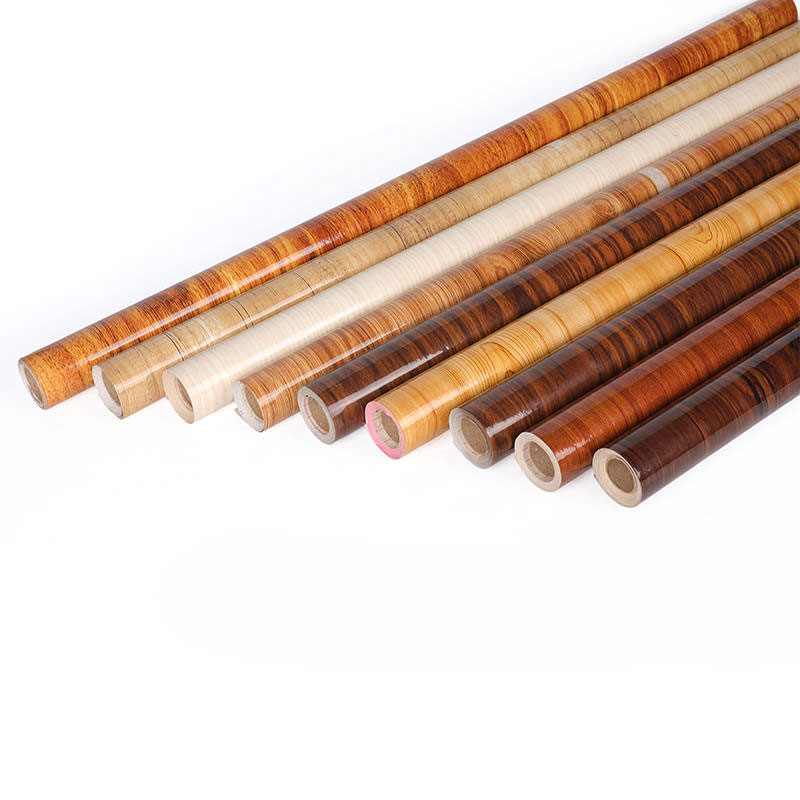
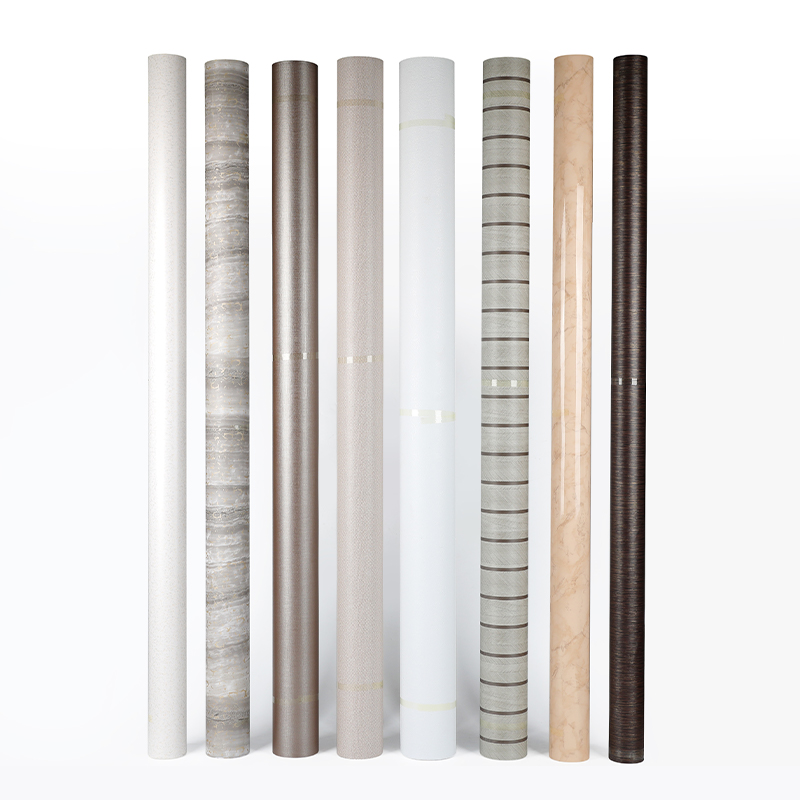
The design range available in commercial PVC decorative film is extensive, with leading manufacturers maintaining catalogues of over 1,000 existing patterns alongside full custom development capabilities. The most commercially significant finish categories are outlined below.
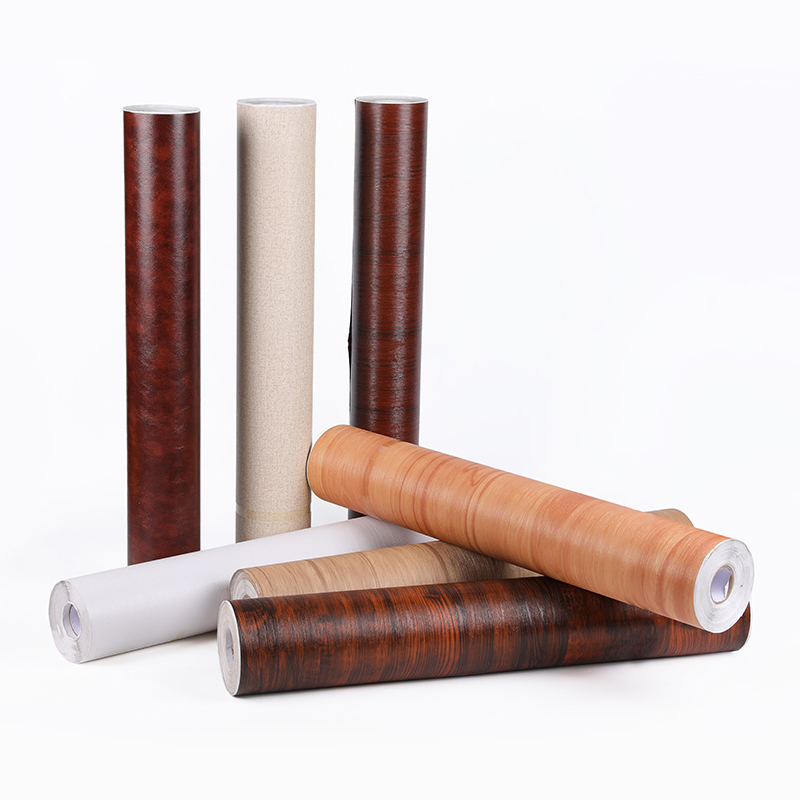
Wood grain remains the dominant design category in the decorative film market, driven by sustained demand for the warmth and naturalness of timber aesthetics in residential and commercial interiors. Modern gravure printing and precision embossing reproduce the cell structure, color variation, and tactile character of species including oak, walnut, ash, maple, elm, pine, and mahogany with a degree of realism that distinguishes premium film from entry-level alternatives. High-gloss wood grain PVC film introduces an additional dimension — a reflective lacquer surface that amplifies light and gives contemporary furniture and kitchen panels a premium, upscale appearance.
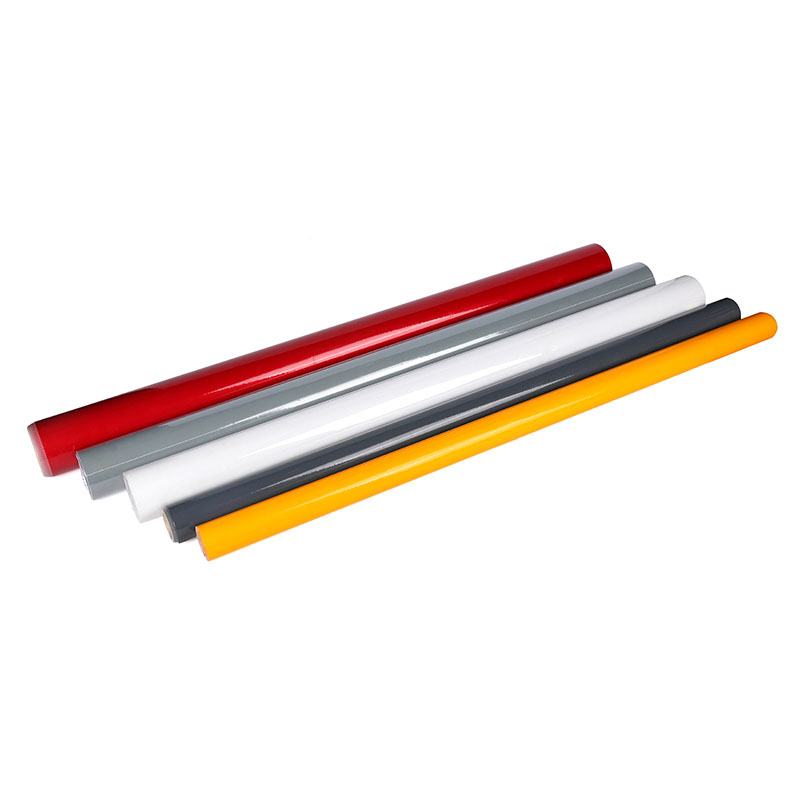
Solid color films deliver clean, uniform tonal surfaces for minimalist, Scandinavian, and contemporary design schemes. Available in finishes from flat matte to high gloss, and in color ranges spanning classic whites, warm neutrals, and bold statement hues, solid color PVC film is among the most widely specified products for kitchen cabinetry, office furniture, and retail fit-out applications where consistent color reproduction across large panel areas is a critical quality requirement.
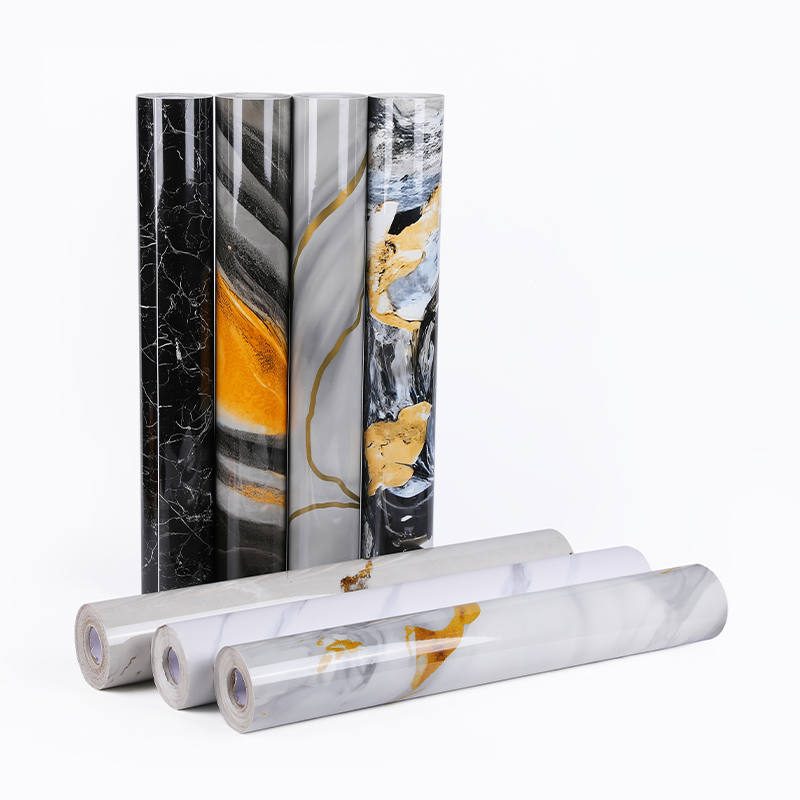
Marble design PVC film addresses a well-established commercial tension: the visual appeal of natural stone versus its cost, weight, fragility, and ecological extraction impact. High-resolution gravure printing combined with embossed vein textures produces convincing simulations of Carrara white, emperador brown, nero marquina, and other popular marble species, suitable for surfaces where real stone would be impractical — including lightweight furniture panels, wall cladding, and countertop wrapping applications.
Metallic decorative films — including mirror gold, mirror silver, brushed gold, brushed silver, and matte chrome — serve both furniture and architectural applications where a premium, contemporary aesthetic is required. Brushed variants are available in directional patterns including straight-brushed, corrugated, and swirled, each producing a different visual character. Specialty options such as holographic films, fabric-texture films, and anti-fingerprint soft-touch surfaces extend the design palette further for premium packaging, display, and high-end residential applications.
| Finish Type | Surface Options | Typical Applications |
|---|---|---|
| Wood Grain | Matte, satin, high gloss | Kitchen cabinets, wardrobes, furniture panels |
| Solid Color | Ultra-matte to mirror gloss | Office furniture, retail fixtures, doors |
| Marble / Stone | Gloss or matte with embossed vein | Feature walls, countertops, tabletops |
| Metallic / Brushed | Mirror, brushed, matte chrome | Hospitality interiors, premium furniture, signage |
| Specialty | Holographic, soft-touch, textile | Packaging, display, luxury residential |
PVC decorative film is a process-versatile material compatible with the full range of surface finishing techniques used in furniture manufacturing and interior construction — including vacuum membrane pressing, flat lamination, profile wrapping, and direct adhesive application.
In furniture manufacturing, flat lamination to MDF, particleboard, and plywood panels is the highest-volume application. The film is bonded to the panel substrate using hot-press or roll-lamination equipment, producing a finished surface that is ready for cutting, edge-banding, and assembly. Vacuum membrane pressing extends coverage to three-dimensional profiles — routed door fronts, shaped drawer faces, and carved panel details — where the film's flexibility and stretch characteristics allow it to conform to contoured geometry without tearing or bridging.
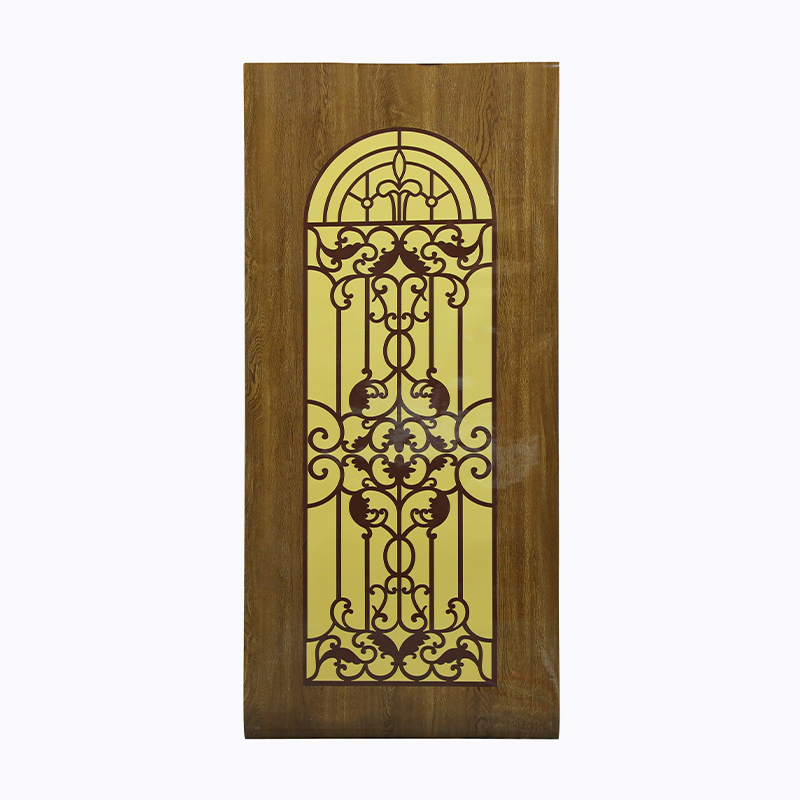
For renovation and refurbishment applications, easy-replacement PVC film for old doors provides a practical, low-disruption solution for upgrading worn or outdated surfaces without removal and replacement. Its flexible formulation accommodates rounded edges and curved profiles, concealing surface imperfections and restoring a fresh appearance at a fraction of the cost of new door installation. Similarly, PVC self-adhesive foil formats deliver a pressure-sensitive application route for walls, glass, and furniture in residential, retail, and hospitality settings where installation speed and reversibility are priorities.
Commercial and institutional applications — including hotel lobbies, office interiors, healthcare facilities, and retail environments — leverage PVC decorative film's combination of design flexibility, cleanability, and surface durability to maintain aesthetically consistent, high-traffic-capable surfaces that can be updated or replaced on renovation cycles without structural modifications to the underlying substrate.
Selecting the right PVC decorative film for a specific application requires matching the film's functional specification to the performance demands of the end use. The following properties are the most commercially relevant evaluation criteria for B2B buyers.
For distributors and furniture manufacturers sourcing PVC decorative film at commercial volumes, OEM customization capability is often the primary differentiator between suppliers. A manufacturer's ability to develop proprietary colorways, custom emboss patterns, and private-label packaging — without routing those designs to competing customers — determines the degree of product differentiation achievable at the brand level.
The most capable suppliers maintain extensive libraries of existing printing and embossing tooling — in some cases exceeding 1,200 printing rollers and 300 embossing rollers — which enables custom color development and texture matching without the cost or lead time of new tool fabrication. This tooling depth is a meaningful supply chain advantage for buyers who need rapid sampling and short development cycles.
Color matching accuracy is a technically demanding requirement in PVC decorative film supply. Reliable manufacturers use spectrophotometric measurement, controlled lighting conditions, and retained reference samples to maintain color consistency across lots — particularly critical in pale shades, optical whites, and saturated colors where visual metamerism and dye uptake variation are most likely to create problems in production batches.
Standard payment and delivery terms, packaging specifications (typically paper core, foam wrap, and wooden crate for export), and certifications for customs clearance — including CO, FTA, and Form F documentation — should be confirmed upfront for international procurement. Lead time varies by order volume and pattern availability: standard catalogue items with sufficient stock can ship within days of order confirmation, while custom developments require sampling, approval, and production scheduling cycles of two to four weeks.
PVC decorative film delivers a commercially compelling combination of design range, functional performance, and cost efficiency that makes it the specification of choice for furniture manufacturers, interior contractors, and distributors operating across residential, commercial, and hospitality markets. From the realistic texture of high-gloss wood grain panels to the clean geometry of solid matte surfaces and the visual drama of marble finishes, the product category addresses the full spectrum of contemporary interior design requirements — without the cost, weight, or fragility of the natural materials it emulates.
Specifying the right film requires matching surface finish, functional properties, substrate compatibility, and environmental certification to the demands of the end application. Working with a manufacturer who combines deep tooling libraries, rigorous quality control, and genuine OEM customization capability provides the supply chain foundation to develop differentiated, reliably produced products that meet market expectations across geographies and price points.

To increase our production capacity, Han Yang has invested in a range of advanced equipment, including gravure printing machines, lamination machines, coating machines, and embossing machines. Architectural Decorative Film Supplier and Decorative Film Factory in China.

 Previous